
code:earth
design & digital fabrication lab
3D-printed ceramics and bio-material systems
for spatial and architectural applications.
From experimental objects to site-specific installations.
Bridging digital processes with tactile, earthy outcomes.
//about
code:earth
Code Earth is an experimental ceramics studio exploring what happens when clay meets code.We use 3D printing and computational design to play with form, process, and material. Sometimes there is a highly precise digital model behind a piece; sometimes the clay has other plans. We like both.Specializing in additive manufacturing, we transform raw clay, upcycled by-products, and bio-composites into bespoke architectural systems, products, and site-specific installations. Our process bridges high-tech precision with material intuition—giving architects, designers, and creators the tools to craft truly unique spaces. Whether you are sourcing curated pieces directly or co-creating large-scale installations, we design forms that bridge technology, earth, and imagination.Ultimately, Code Earth is an ongoing experiment with clay—part design studio, part fabrication lab, and part excuse to keep making things.
Let’s collaborate. Let’s build. Let’s shape the future of design, together.
our vision
We imagine a future where craft and technology don’t exist as opposites, but grow together.At code earth, we are building a world where ceramics, computation, and digital fabrication come together — merging the knowledge, intuition, and material understanding of traditional craft with the possibilities of advanced technology. We want to explore how technology can carry craft knowledge forward, while opening up new ways of designing, making, and working with clay.We see ceramics as a space where these two worlds can meet — where ancient material knowledge can inform new technologies, and new technologies can open up possibilities that were once difficult to imagine.We are building this world with architects, designers, makers, and visionaries who refuse to compromise, who see technology as a way to expand craft, not replace it.Our vision is to evolve the way we make, while carrying the knowledge and spirit of craft into the future.
sustainability isn’t an afterthought, but the foundation of creation.
// 3d printing
About the service
Crafting your innovative projects in 3D
Experience the future of digital fabrication with our cutting-edge range of 3D printing options with clay and bio materials, catering to Architects, Interior designers, Product designers and artists. We collaborate with those who dare to rethink materials, those who see waste as a resource, those who believe technology can serve the earth.
We take clay and reclaimed waste streams and transform them through 3D printing, computational design, and sustainable innovation.
We are not just making objects, we are reshaping the way materials are used, reused, and reimagined.
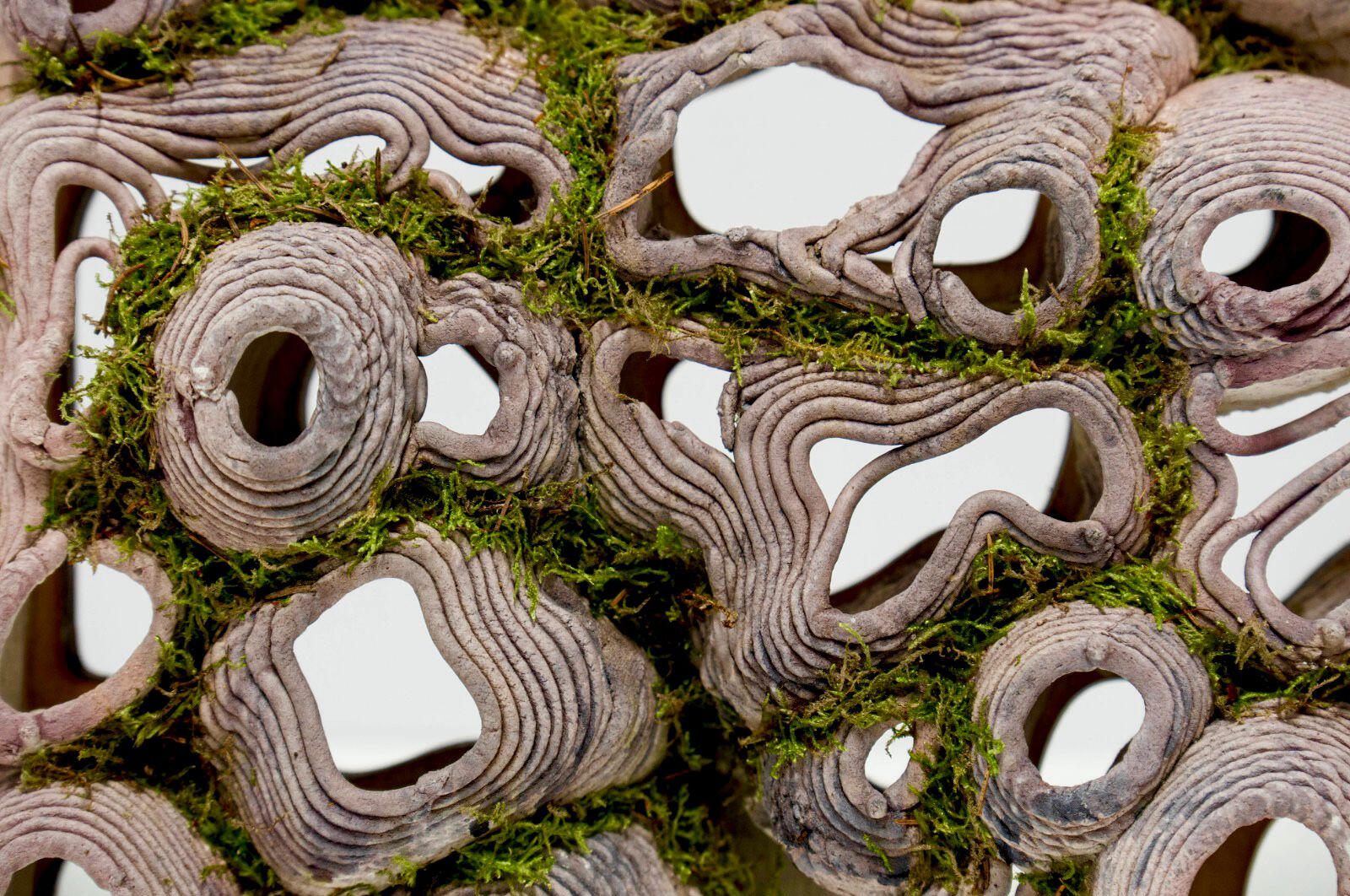
work done in collaboration with Sharif. M & Hana. C (Bio-ID, UCL, London)
How it works
Design, upload, and 3D print your vision
In 5 easy steps from design to the finished product. Follow the steps below to 3D print your project today!.
create your design
Sketch it and model it, your idea begins here. Give it the details only you can imagine.
share your vision

Send us your file. along with your choice of material, be it terracotta, stoneware or a biocomposite we have got you covered
quote & payment

we will check for printability, offer consultation if your design needs a nudge, send you a custom quote and begin once payment is made.
print and bake

your design becomes tangible, printed in clay, refined by hand and baked in the kiln
into your hands

when your piece is ready, we will arrange a safe delivery or you can pick it up from our studio - ready to be part of your space and story
// portfolio
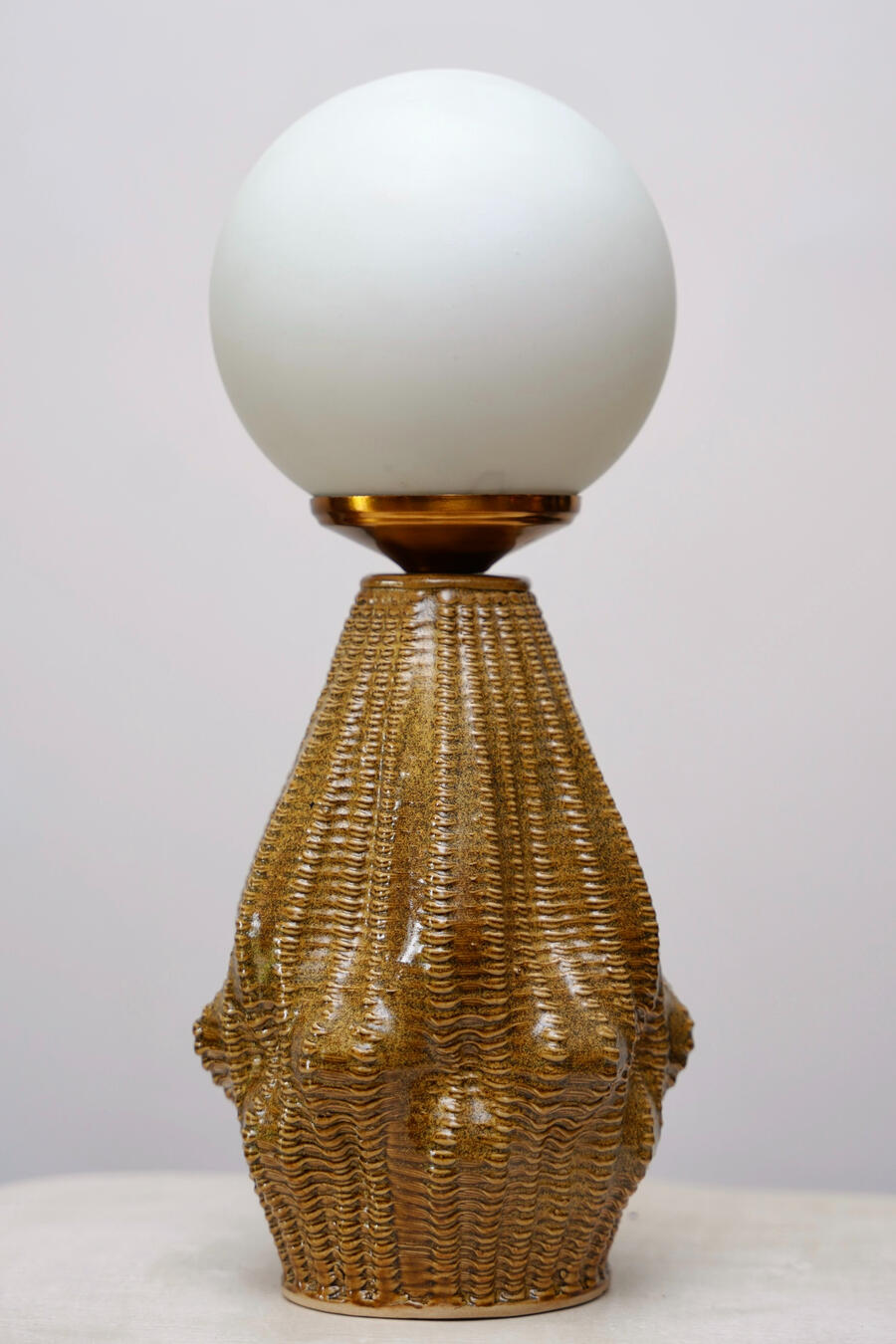
Droop I
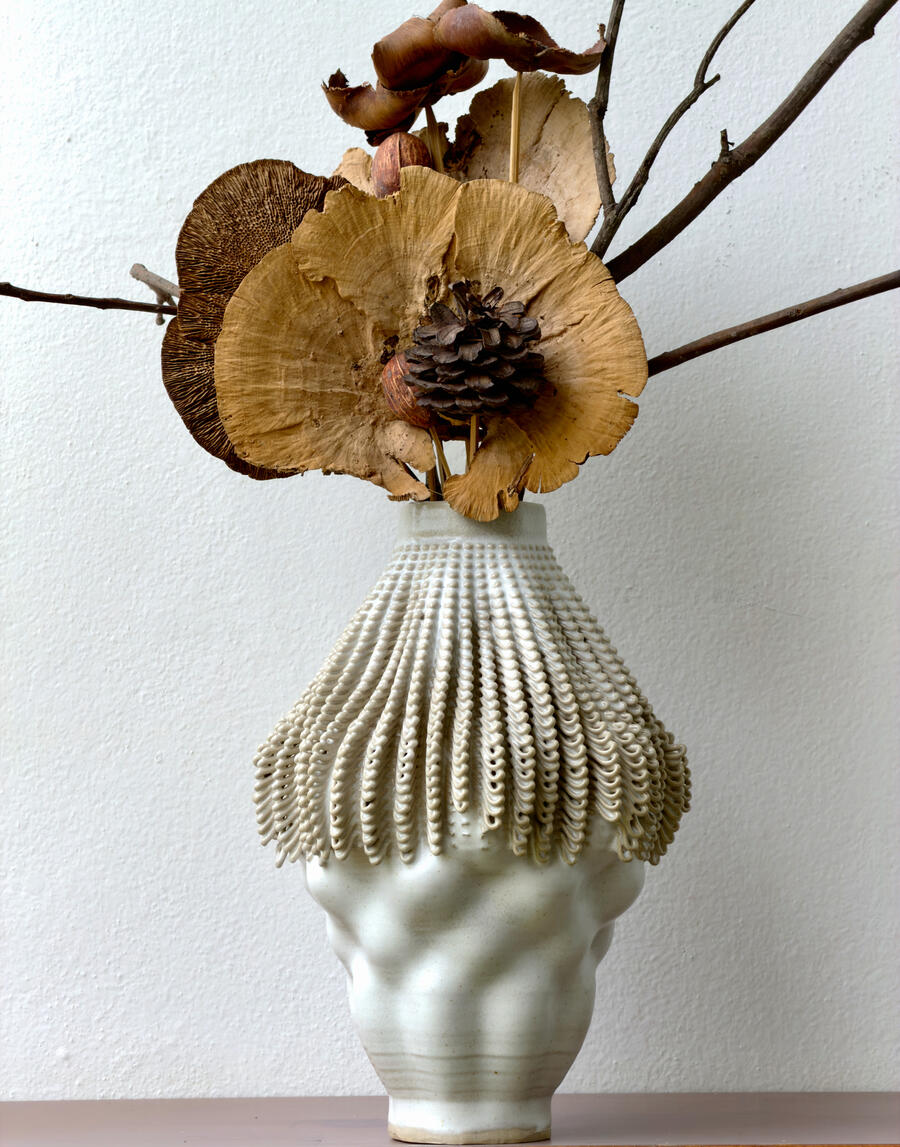
Digital Lace I
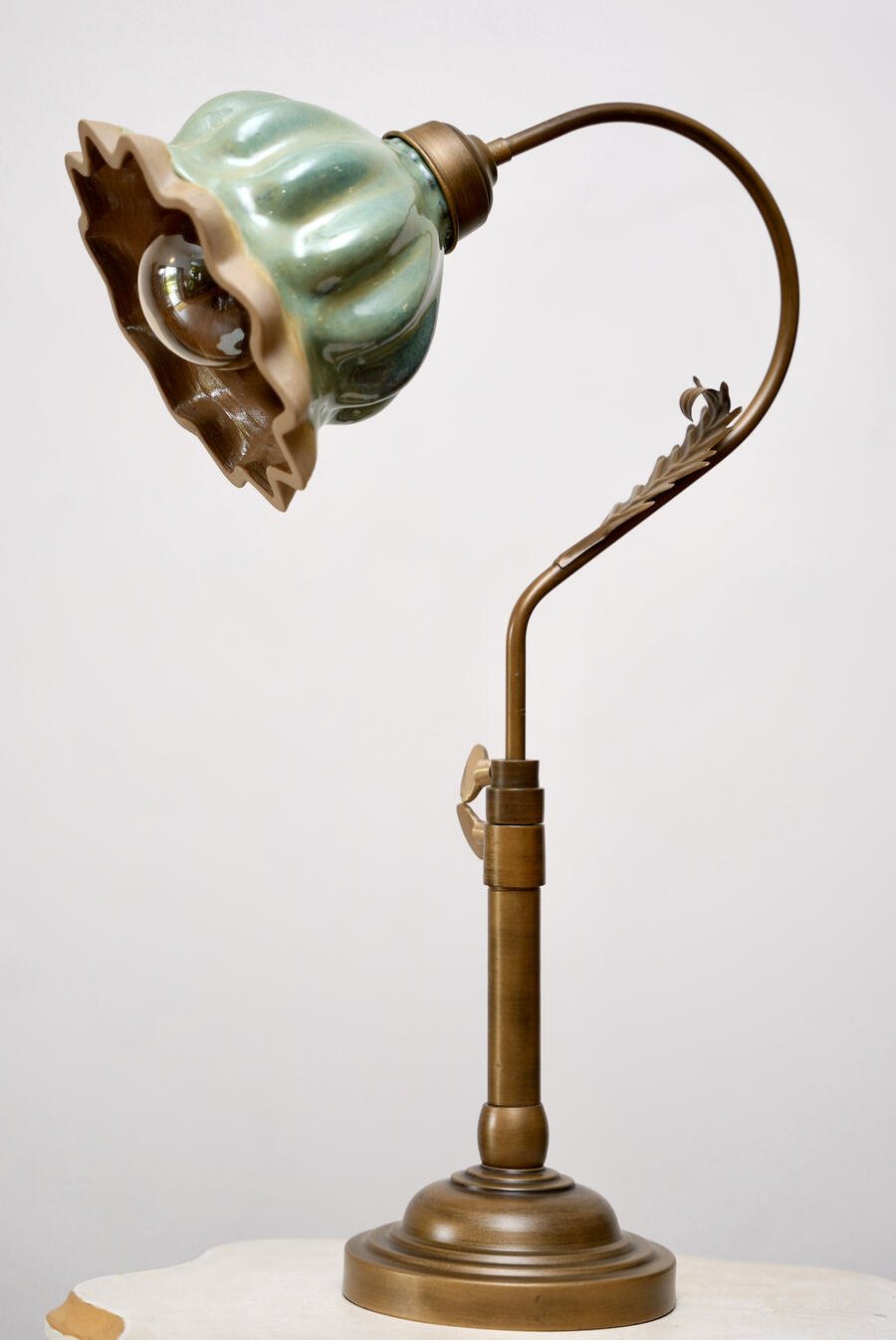
Bloom I
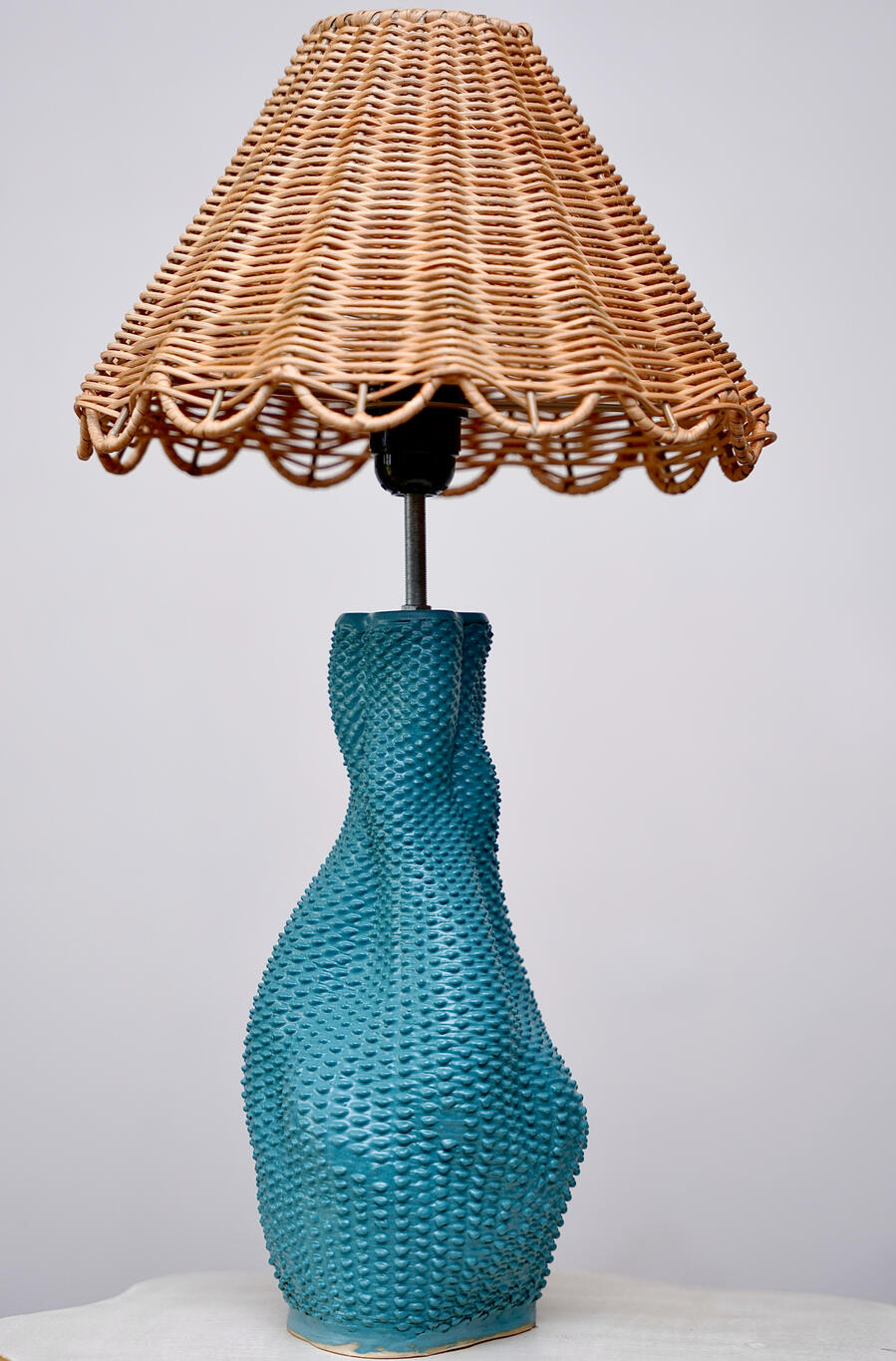
Droop II
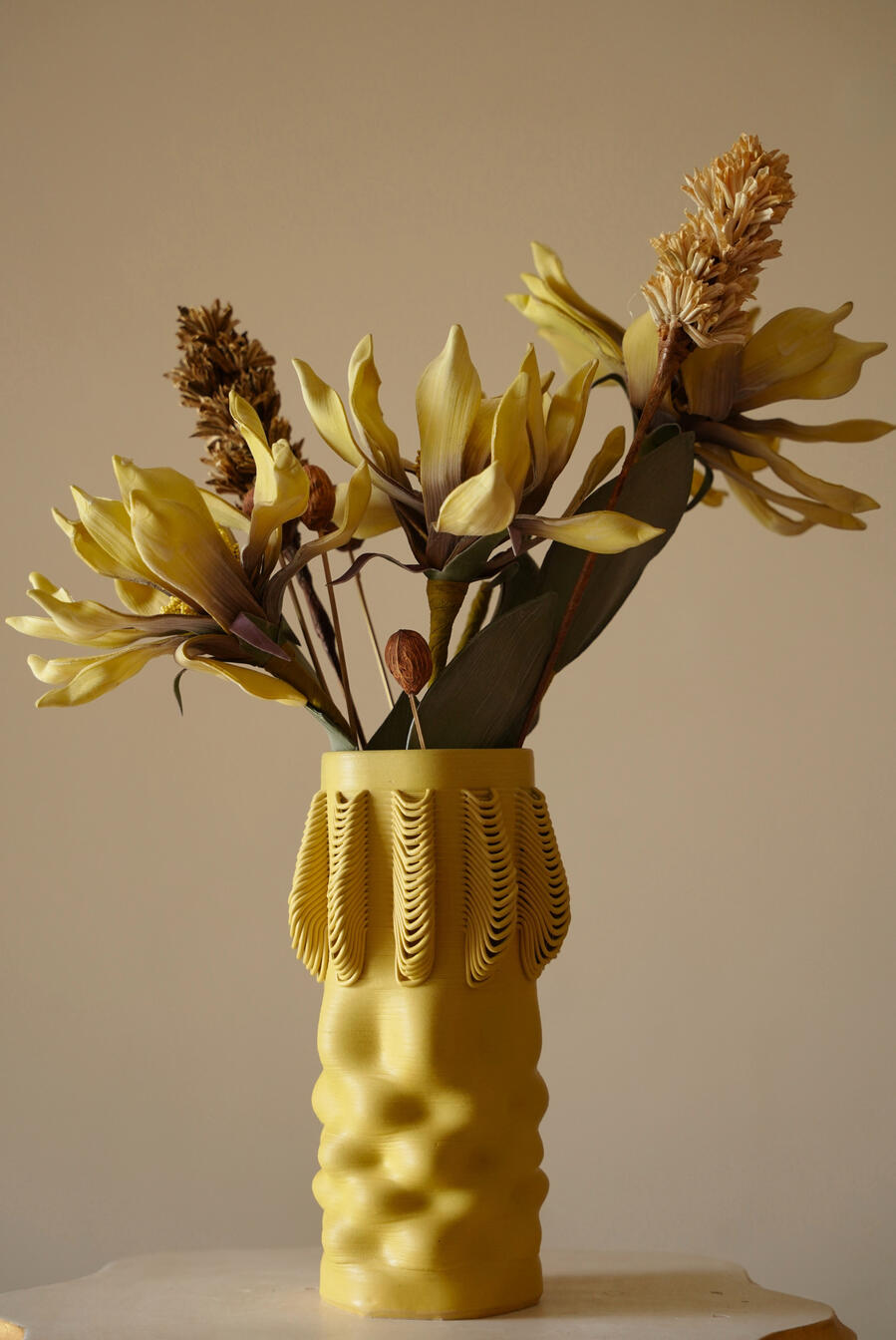
Digital Lace II
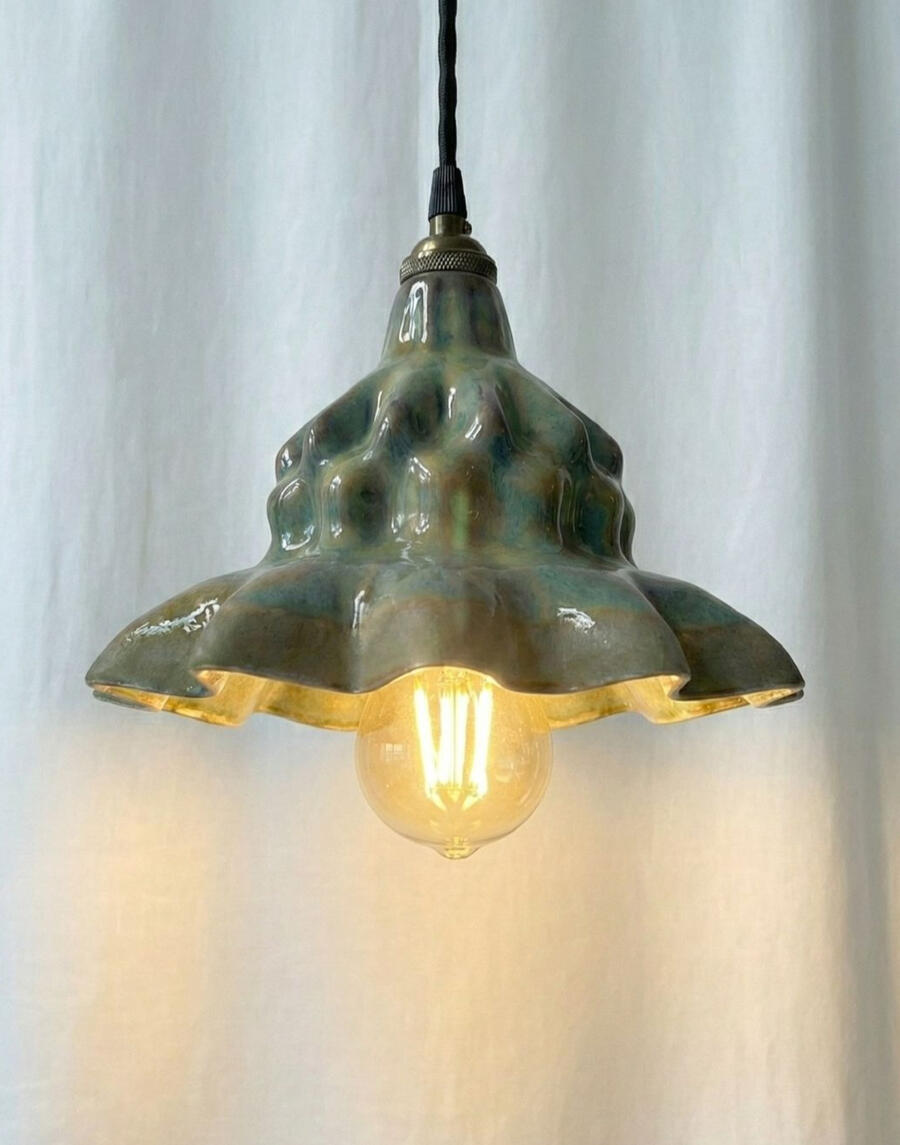
Bloom III
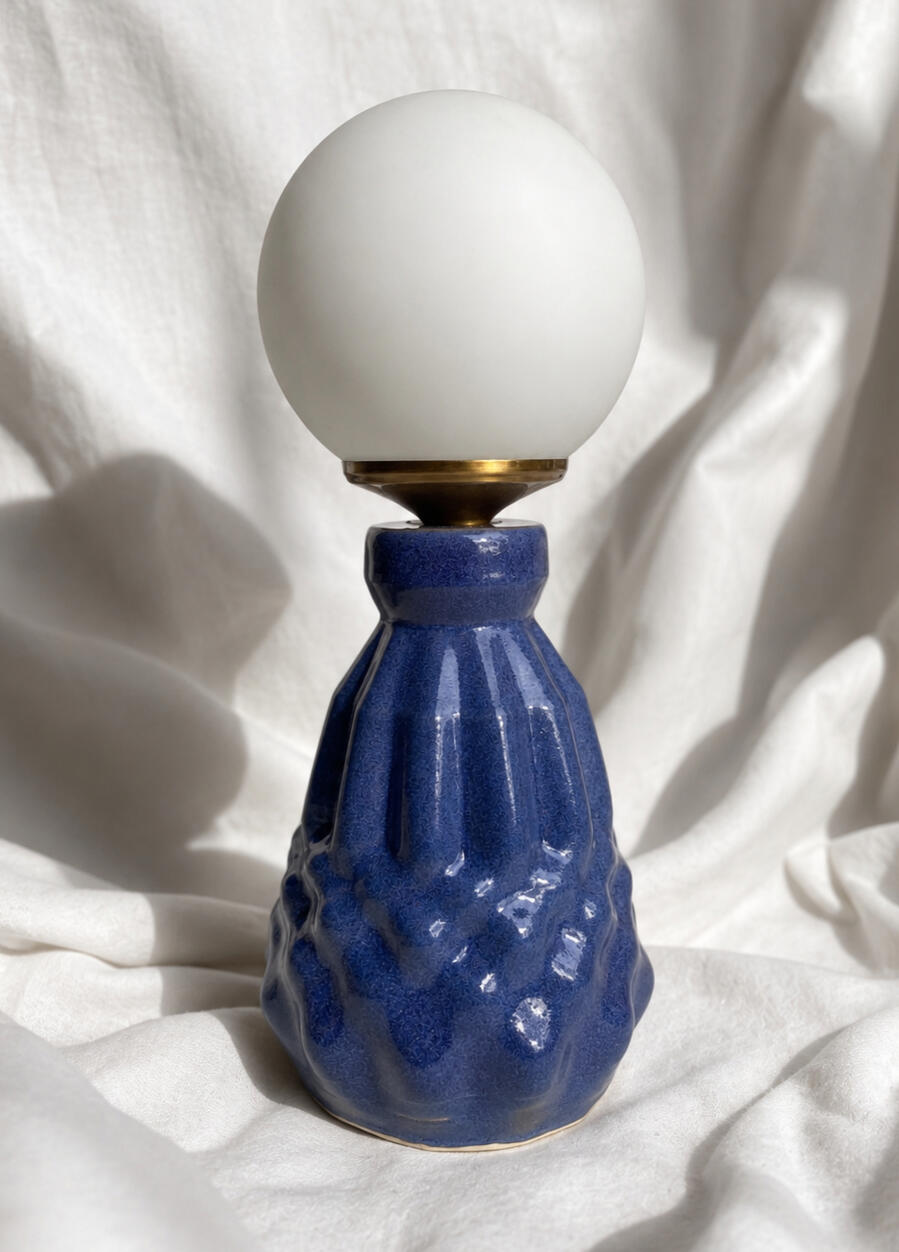
Nova
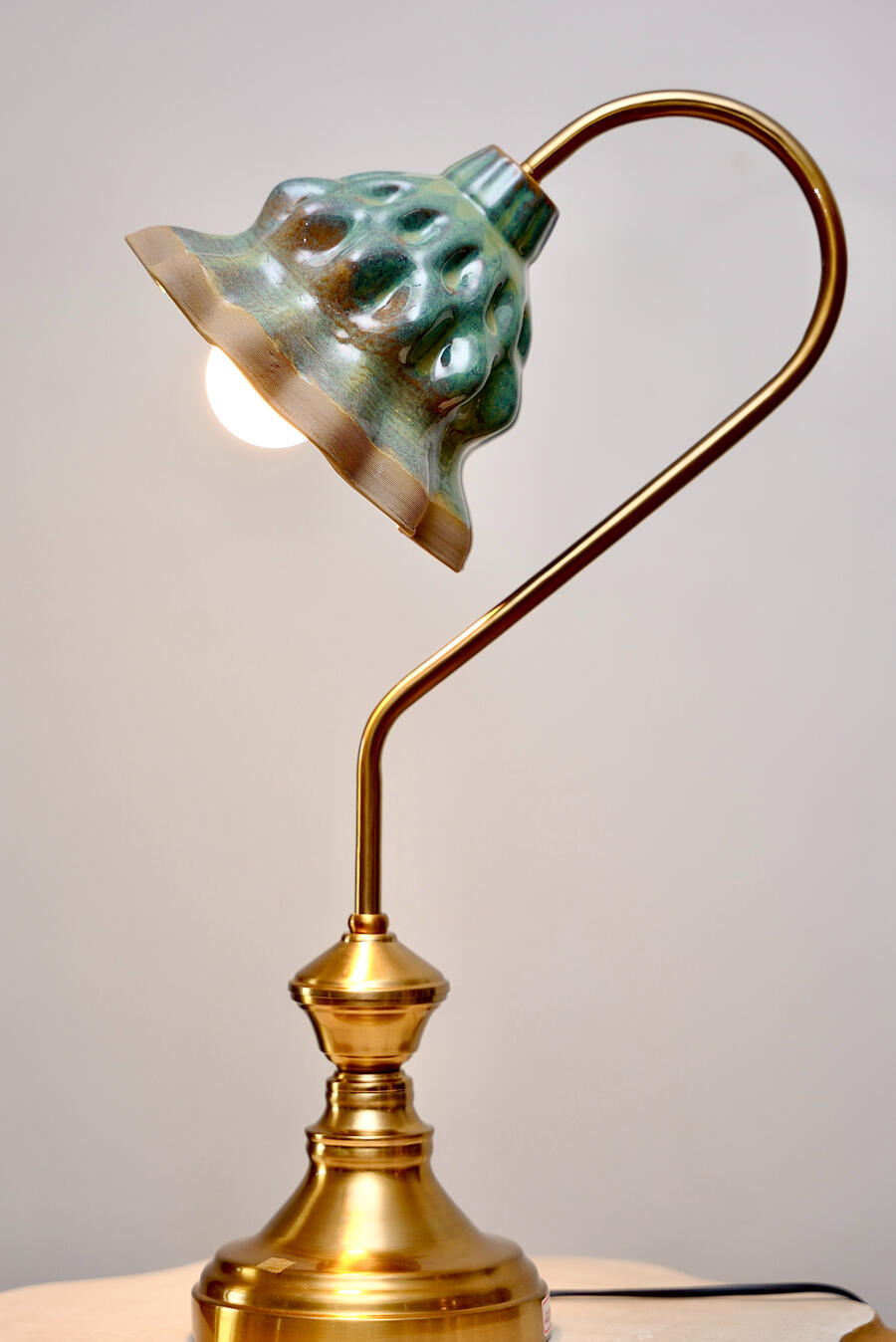
Bloom II
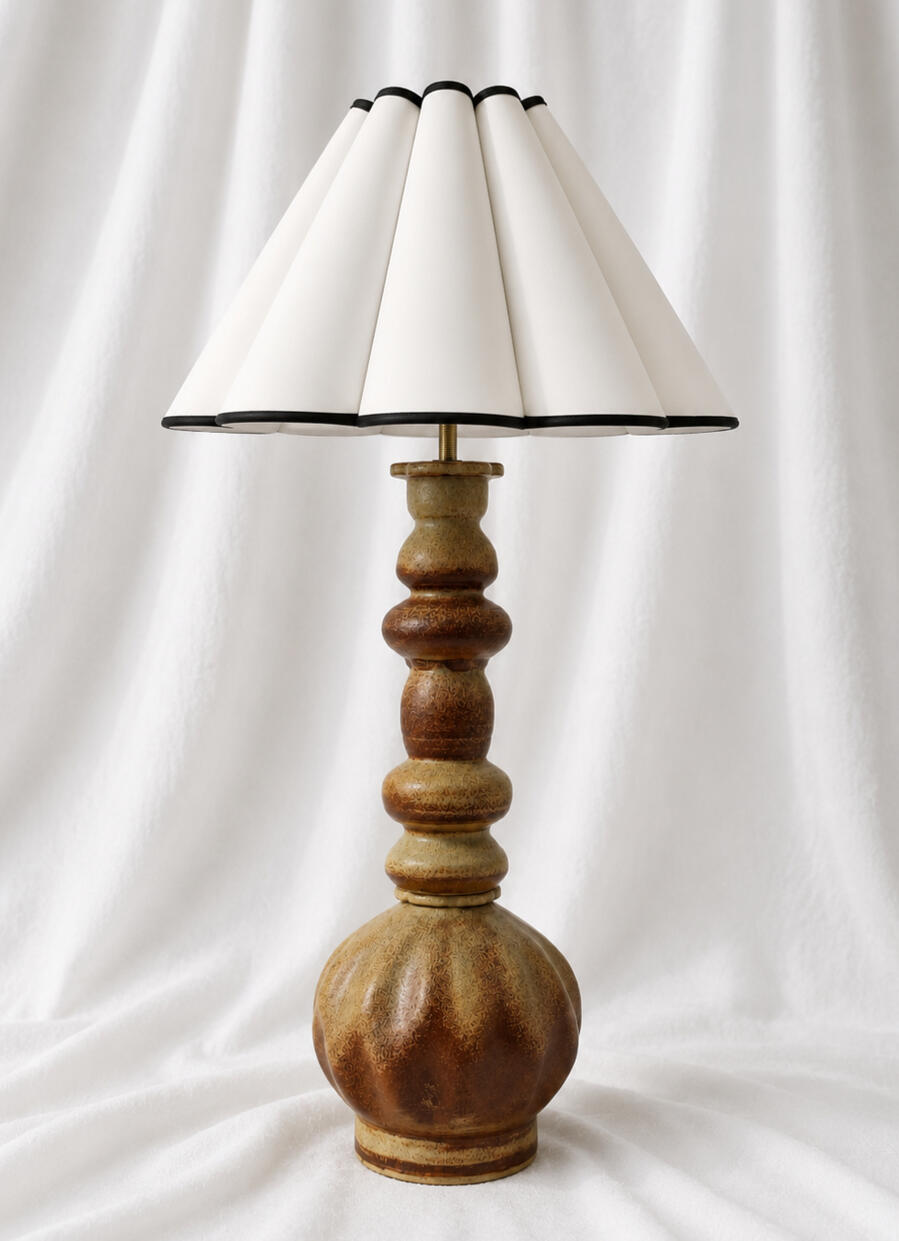
Digital Lace II
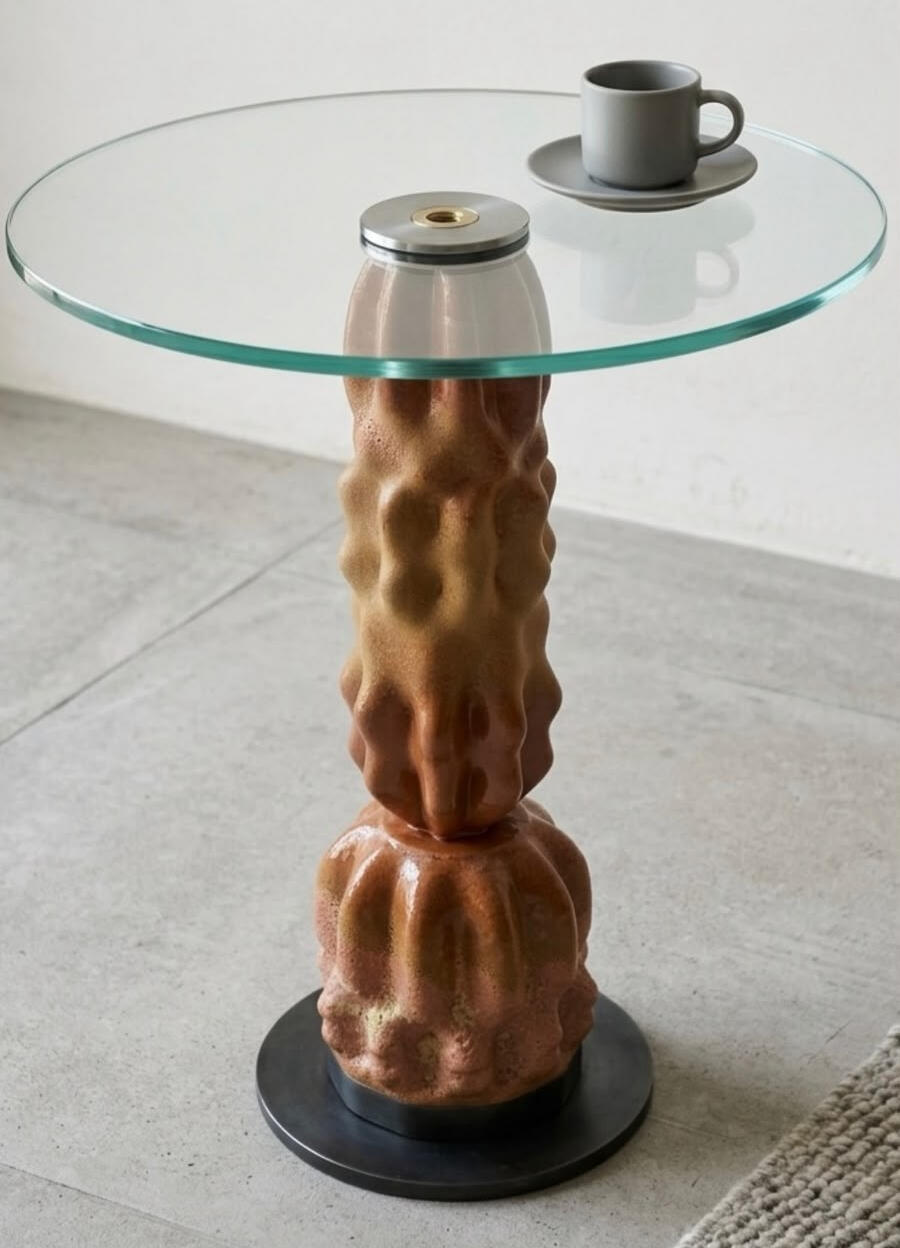
Fossil
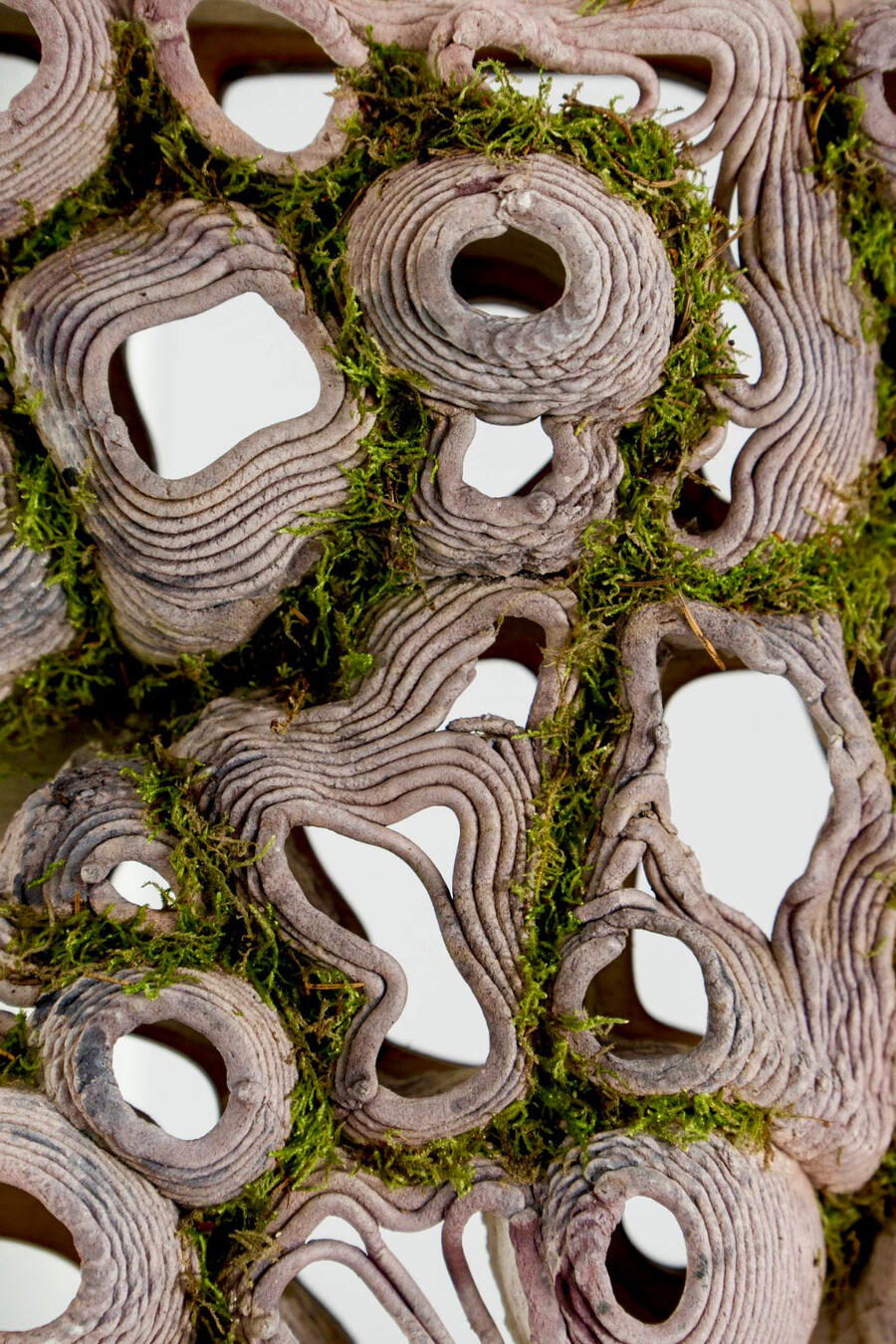
Probiogenesis
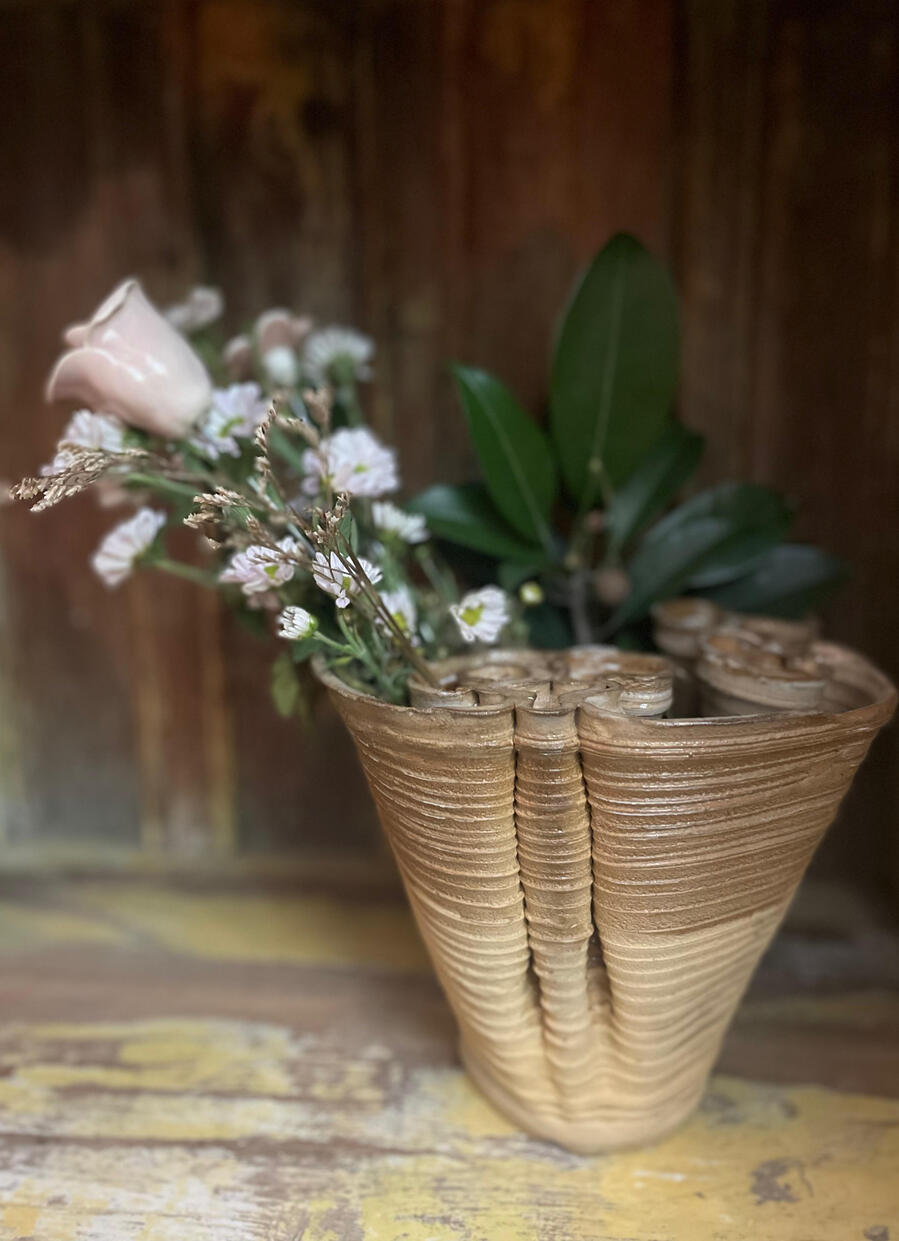
Coral vase
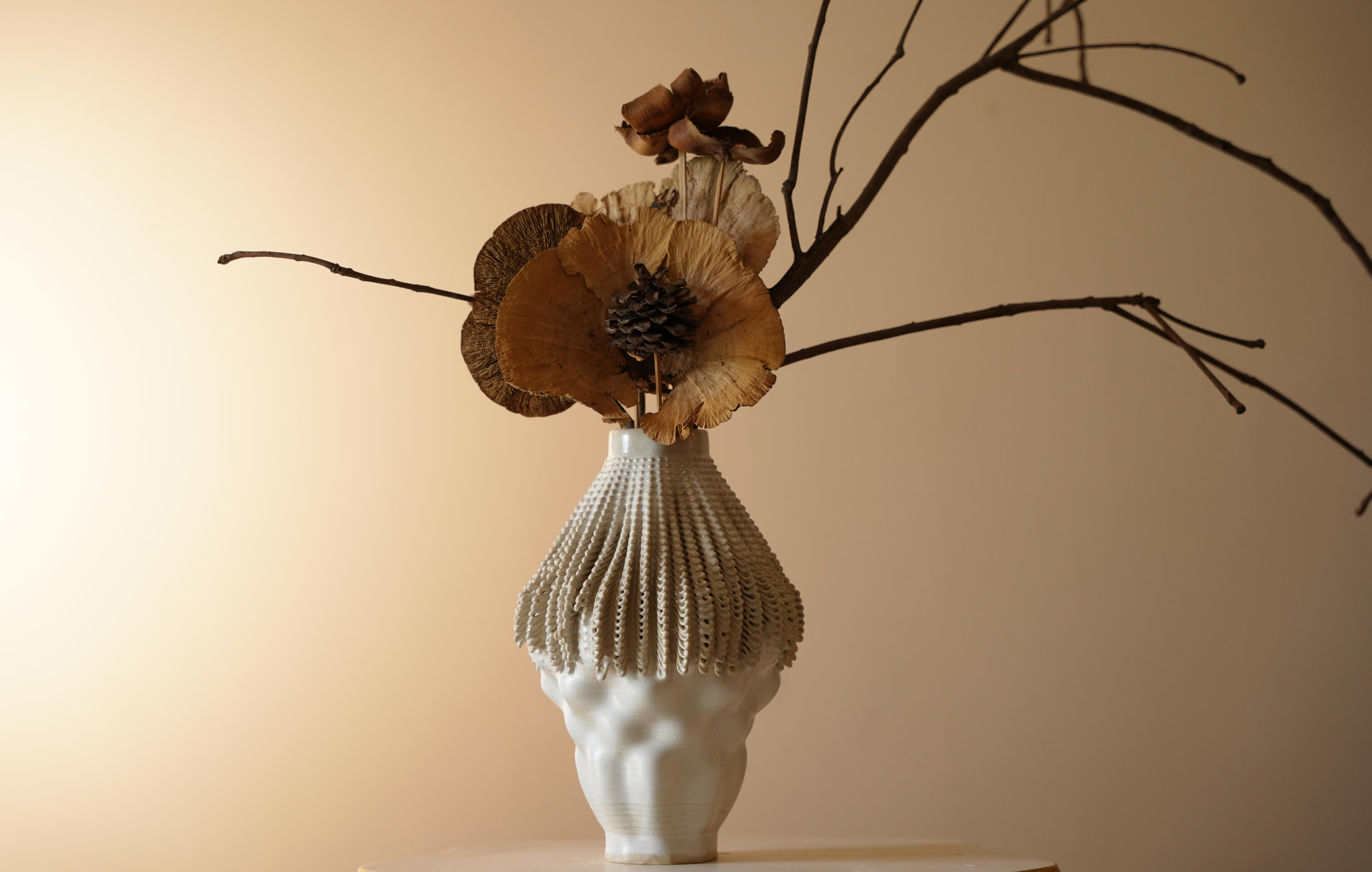
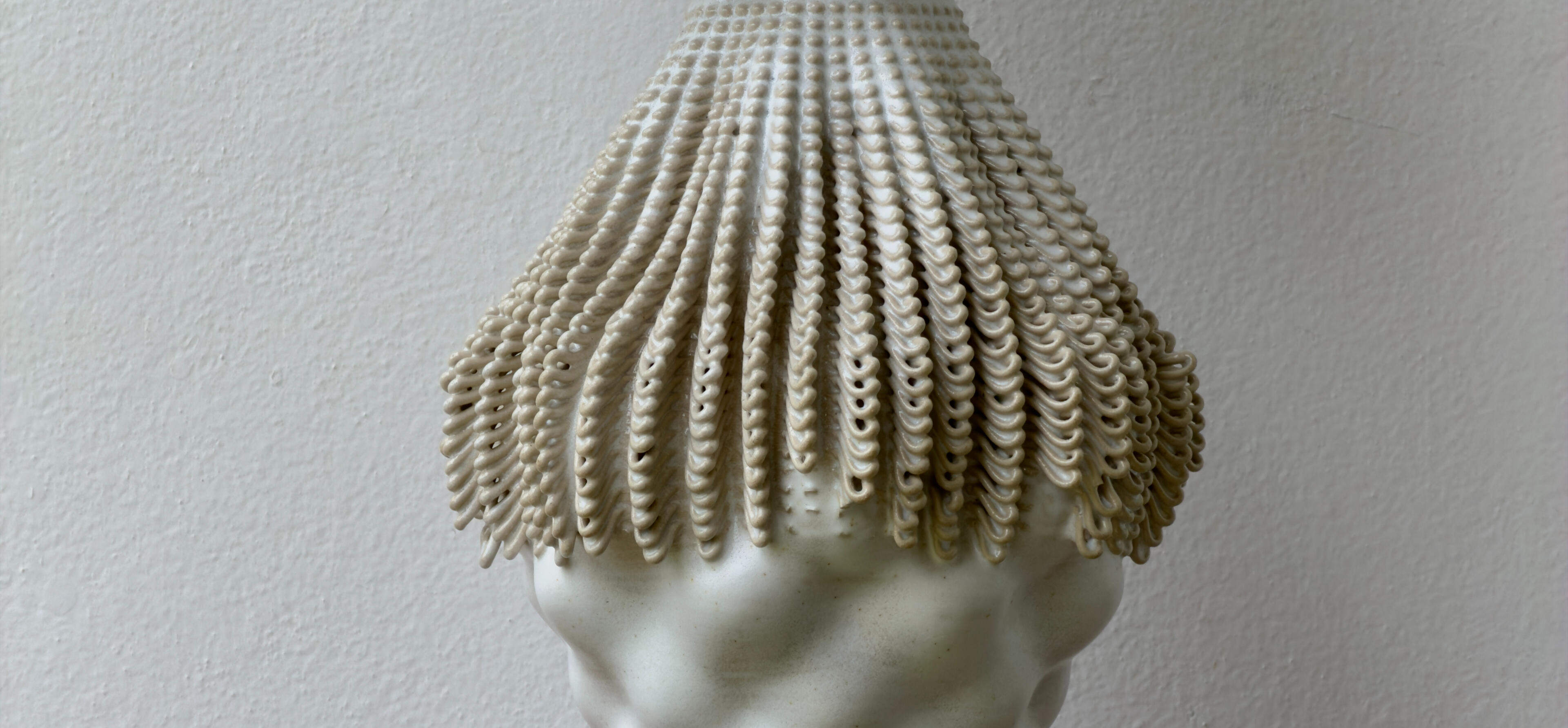
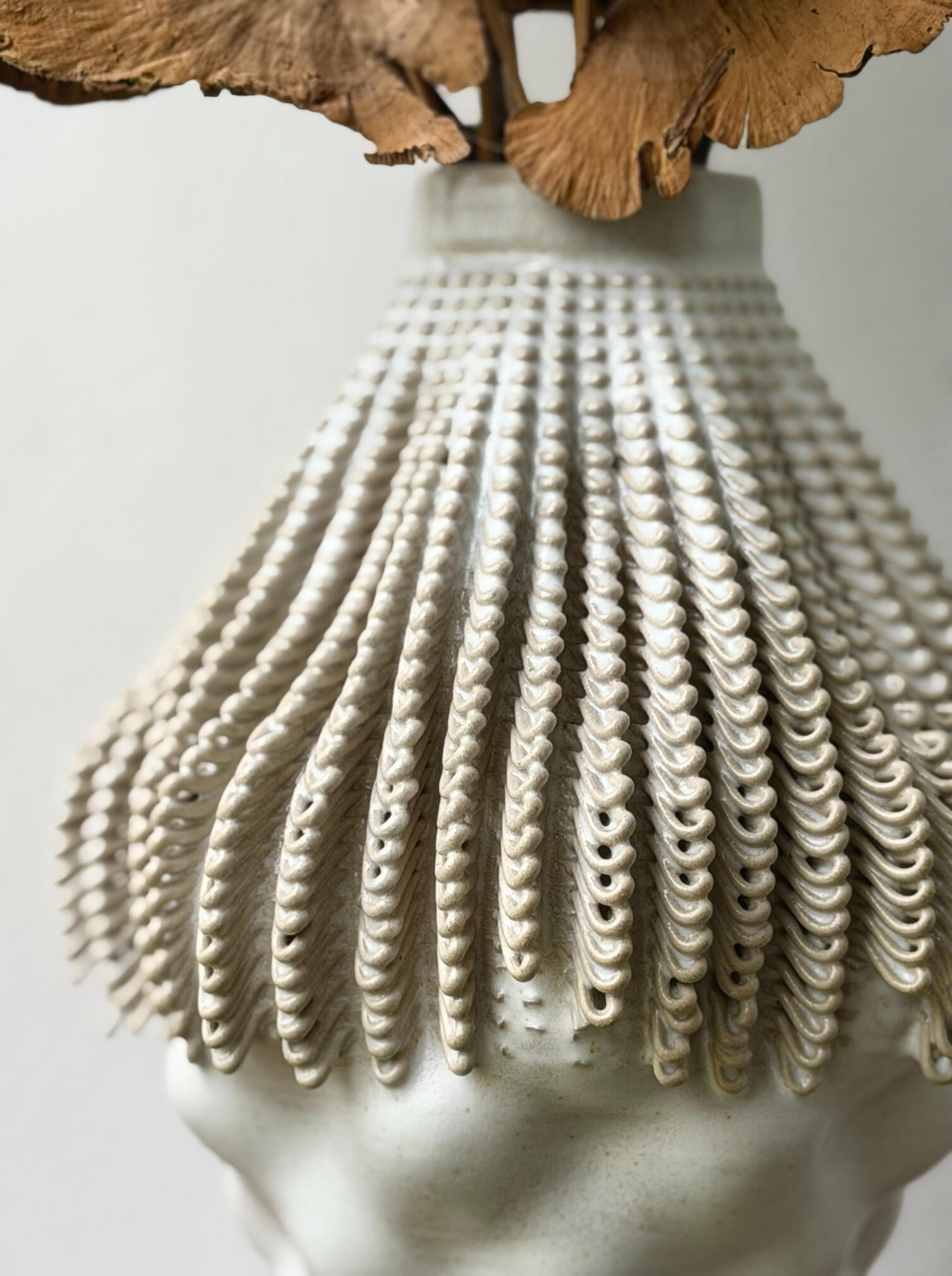
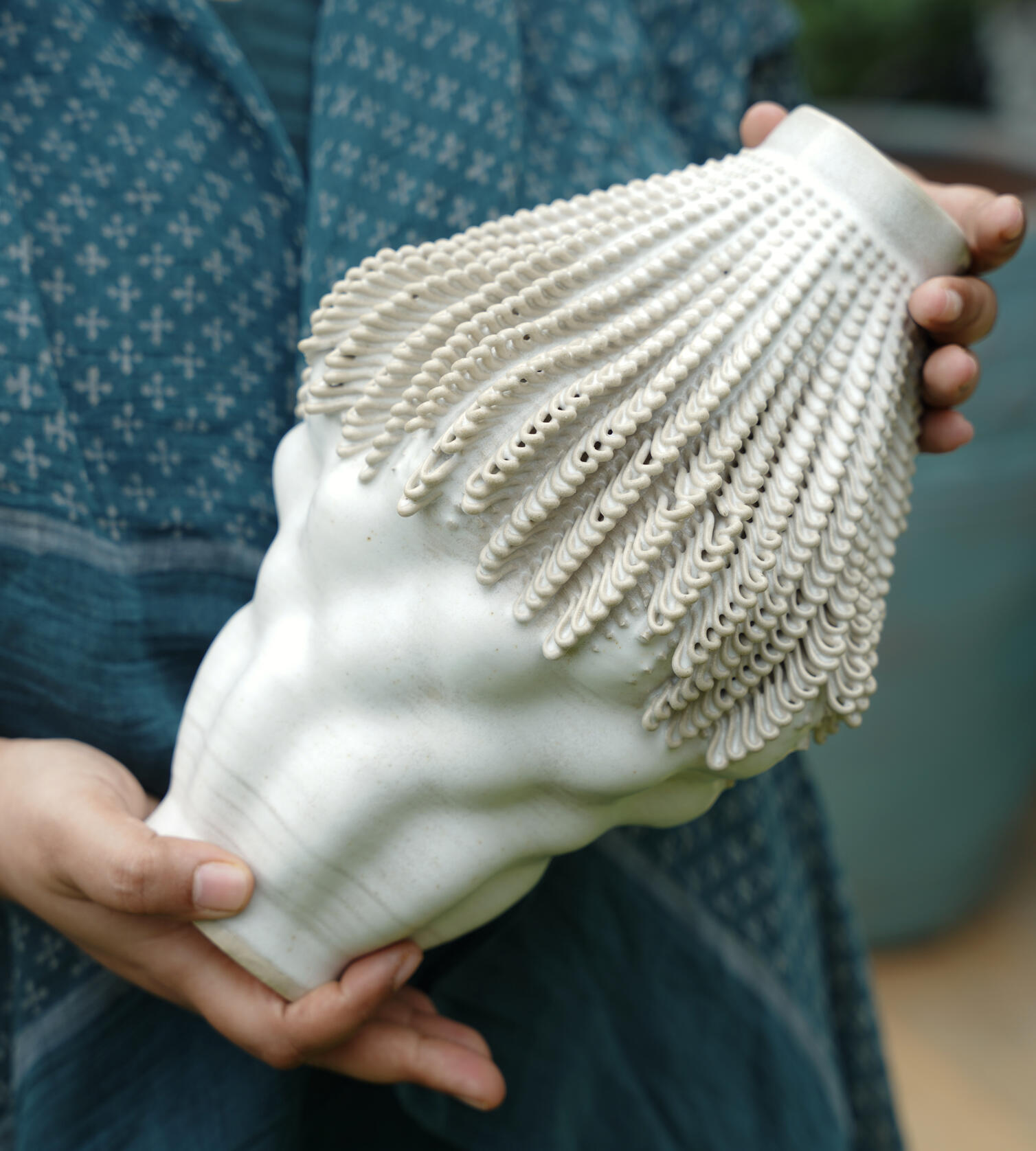
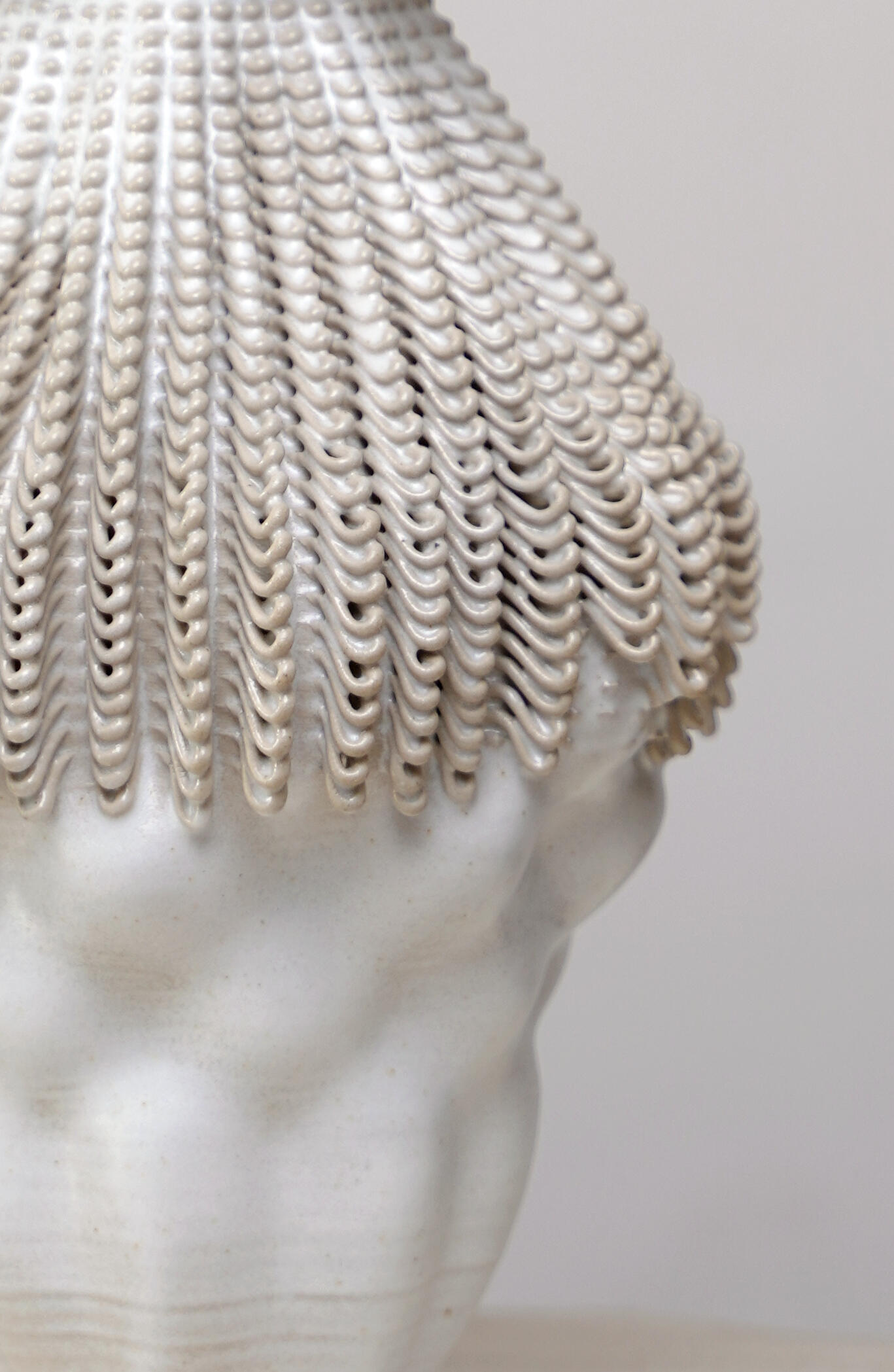
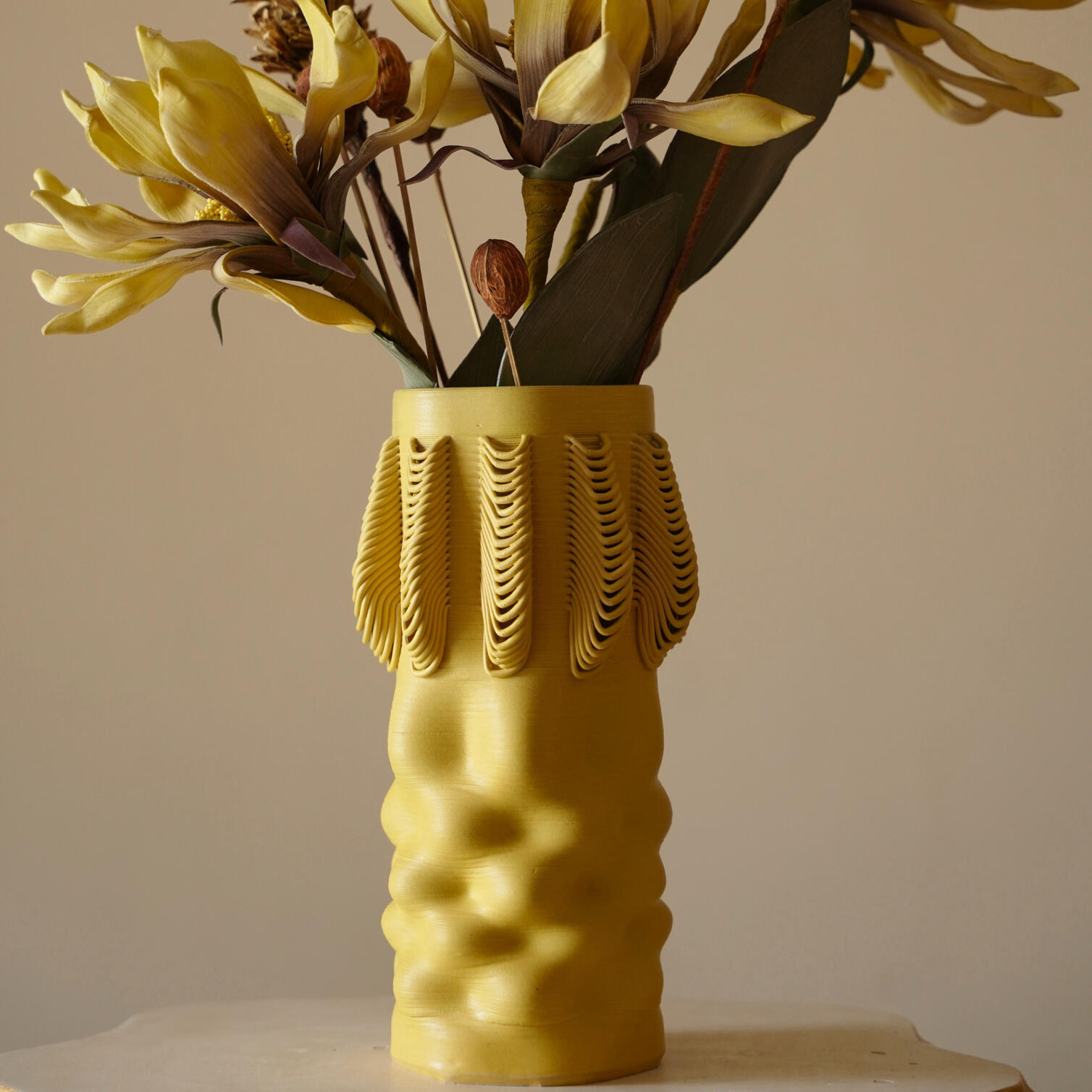
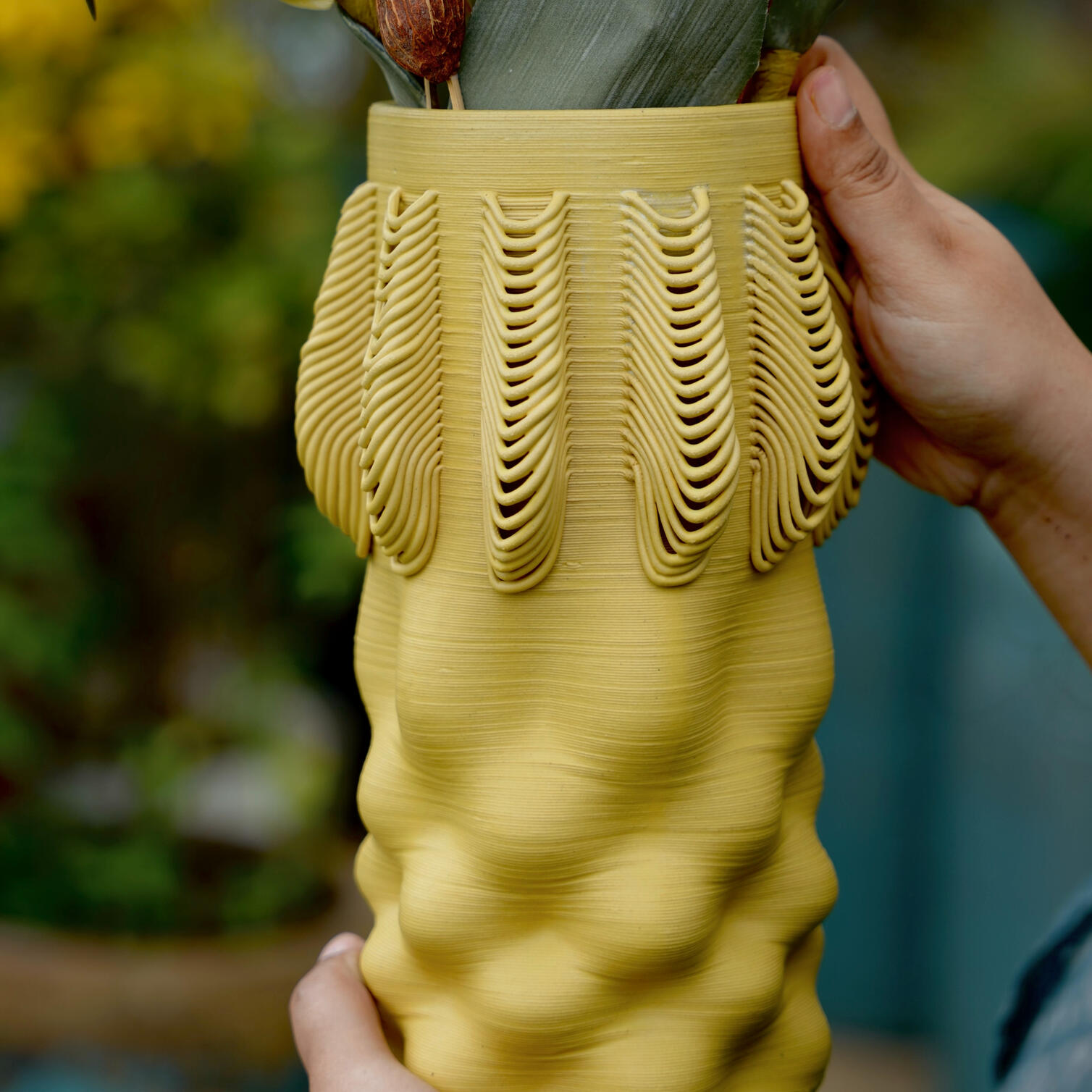
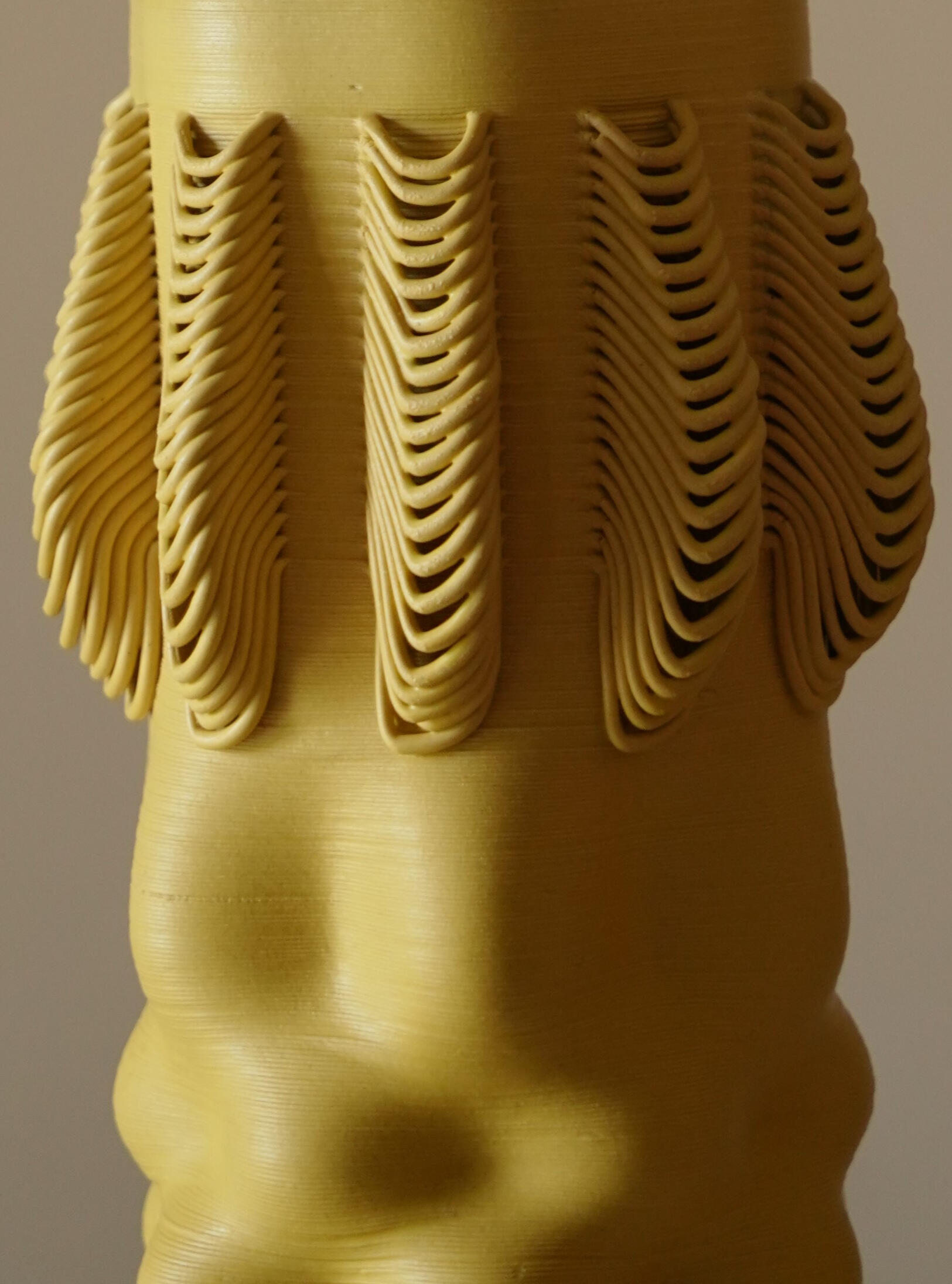
Digital Lace IThis captivating stoneware vessel invites touch and exploration, with its surface formed through continuous programmed toolpaths that create delicate, lace-like structures across the vessel. The repeated patterns introduce rhythm and movement, while subtle variations emerge from the material’s behaviour during printing. The sculptural body contrasts with the fragile, tactile surface, blurring the boundary between structure and ornament. Part of the Droops Collection—named from Drop + Loop—the piece explores how a simple looping motion can transform into intricate, organic textures. Through digital fabrication, the collection translates the movement of a clay droplet into a language of rhythm, repetition, and form.
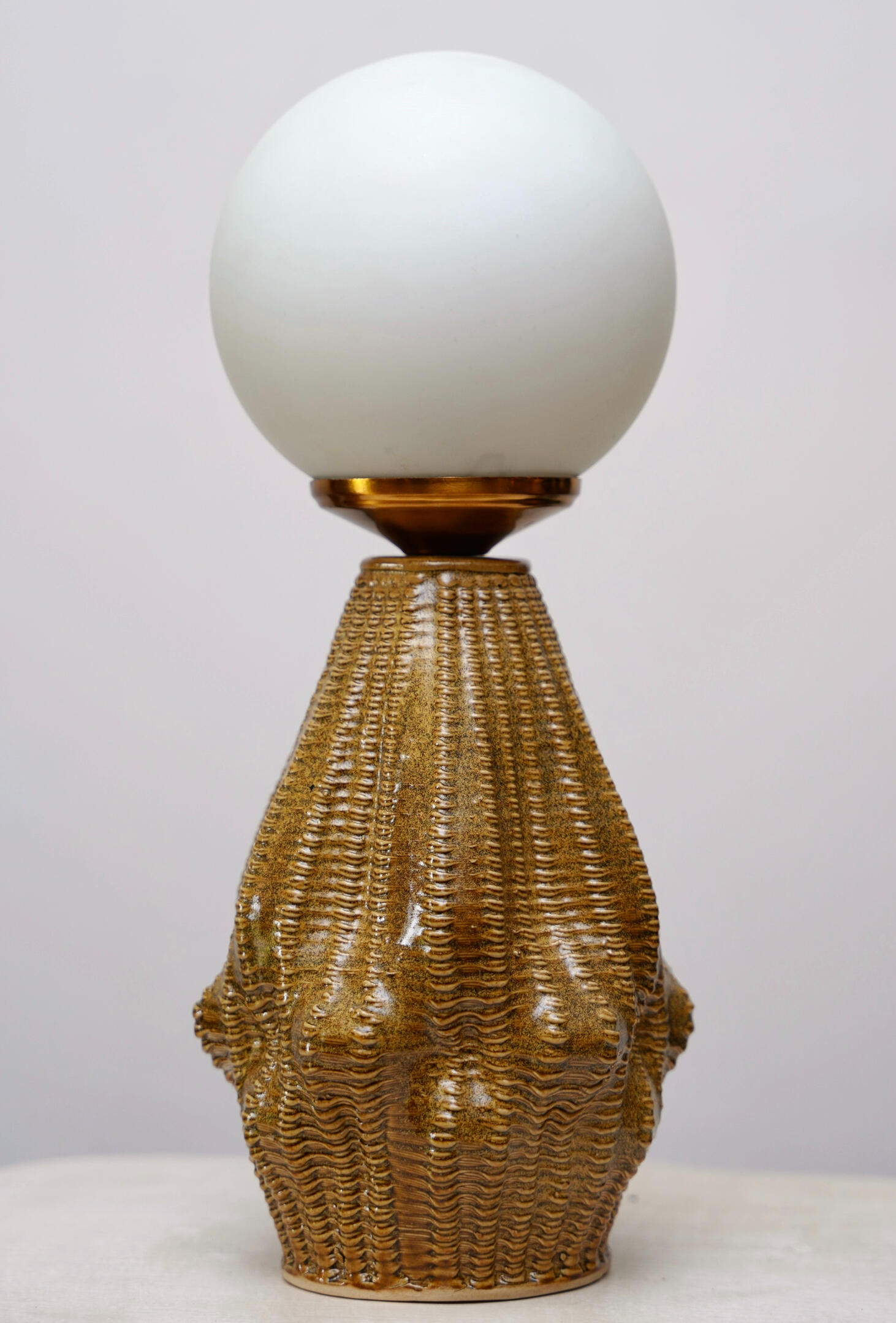
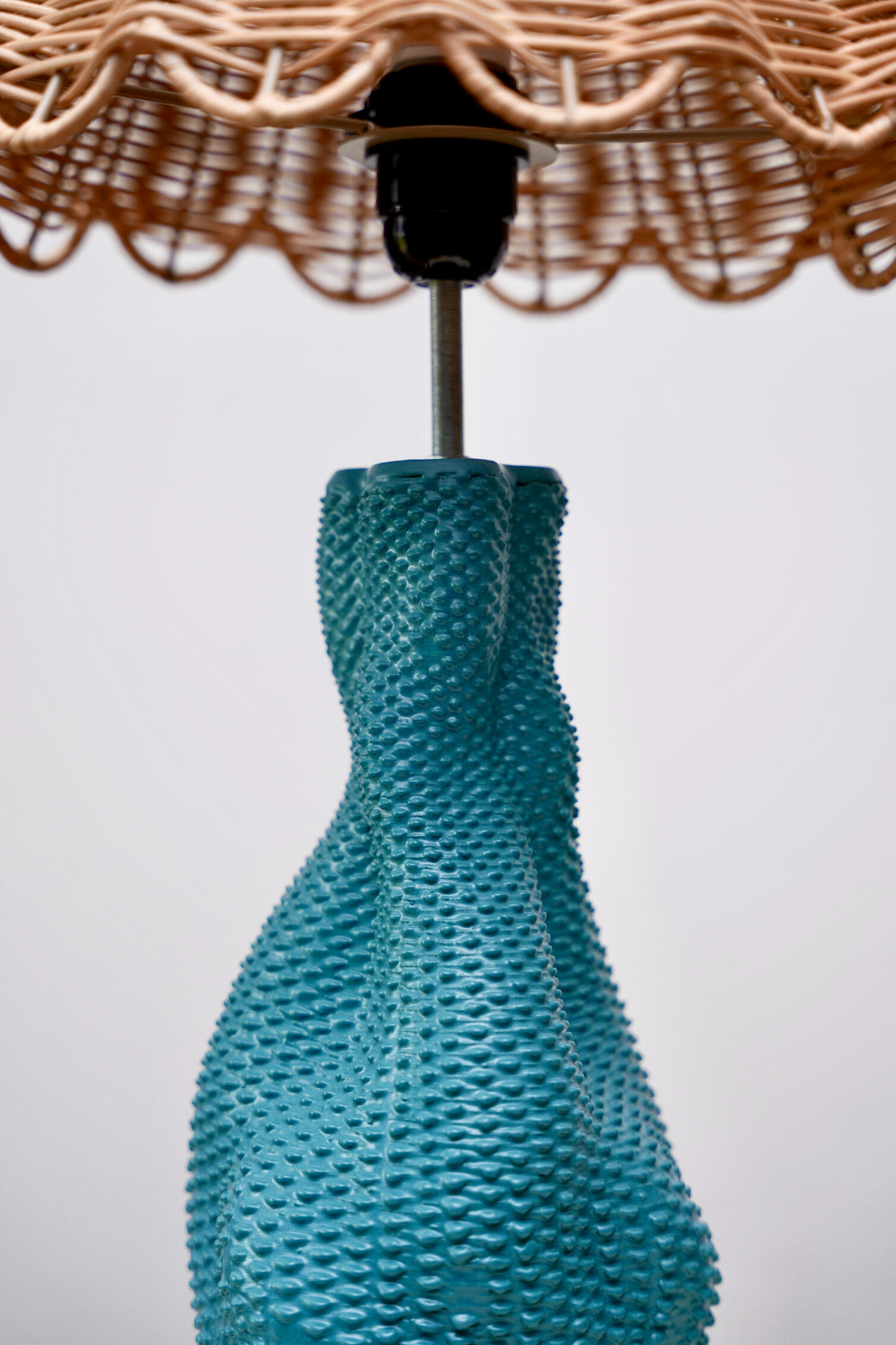
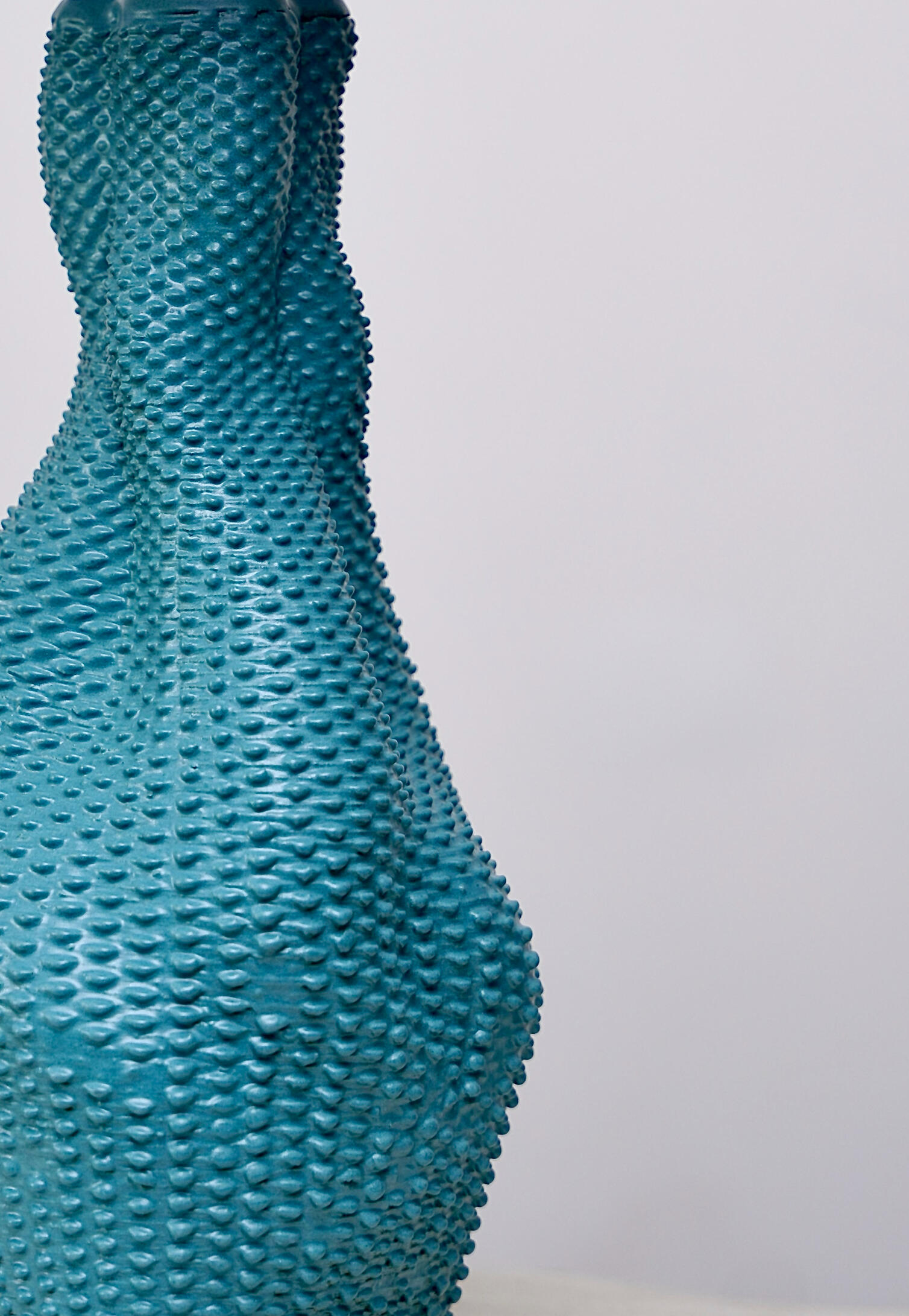
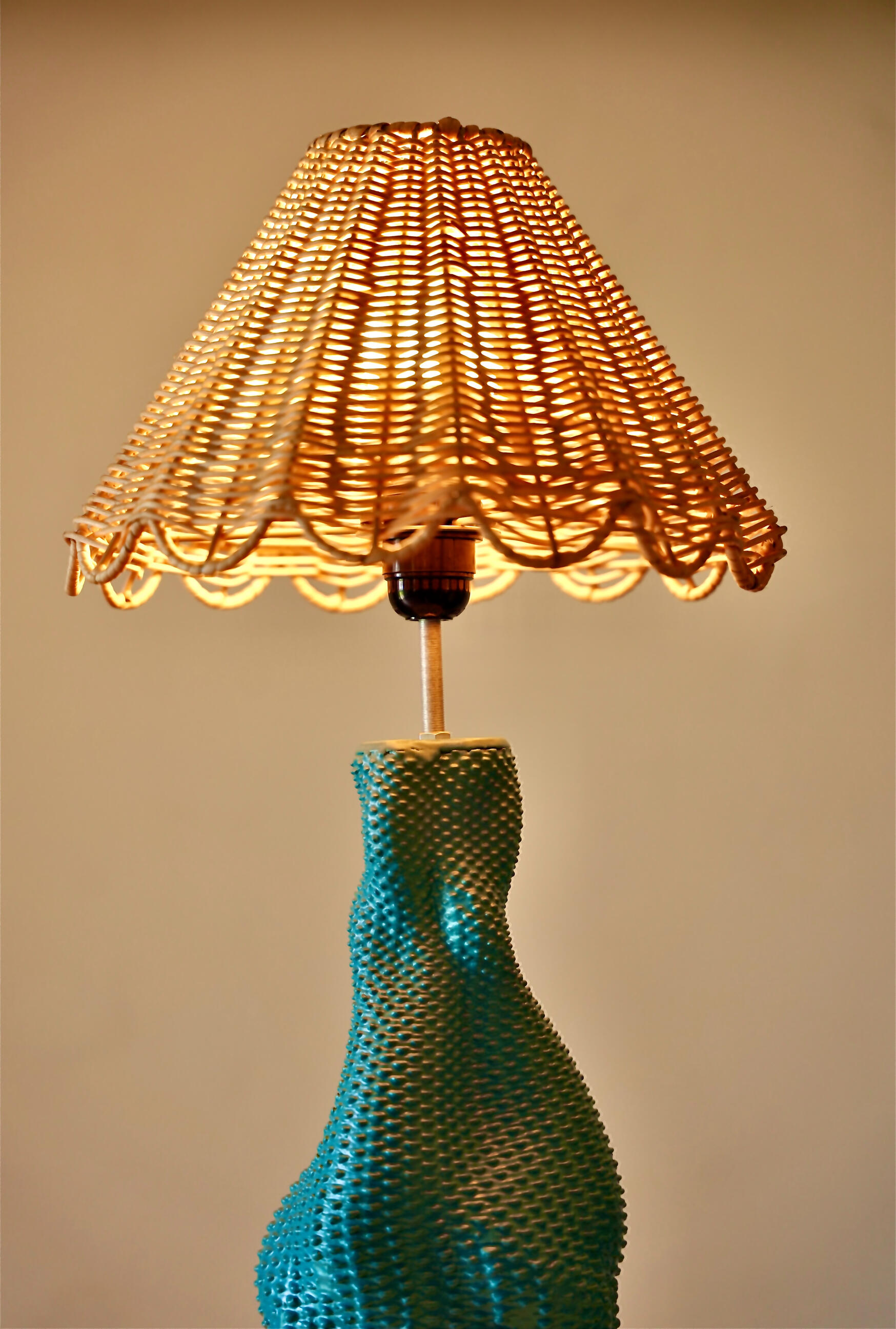
Droop IThis ceramic table lamp explores the transformation of a simple drop into a continuous looping gesture. Its surface is created through repeated programmed toolpaths, building rhythmic layers of clay that wrap around the form and respond to its changing geometry. The textured structure captures the movement of the nozzle, while the glazed surface enhances the depth and variation of each individual loop. Organic bulges and subtle irregularities emerge as the clay responds to gravity, material flow, and the printing process. Part of the Droops Collection, the piece explores how digital fabrication can translate a moment of movement into texture, form, and material expression.
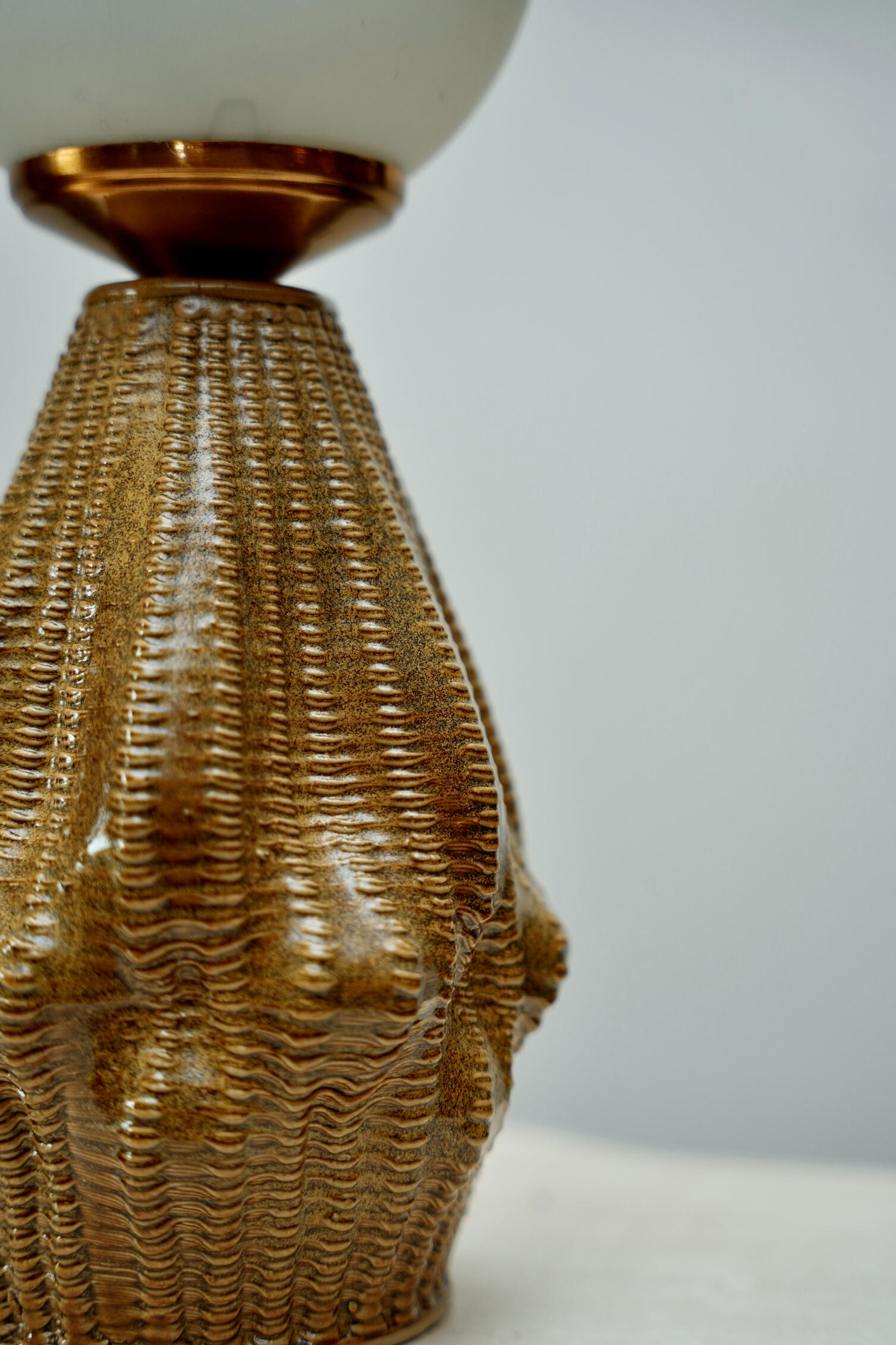
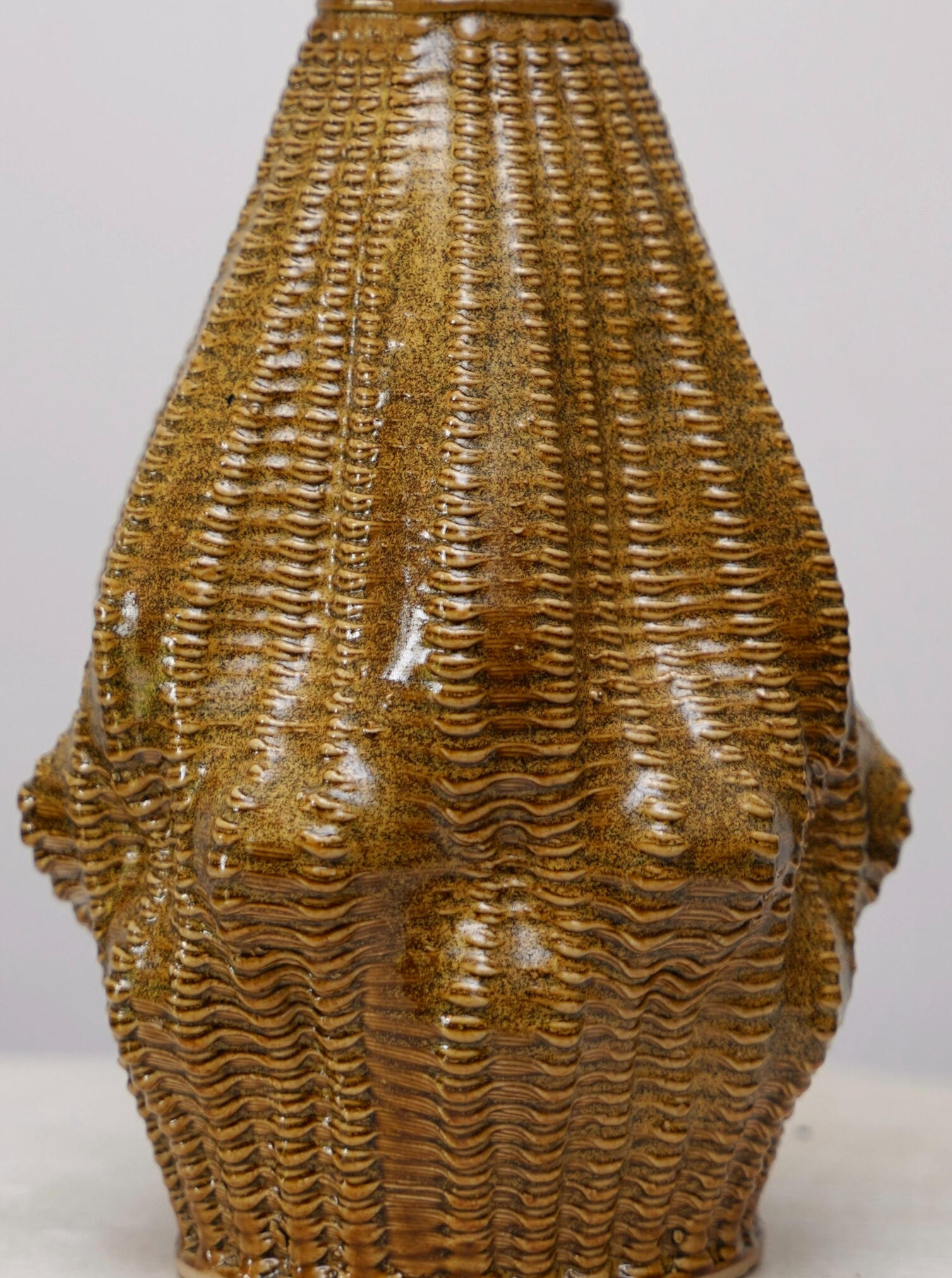
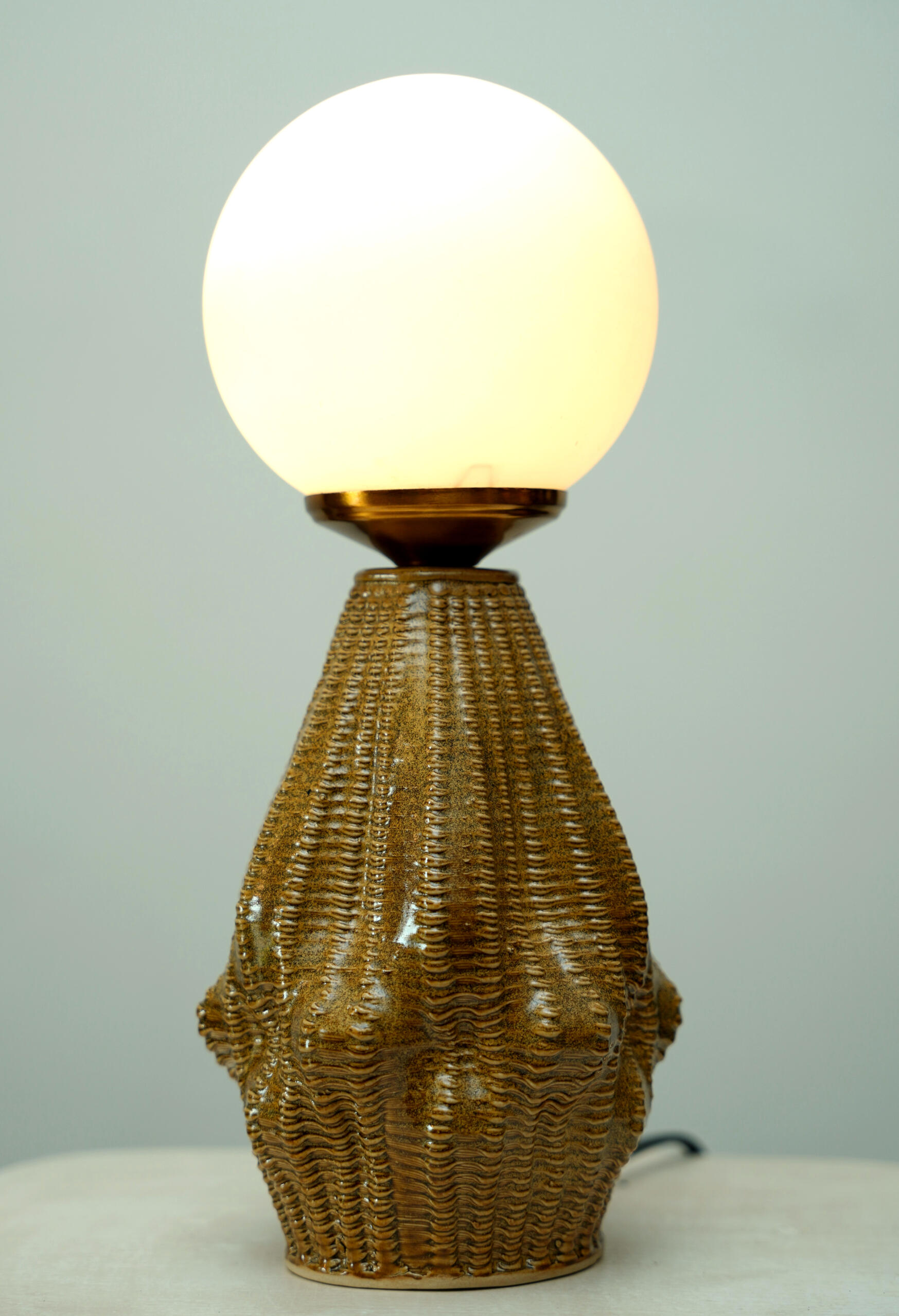
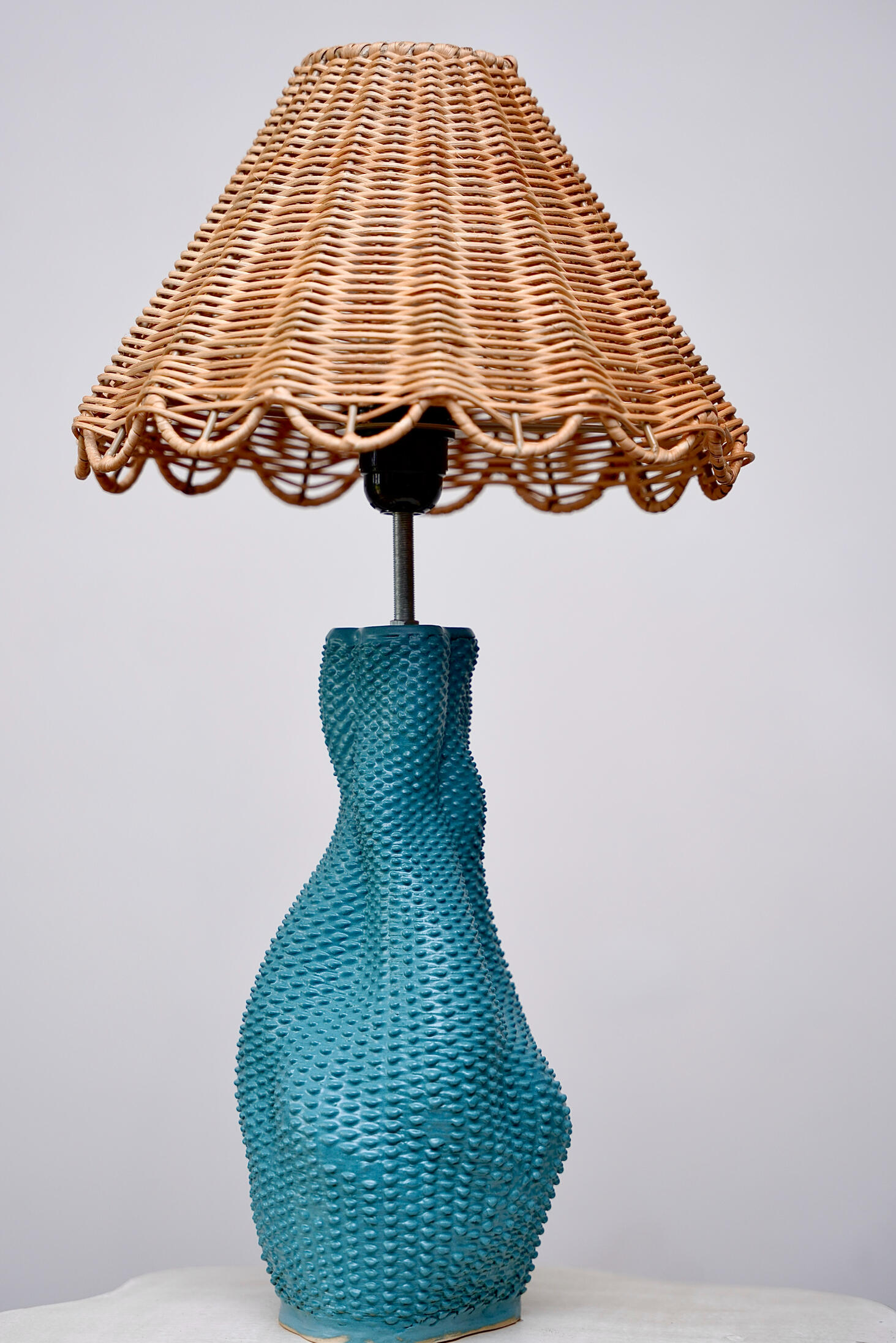
Droop IIThis ceramic table lamp explores the transformation of a simple drop into a continuous looping gesture. Its surface is created through repeated programmed toolpaths, building rhythmic layers of clay that wrap around the form and respond to its changing geometry. The textured structure captures the movement of the nozzle, while the glazed surface enhances the depth and variation of each individual loop. Organic bulges and subtle irregularities emerge as the clay responds to gravity, material flow, and the printing process. Part of the Droops Collection, the piece explores how digital fabrication can translate a moment of movement into texture, form, and material expression.
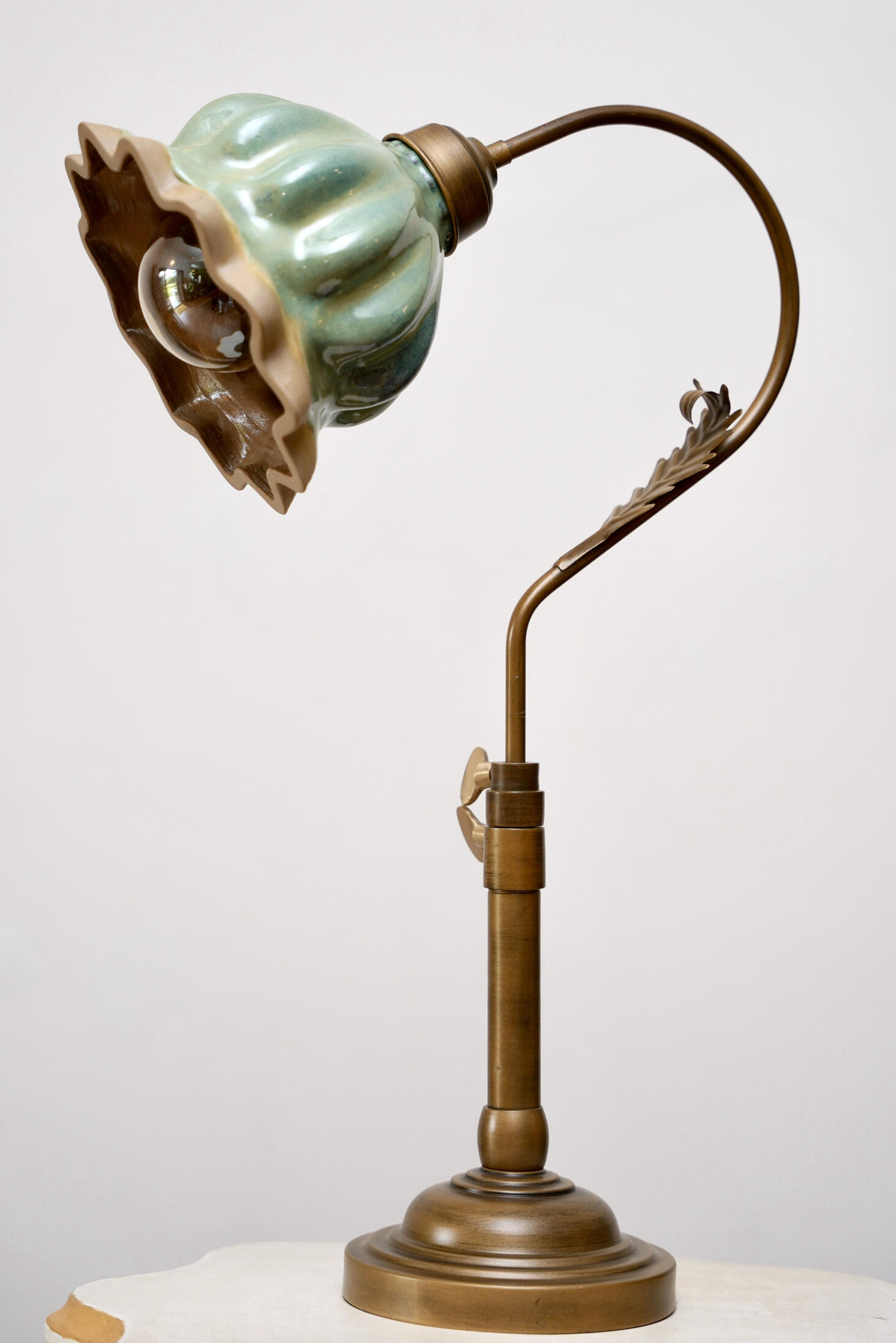
Bloom IThis sculptural ceramic lamp draws inspiration from the organic rhythm of a blooming flower. Its undulating ceramic shade opens like a petal in motion, revealing the light source within and creating a soft interplay of form, shadow, and illumination. The contrast between the glazed green exterior and warm earthen interior accentuates its floral character, while the handcrafted metal stem and sculptural detailing extend the language of the bloom into the structure. Part of the Bloom Collection, the piece explores how natural growth patterns can be translated into functional objects, bringing together ceramics, light, and botanical forms in a contemporary interpretation of a flower in bloom.
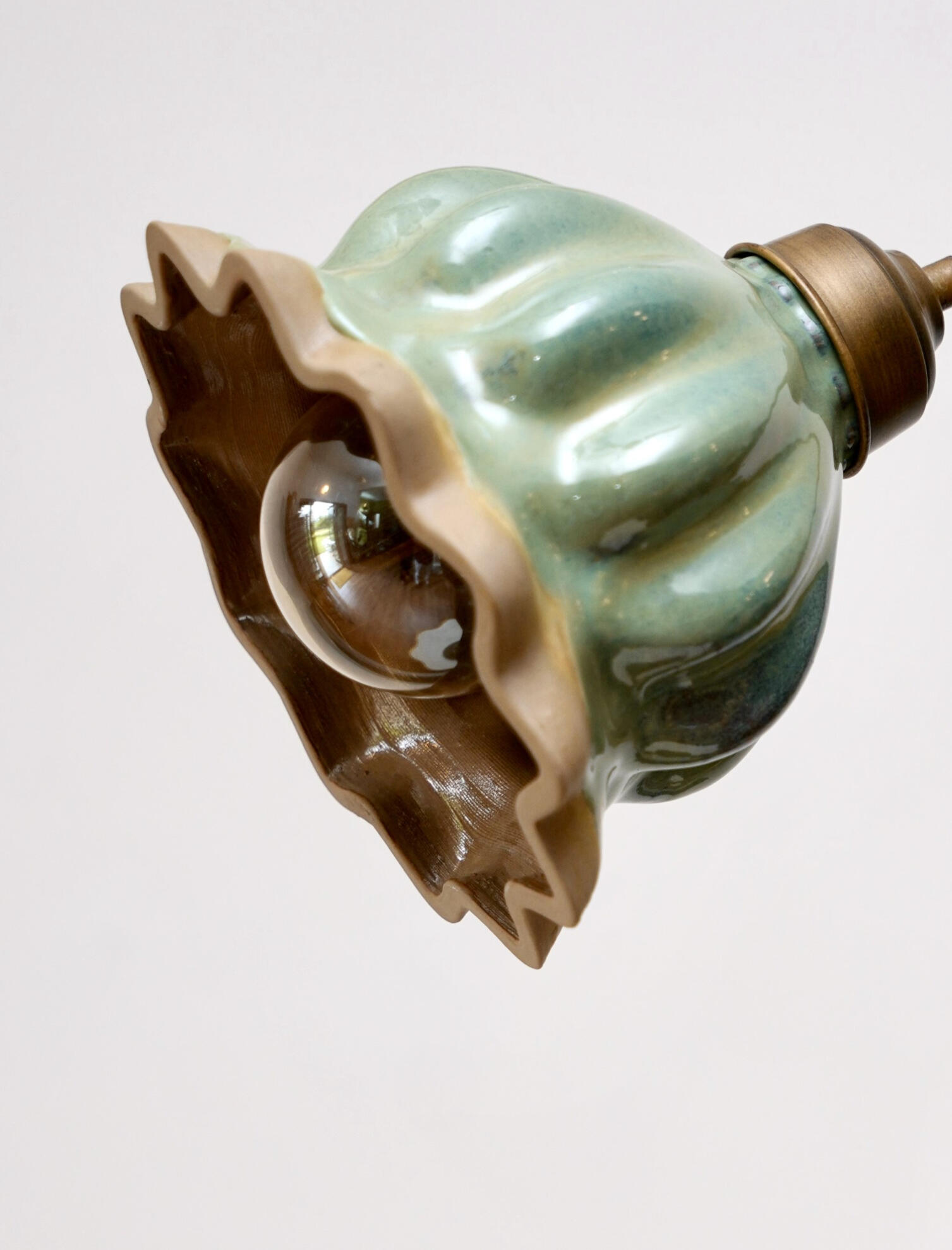
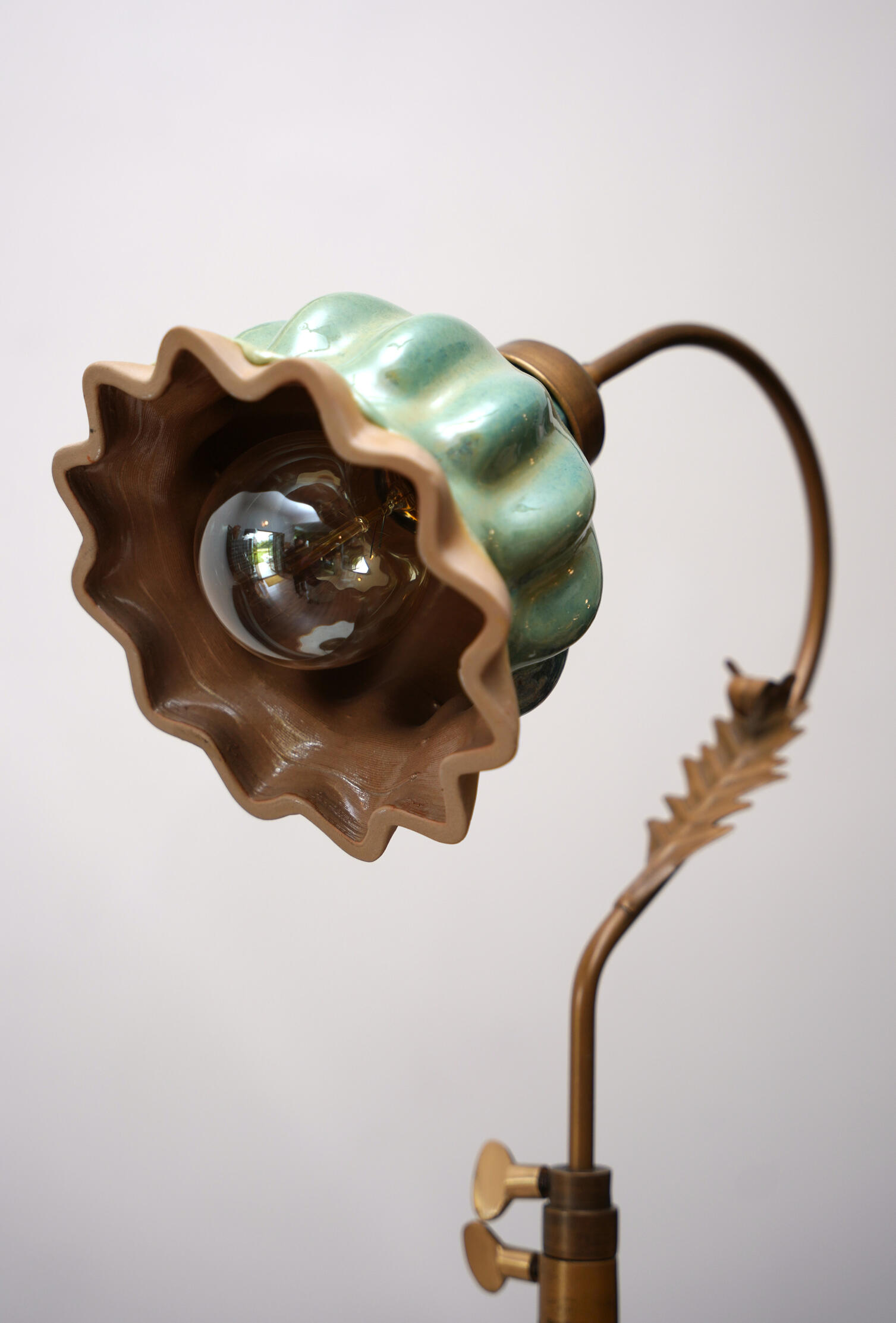
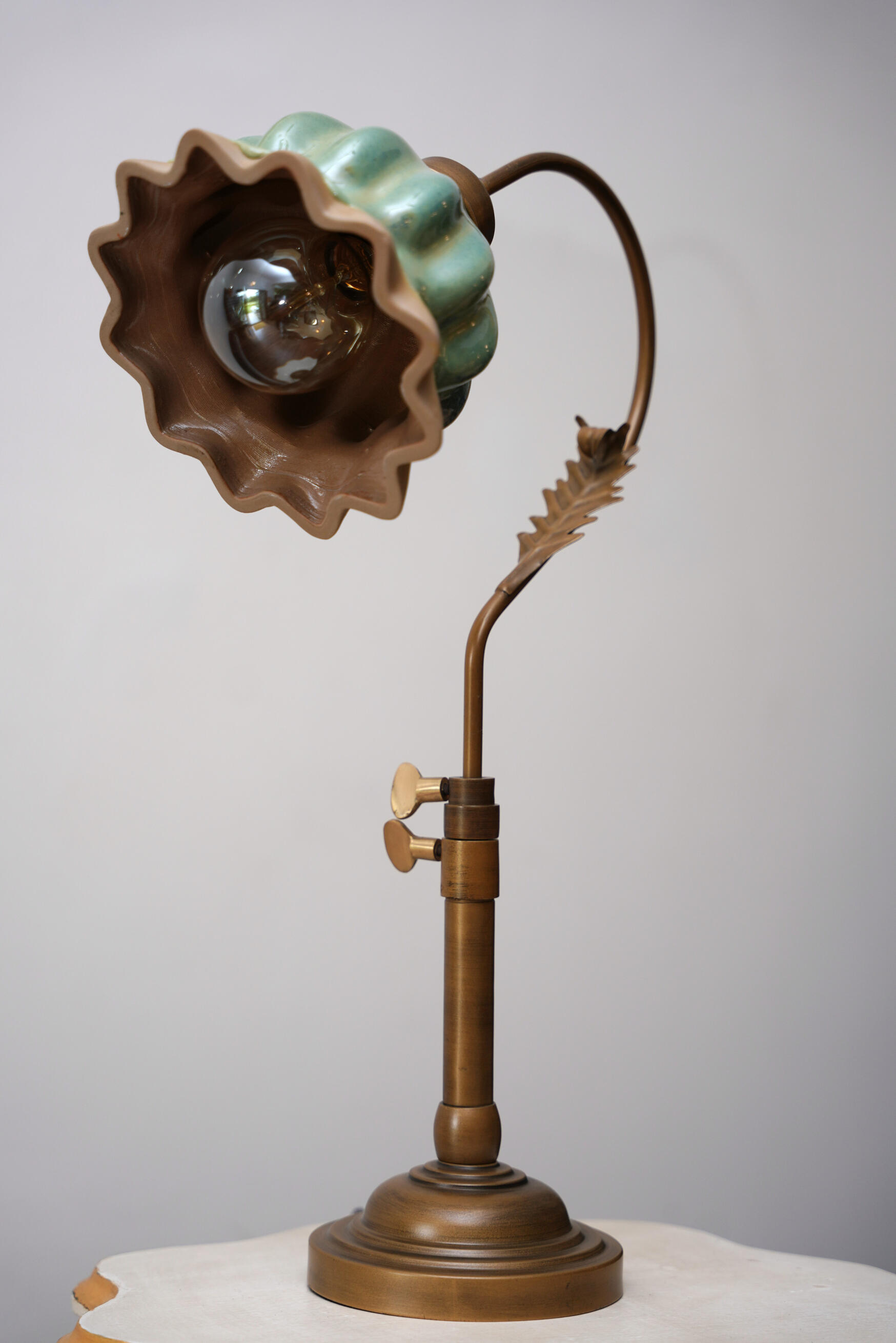
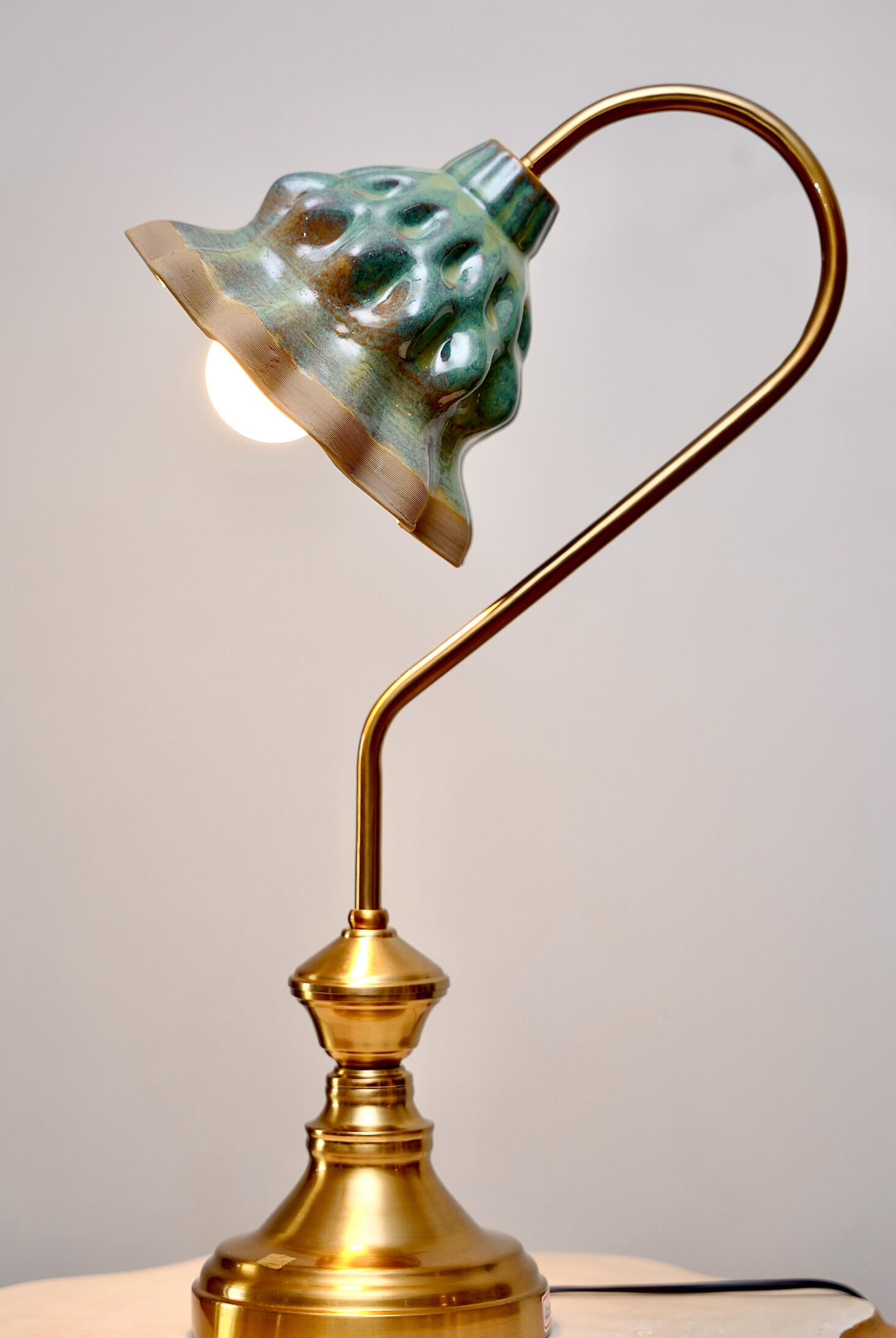
Bloom IIThis sculptural ceramic lamp draws inspiration from the organic rhythm of a blooming flower. Its undulating ceramic shade opens like a petal in motion, revealing the light source within and creating a soft interplay of form, shadow, and illumination. The contrast between the glazed green exterior and warm earthen interior accentuates its floral character, while the handcrafted metal stem and sculptural detailing extend the language of the bloom into the structure. Part of the Bloom Collection, the piece explores how natural growth patterns can be translated into functional objects, bringing together ceramics, light, and botanical forms in a contemporary interpretation of a flower in bloom.
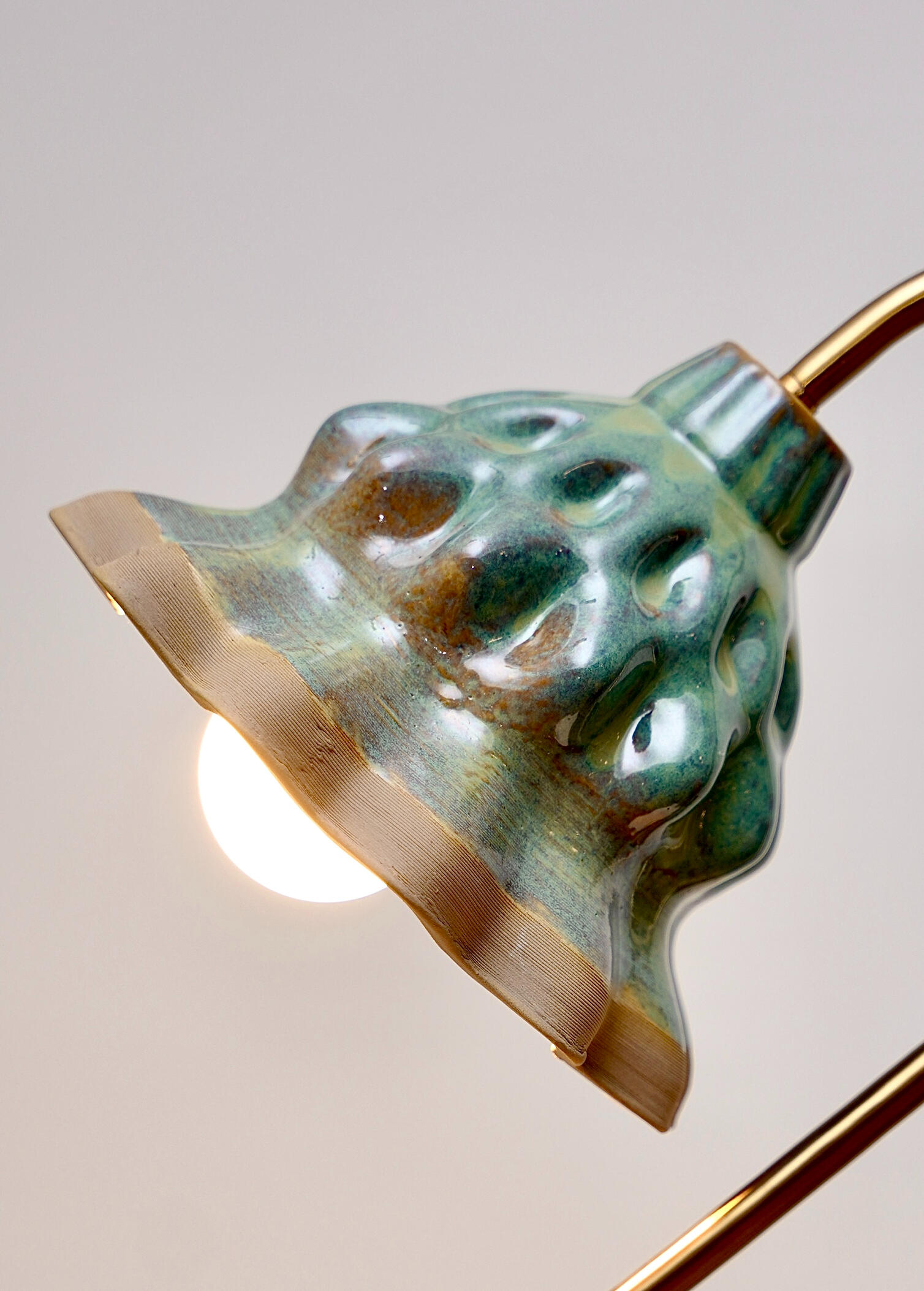
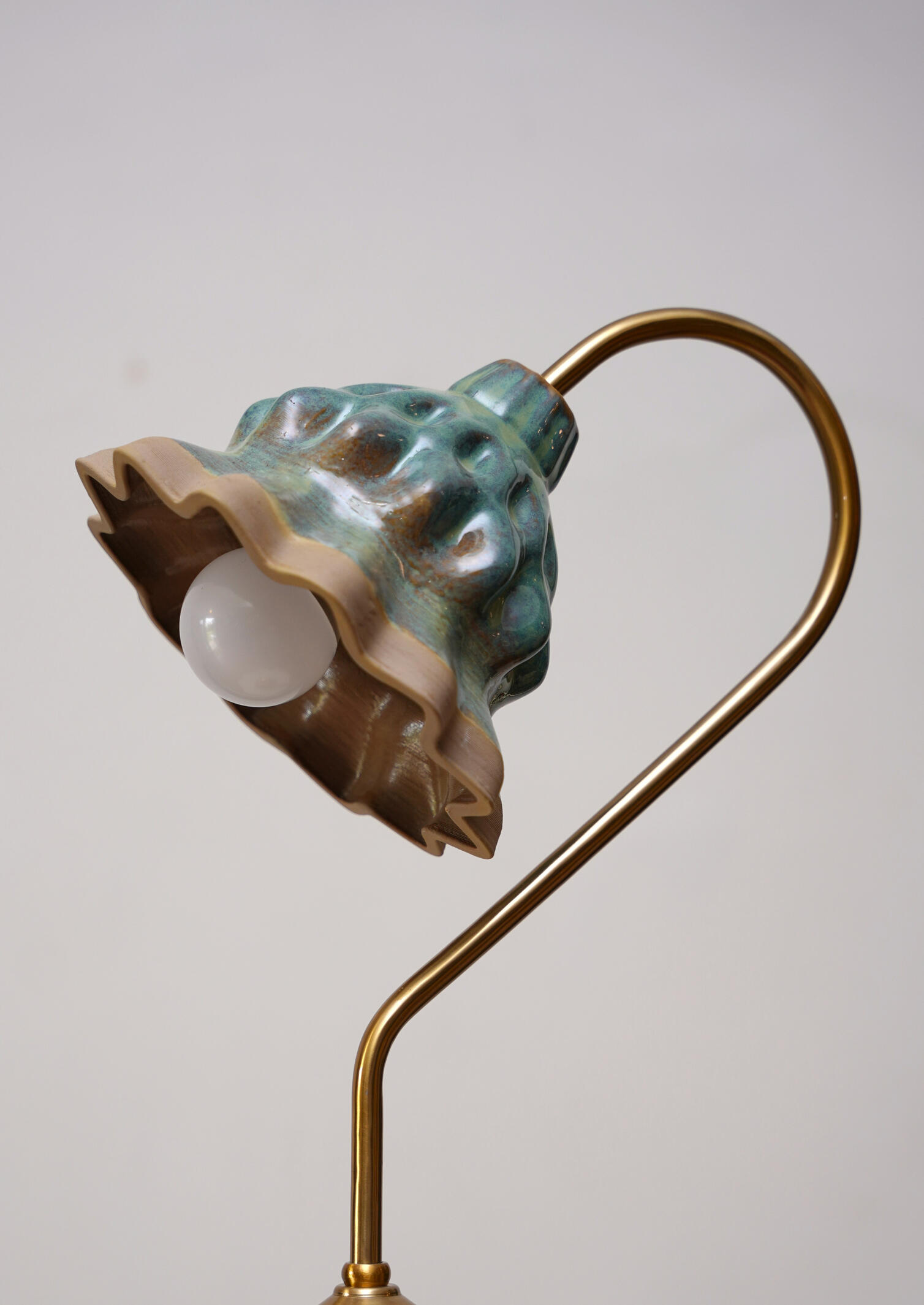
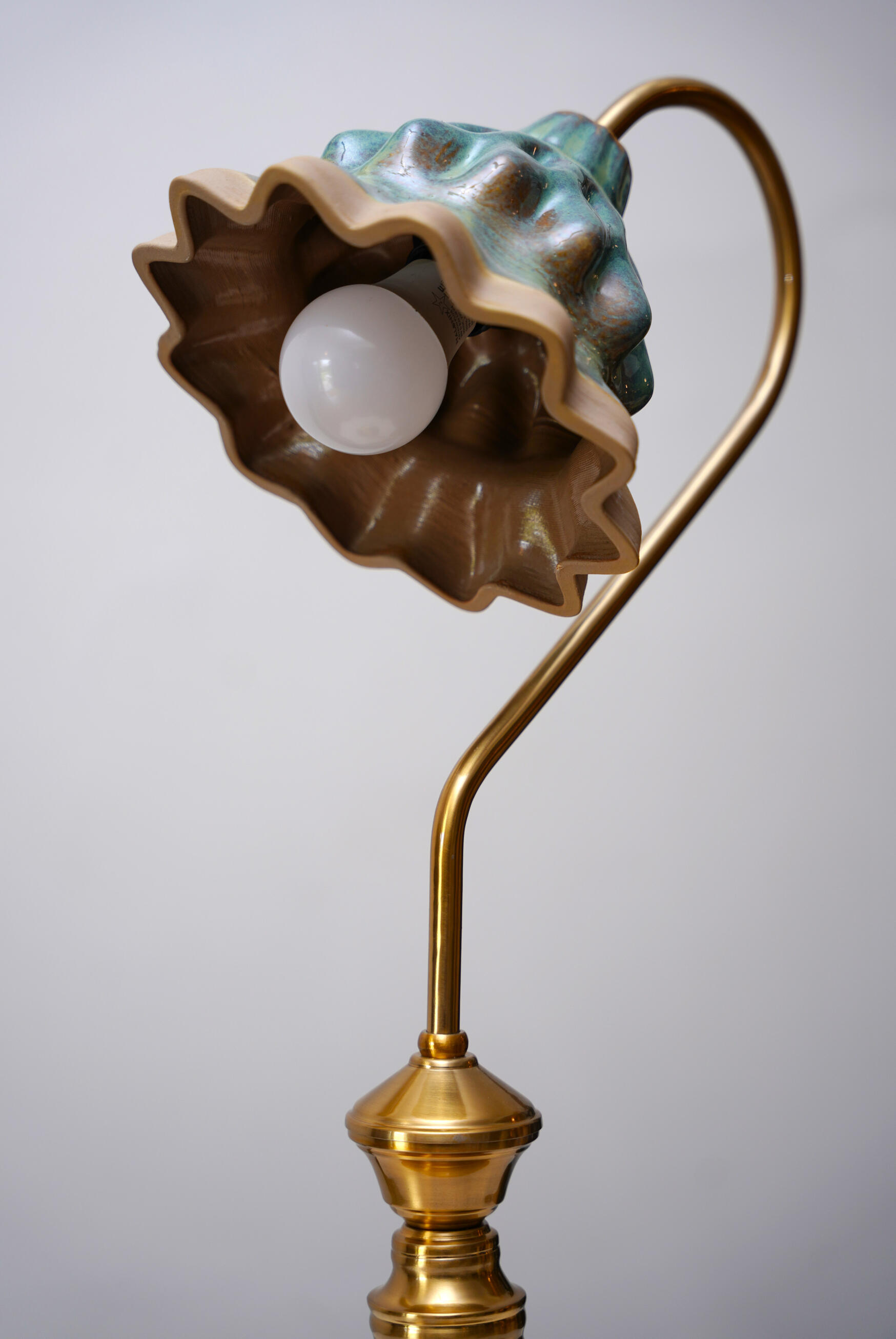
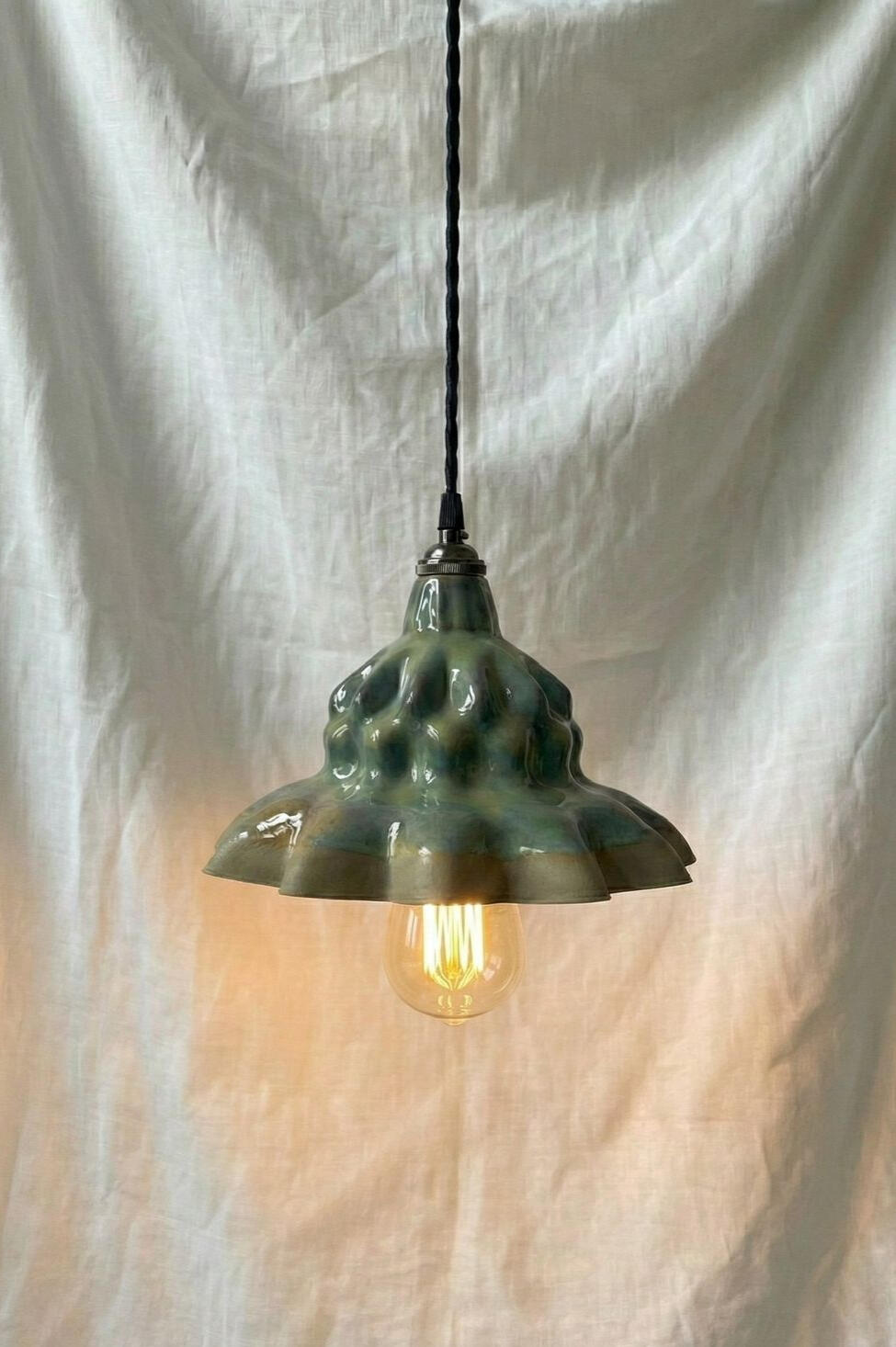
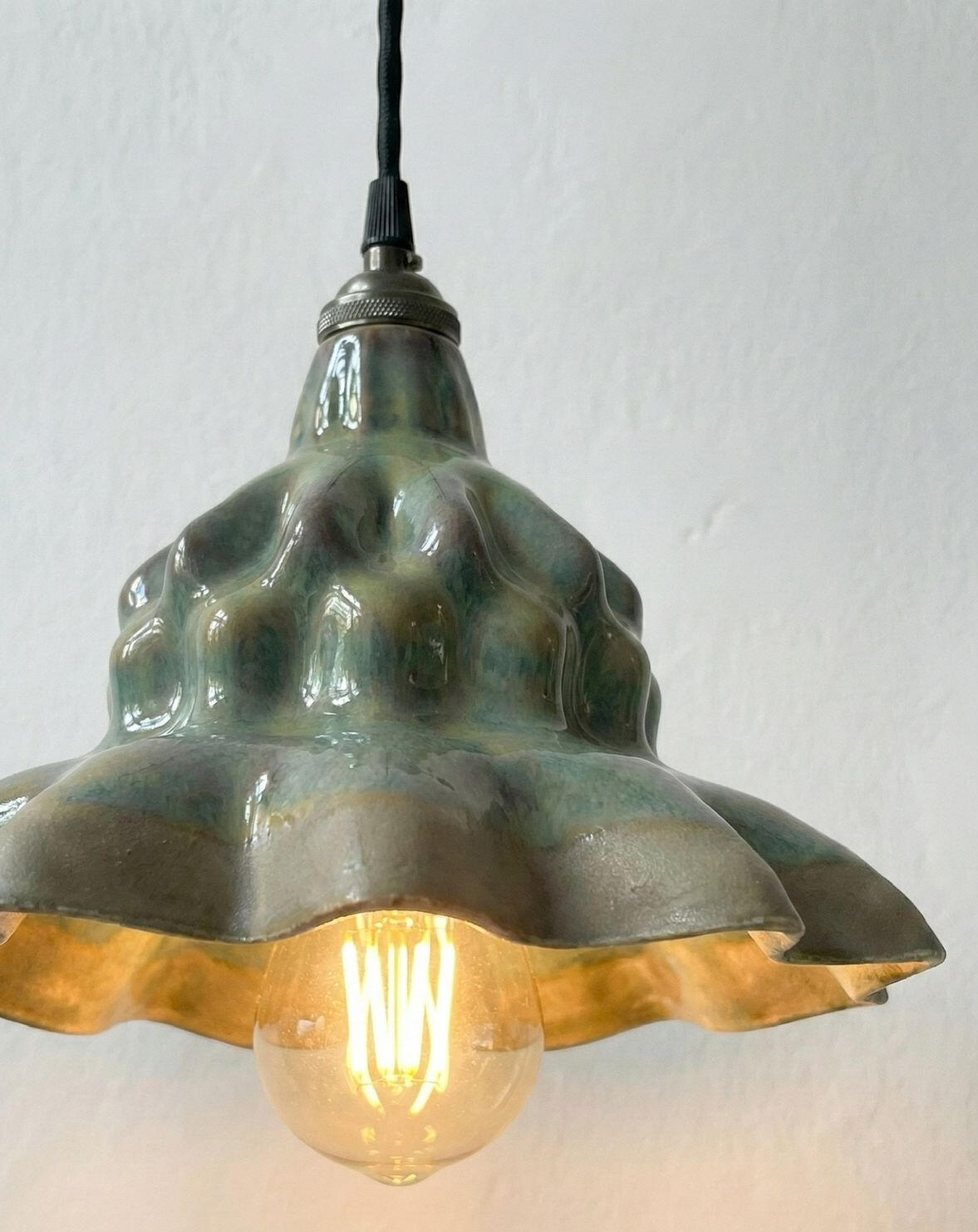
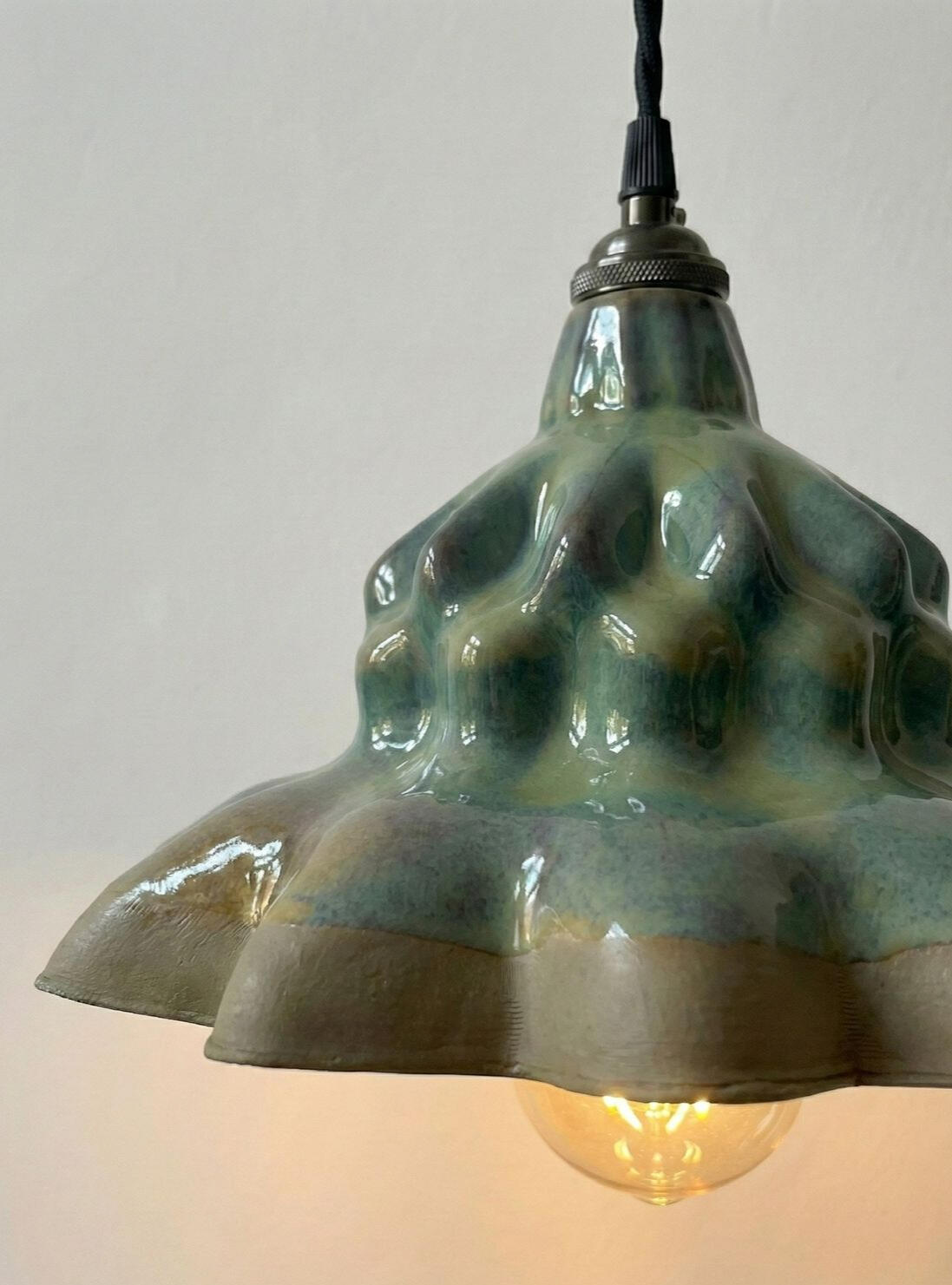
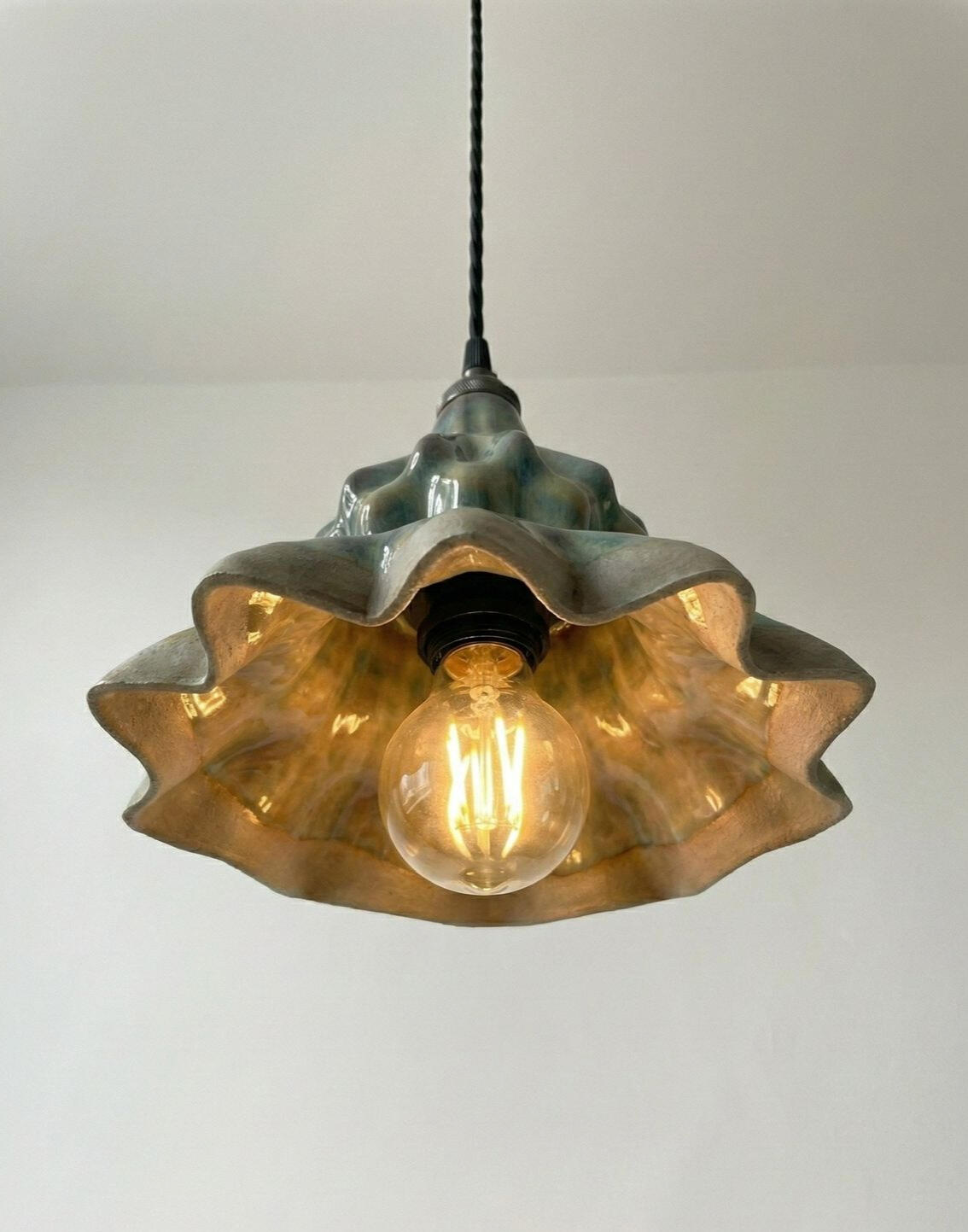
Bloom IIIThis ceramic pendant light draws inspiration from the organic rhythm of a blooming flower. Its undulating ceramic shade opens like a petal in motion, revealing the light source within and creating a soft interplay of form, shadow, and illumination. The contrast between the glazed green exterior and warm earthen interior accentuates its floral character, while the handcrafted metal stem and sculptural detailing extend the language of the bloom into the structure. Part of the Bloom Collection, the piece explores how natural growth patterns can be translated into functional objects, bringing together ceramics, light, and botanical forms in a contemporary interpretation of a flower in bloom.
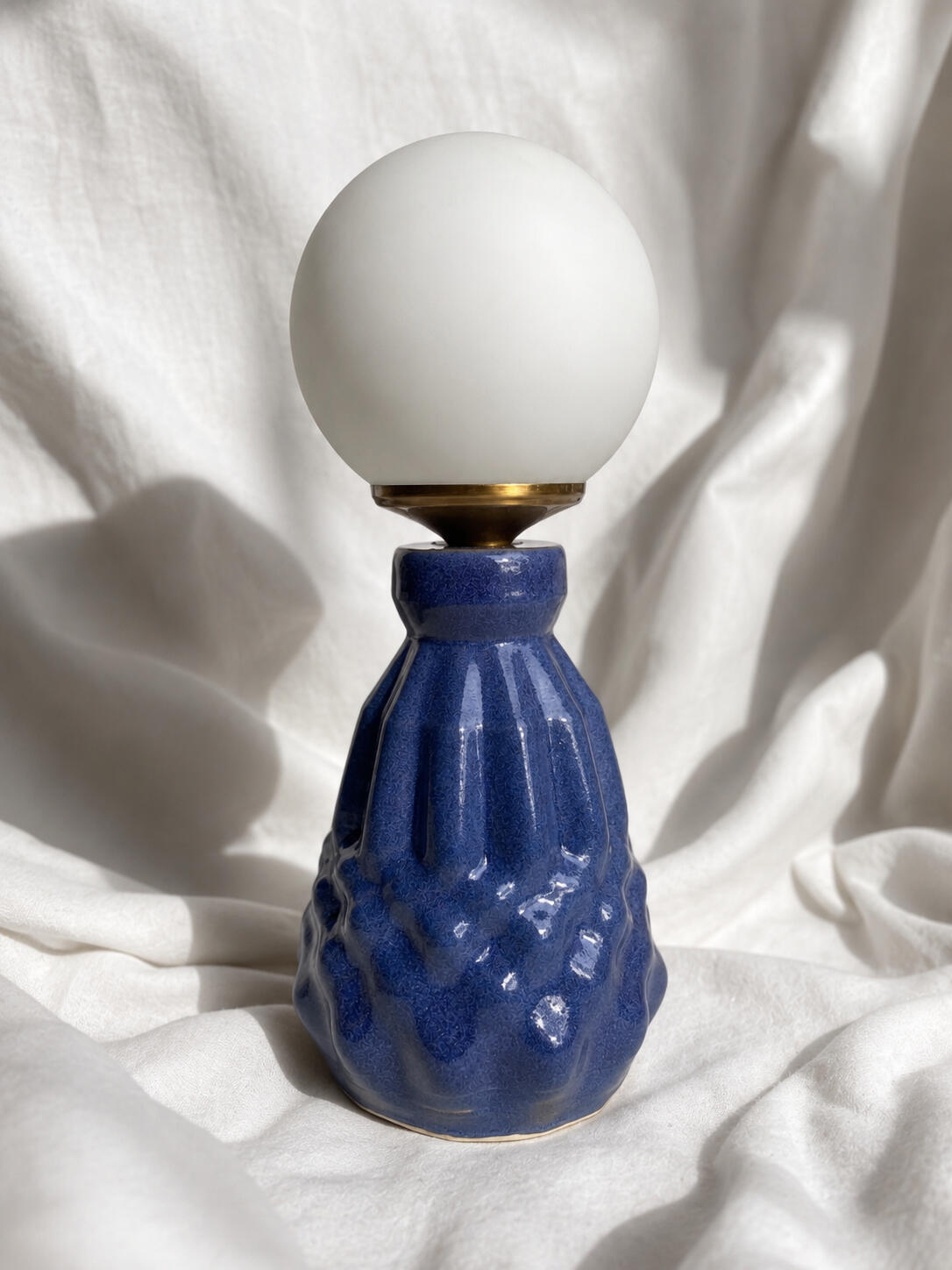
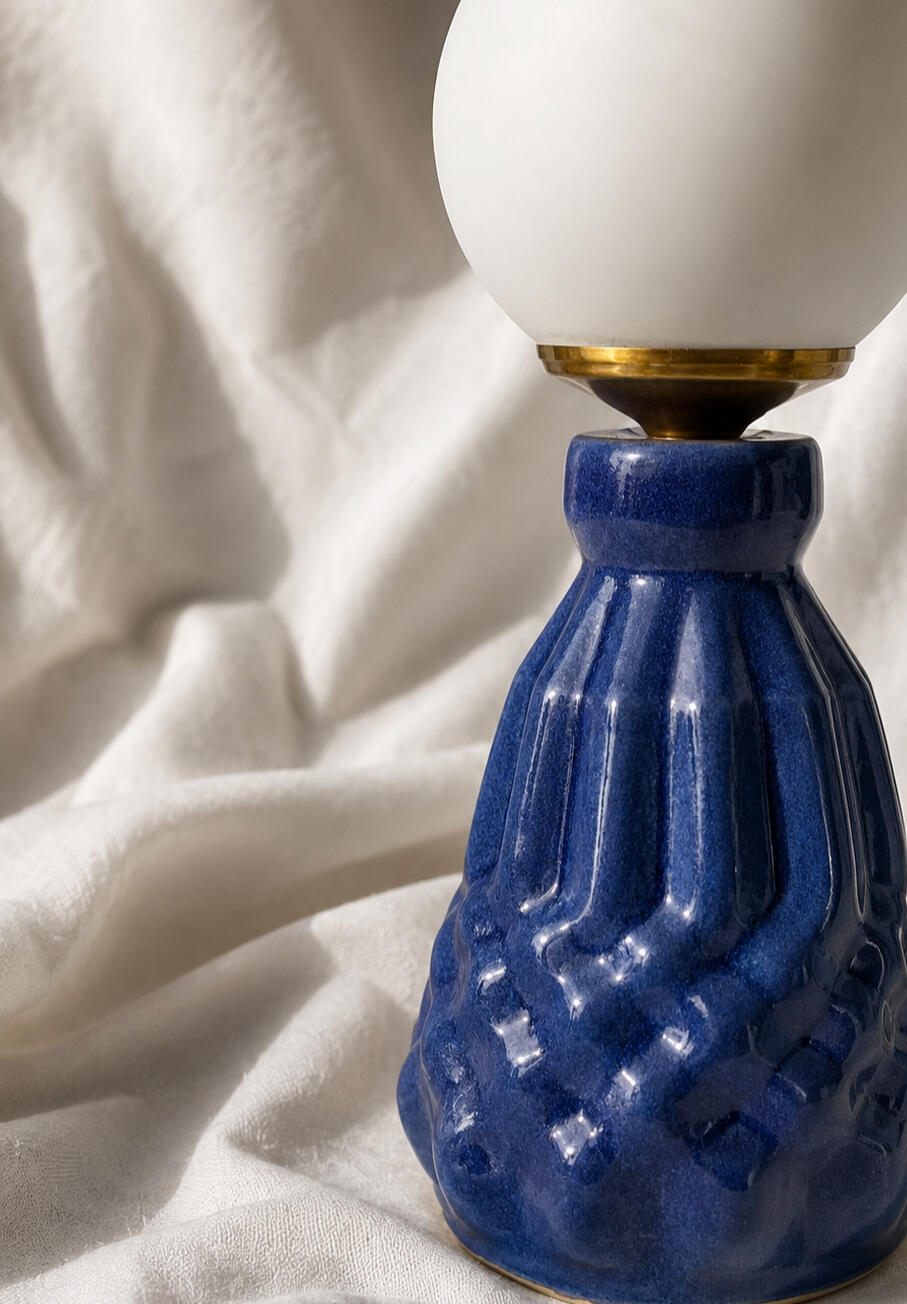
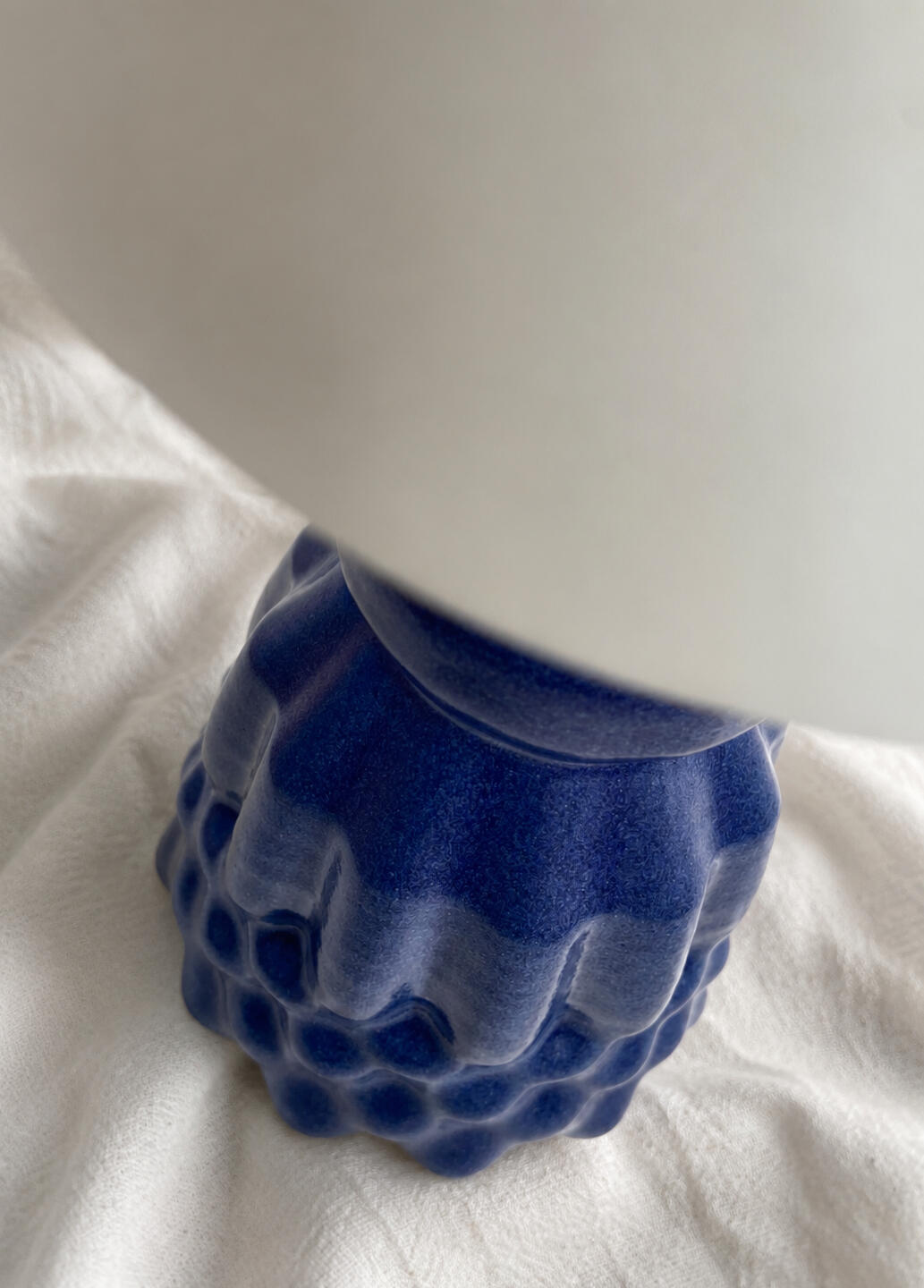
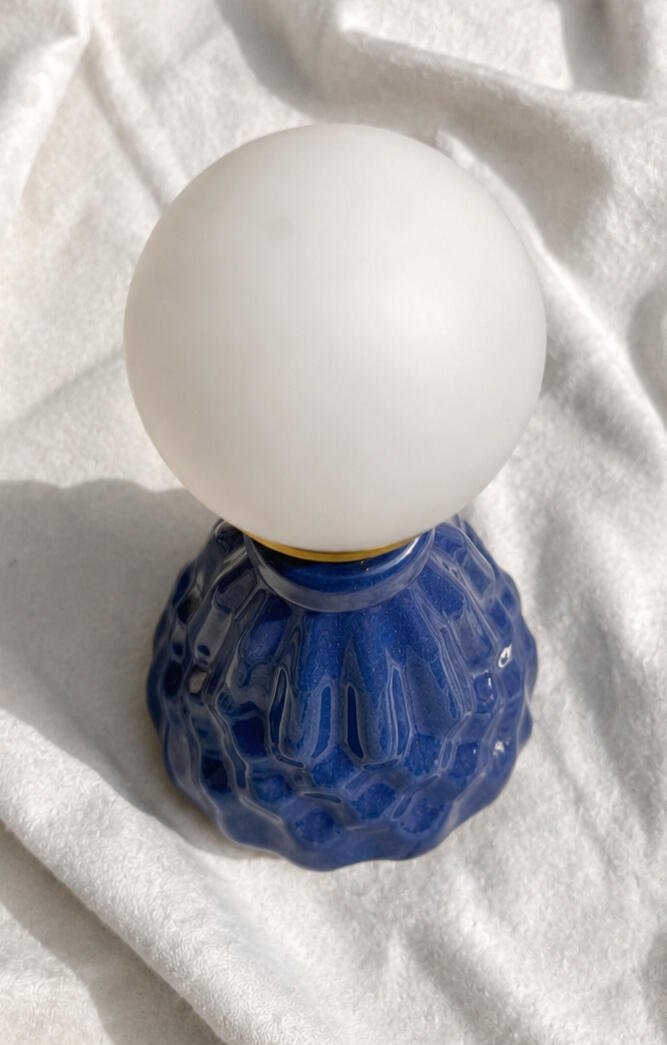
NovaNova explores the meeting point between light, form, and material. A sculptural ceramic base supports a softly glowing spherical volume, creating a contrast between the solidity of clay and the ethereal quality of light.The body is shaped through procedural modelling, with faceted ribs and organic reliefs that move gradually across its surface. Finished in a deep cobalt blue glaze, the ceramic catches light across its changing contours, revealing subtle variations in texture and depth.
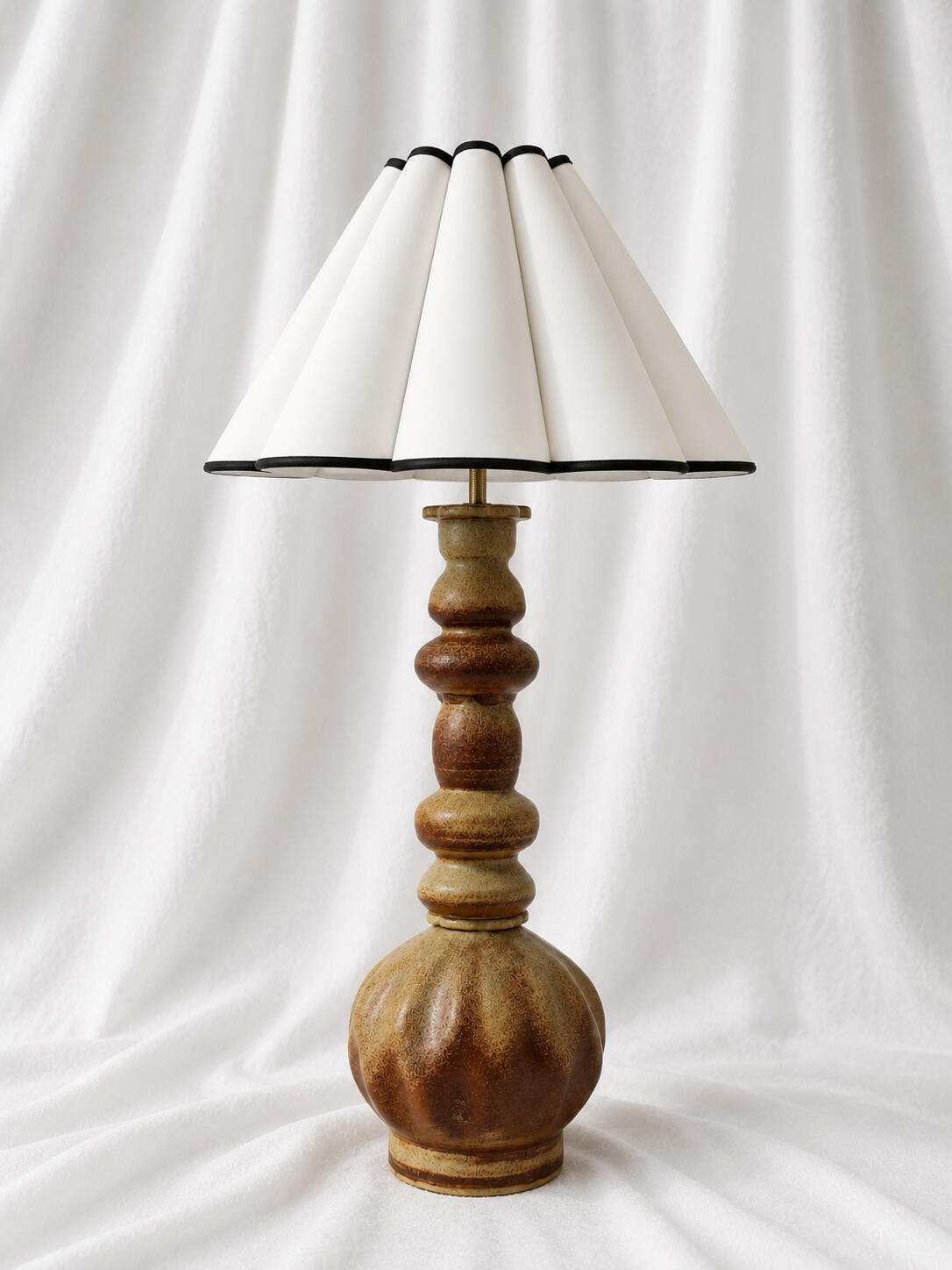
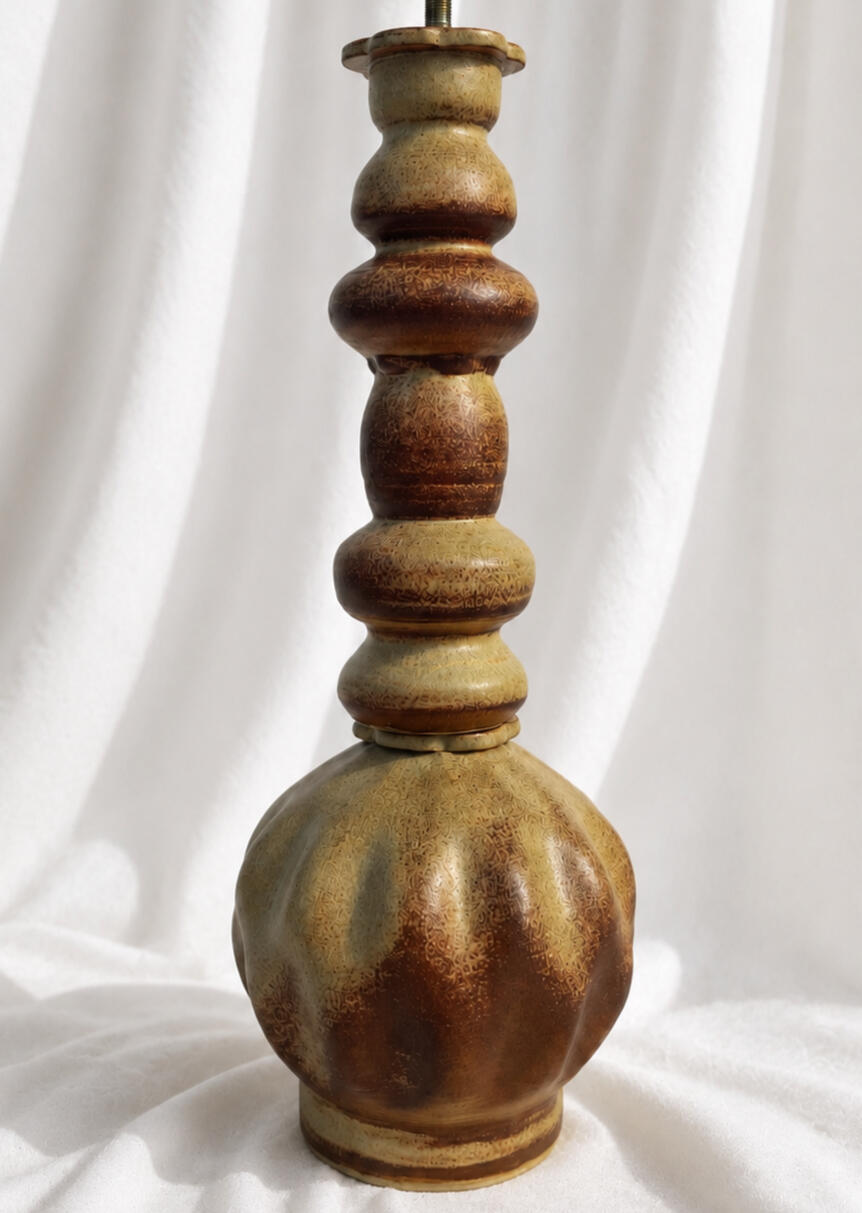
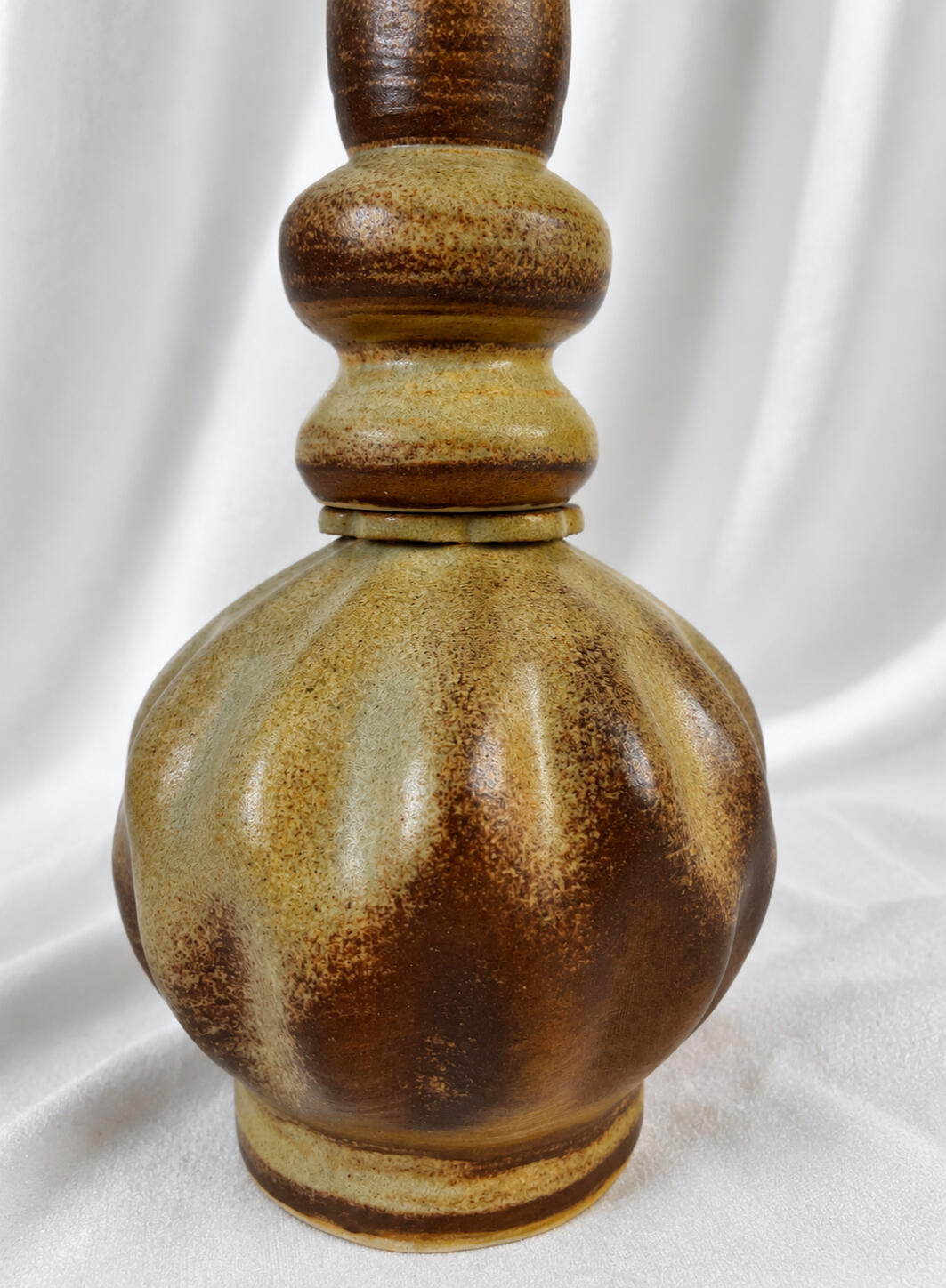
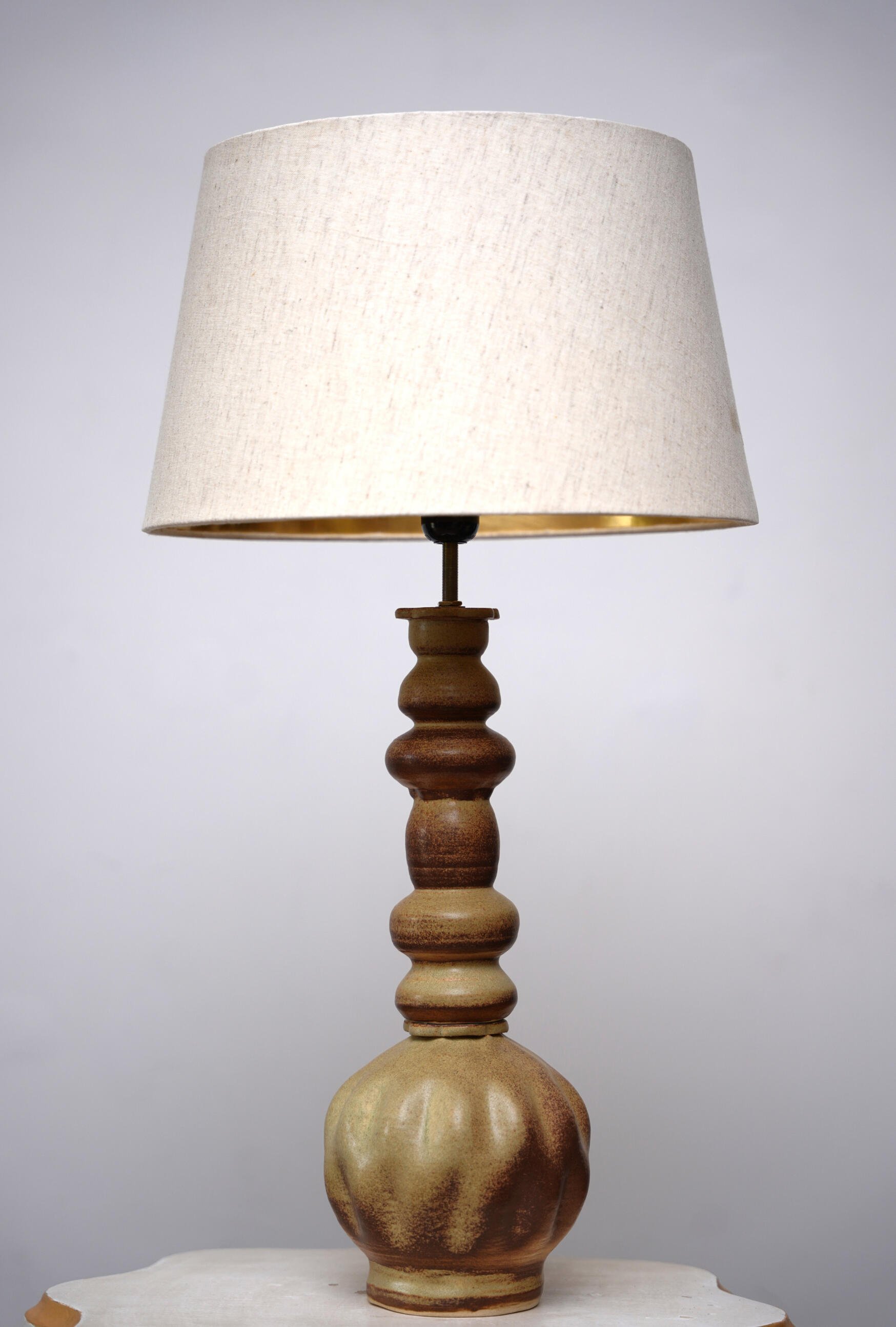
AmberAmber explores the warmth and tactility of ceramic through a form that feels both familiar and otherworldly. The lamp’s body is composed of rounded, stacked volumes, creating a continuous rhythm of swelling and narrowing forms. Each section is shaped through additive fabrication, allowing the geometry to evolve as it rises from the base. The earthy amber glaze settles into the contours of the surface, revealing subtle shifts in tone and texture that make every curve distinct.
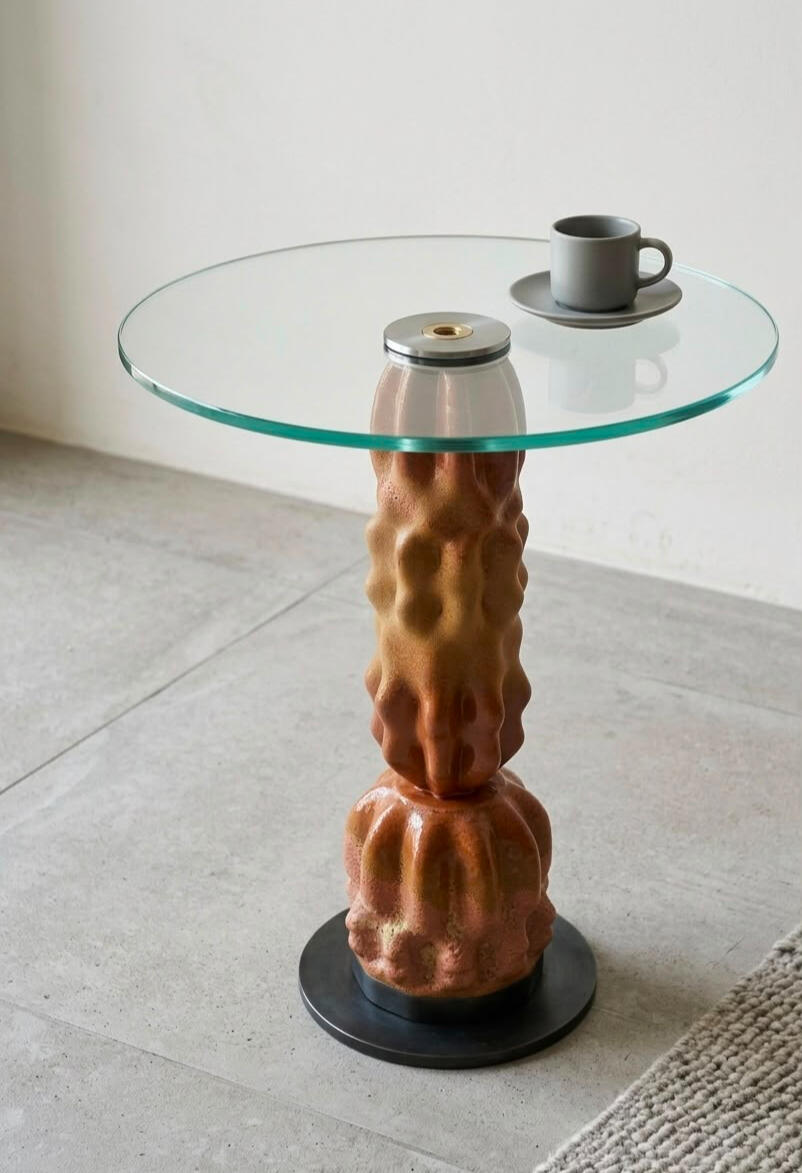
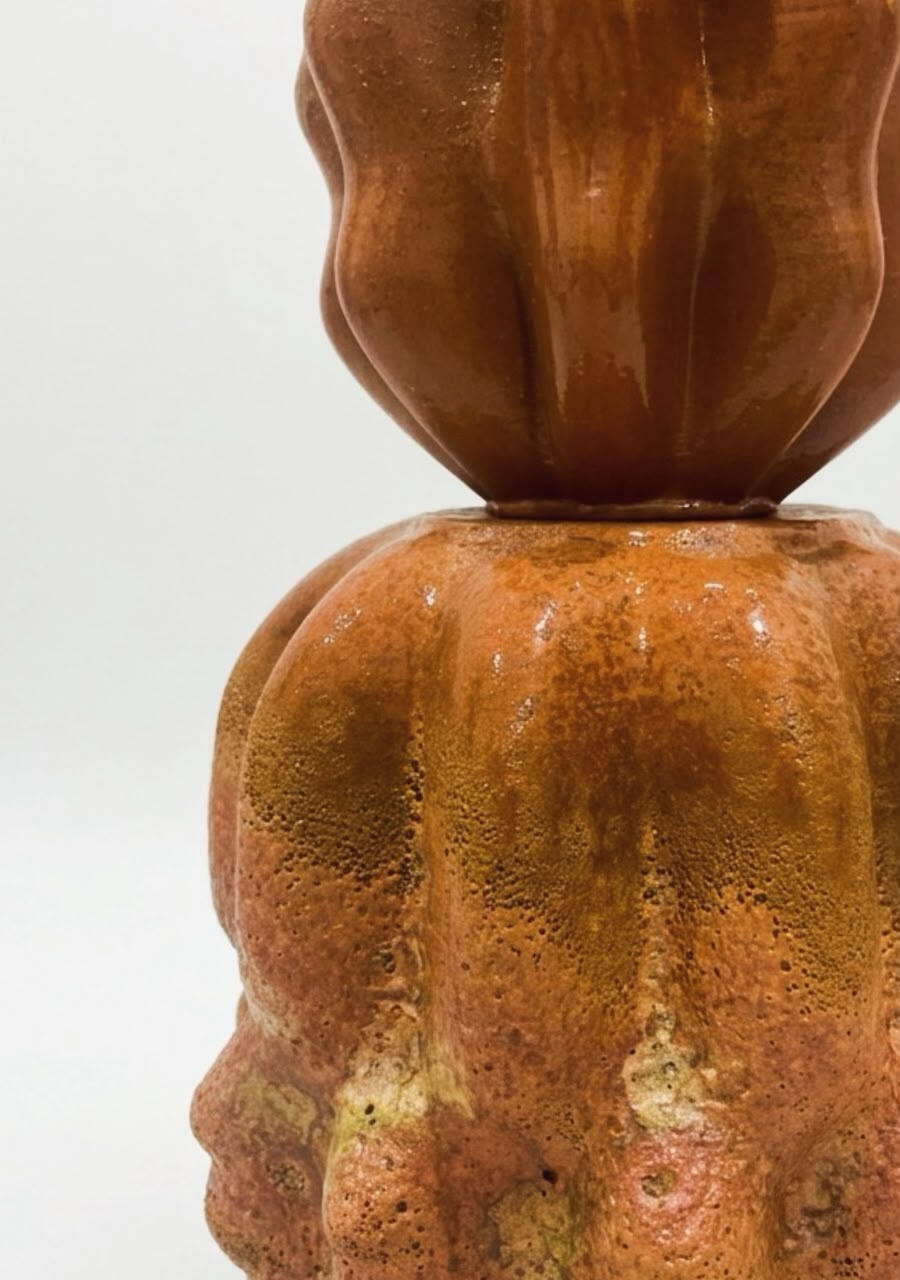
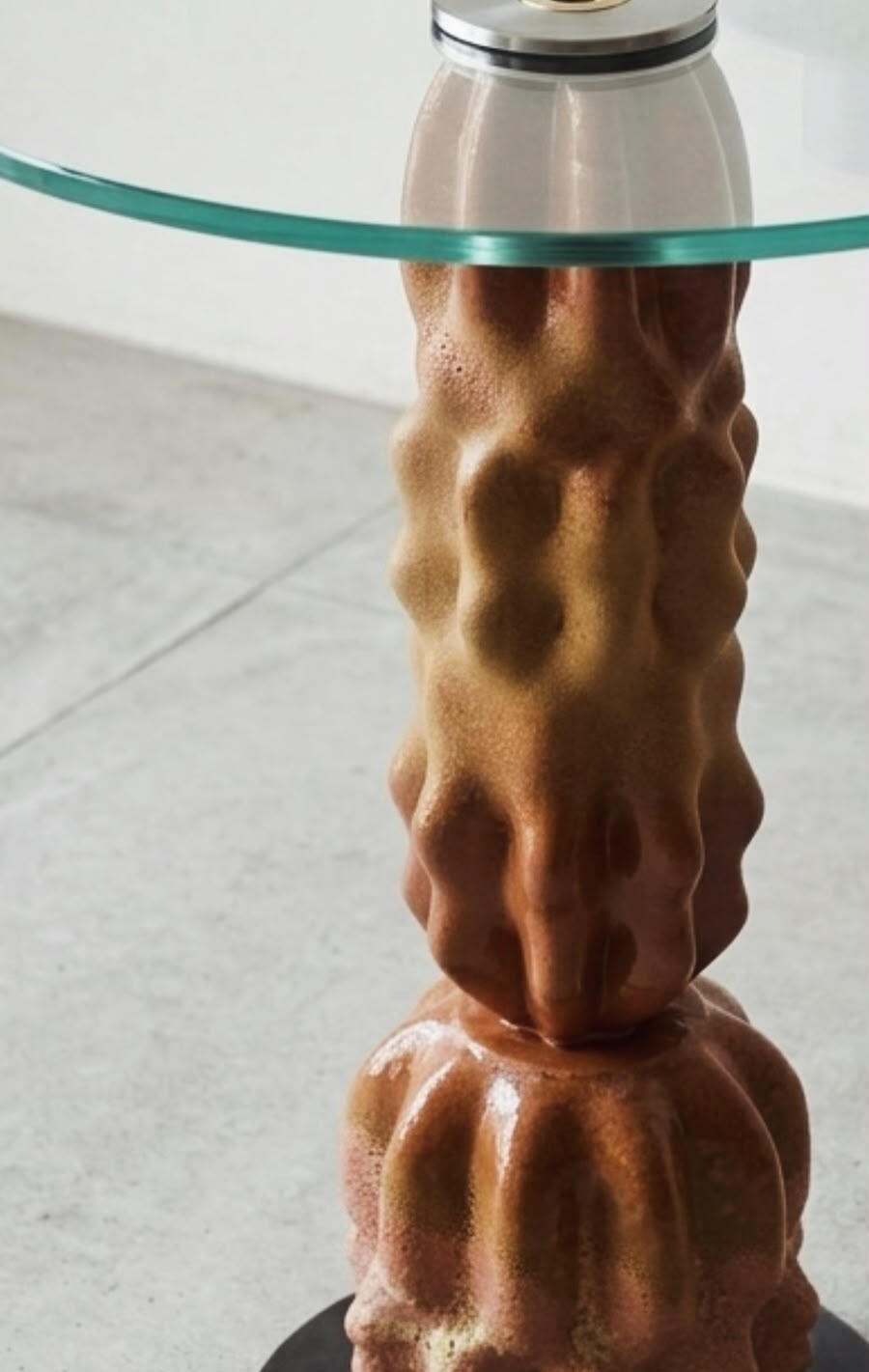
FossilFossil is a sculptural side table that draws from the forms and textures of objects shaped by time. Its layered ceramic base resembles an organic specimen—eroded, accumulated, and slowly transformed through geological processes. The irregular, bulbous surface captures the tension between growth and decay, while the warm earthy glaze enhances its fossil-like character. A simple circular glass top creates a deliberate contrast, allowing the sculptural ceramic form to remain the focal point while introducing functionality. The piece explores the relationship between natural formation and digital fabrication, translating the language of geological time into a contemporary object for everyday use.
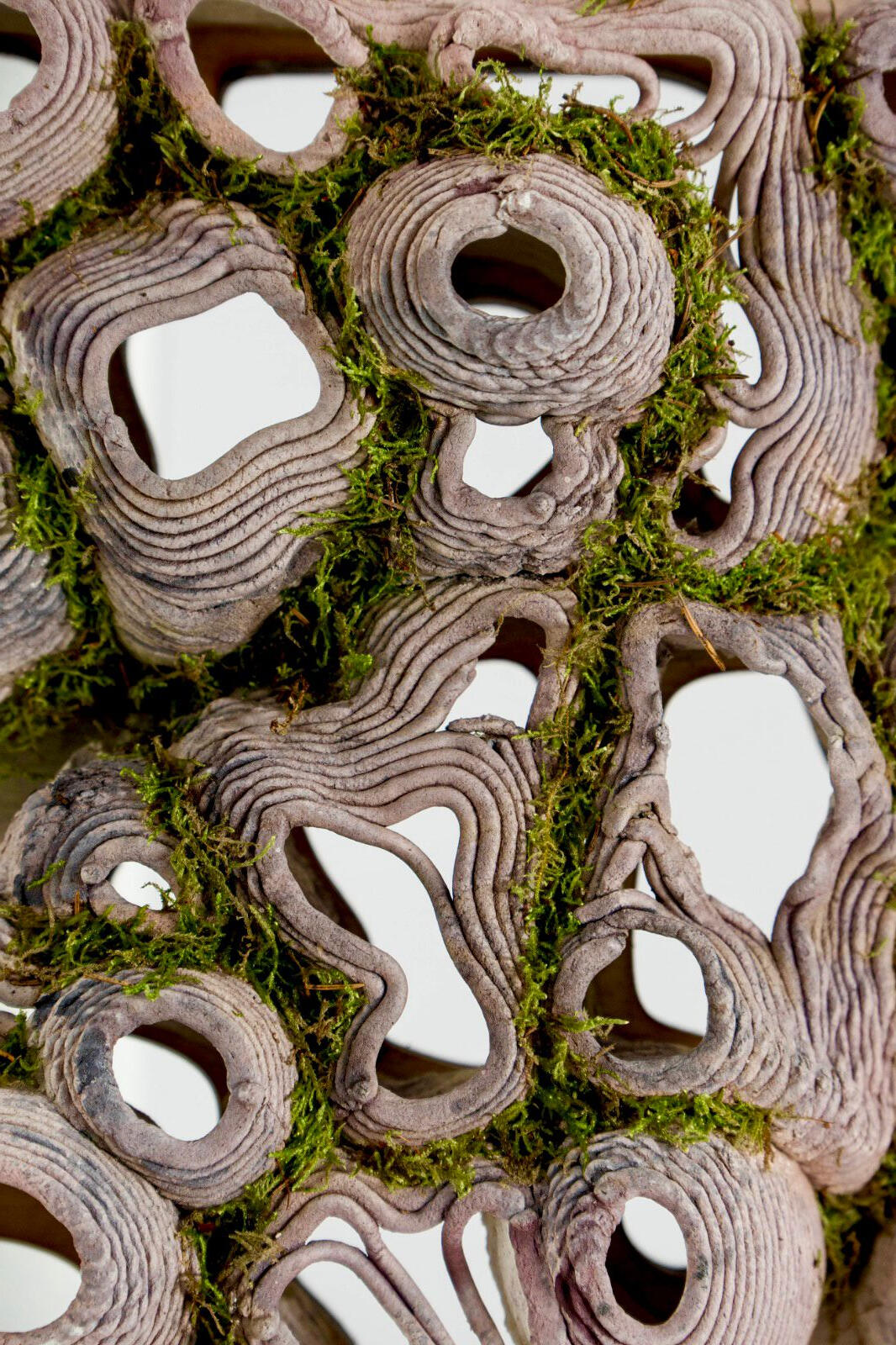
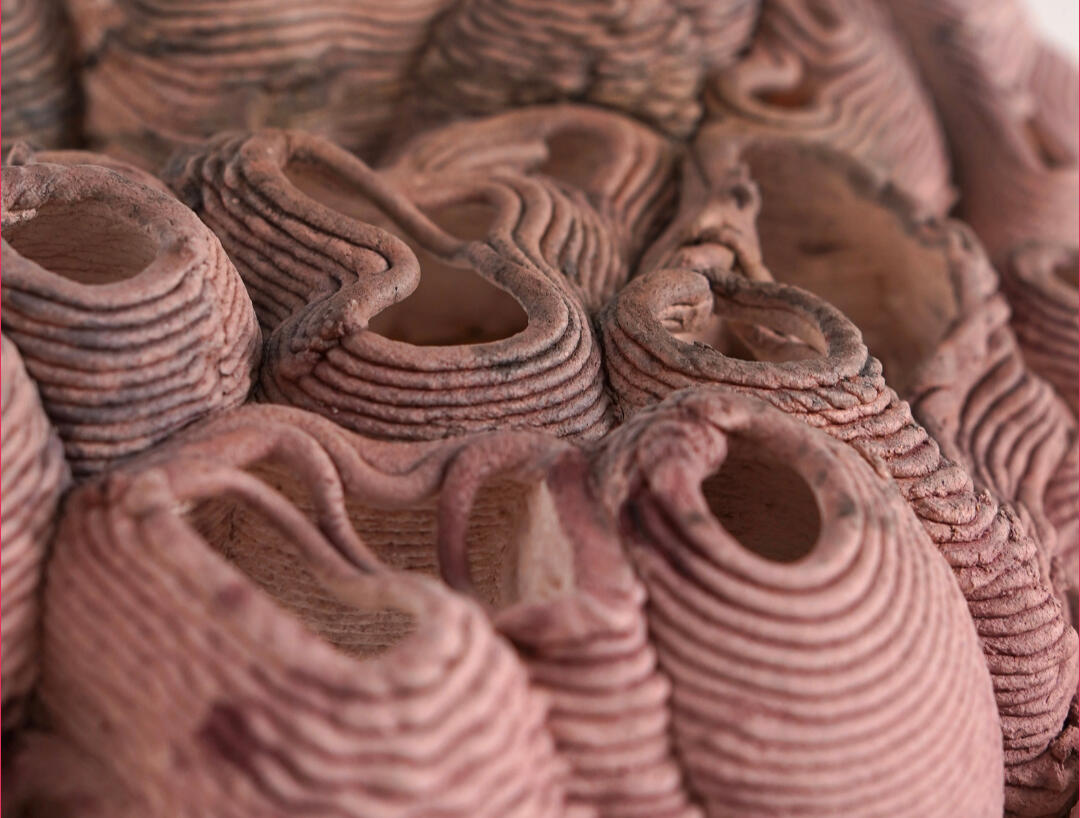
ProbiogenesisProBioGenesis explores inorganic-organic structures embedding the bacteria Streptomyces coelicolor within functionally graded porous bagasse ceramic for a bio-receptive rebirth of architecture.The project develops a manifesto for successful greening of cities and mitigating the heat islands effect along three crucial principles for producing resilient ecological communities in cities.First, a highly porous bio-based ceramic derived from the waste stream of the sugar industry was developed. This material is capable of high-water retention.Second, materials were merged with the beneficial microbe Streptomyces. This microorganism enhances photosynthetic organisms' immunity while shielding them from pathogens. Streptomyces reciprocally aides algae and mosses to serve as urban biofilters, removing pollutants like PMx and NOx, and absorbing CO2.Third, 3D printed gradient material with different porosities fulfils the needs of different species for moisture, light, and nutrient requirements.Overall, this project is a shift from mono-material and flat architecture, towards a more dynamic and diverse future, contributing to the ecosystem's overall health.
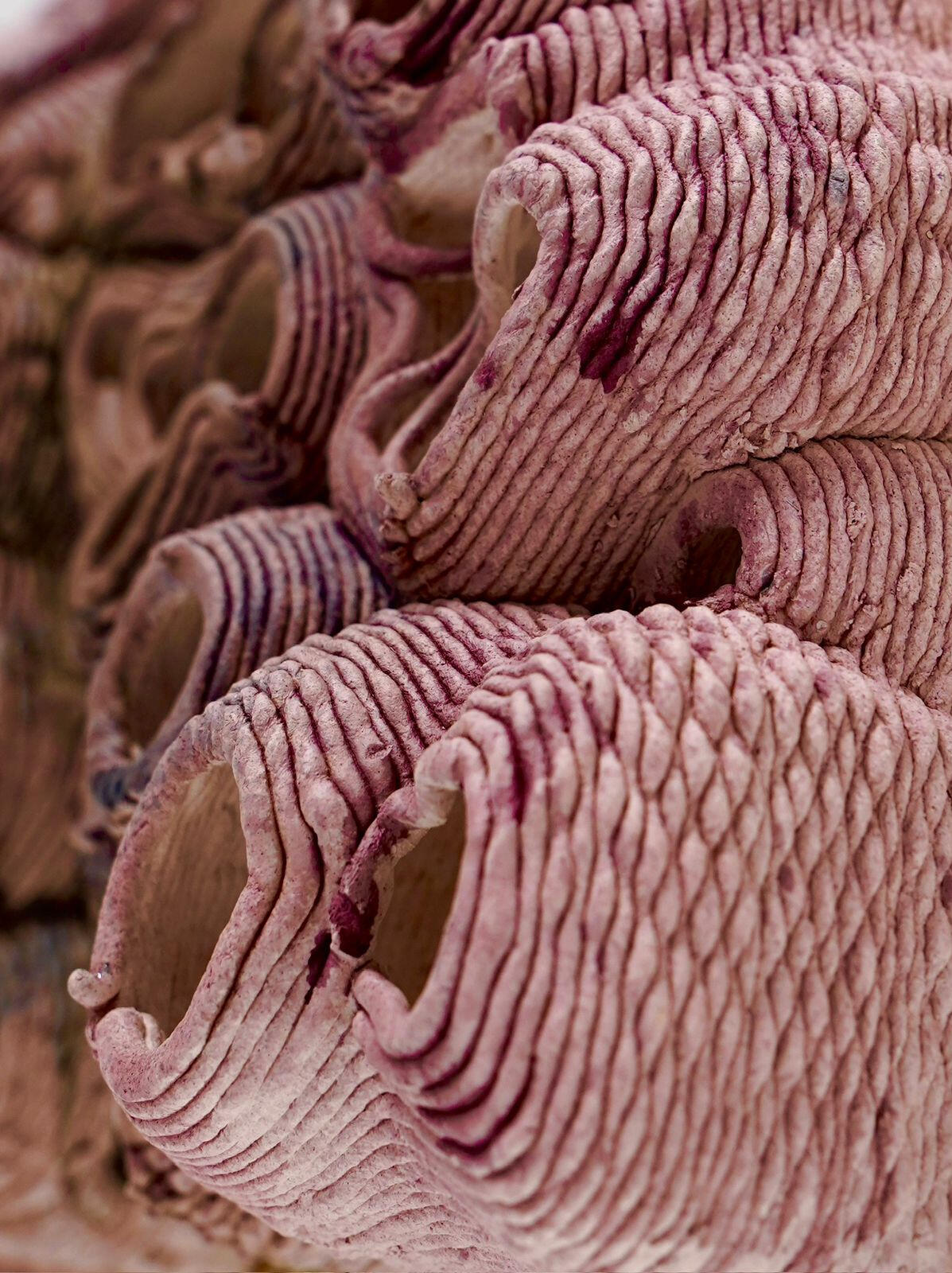
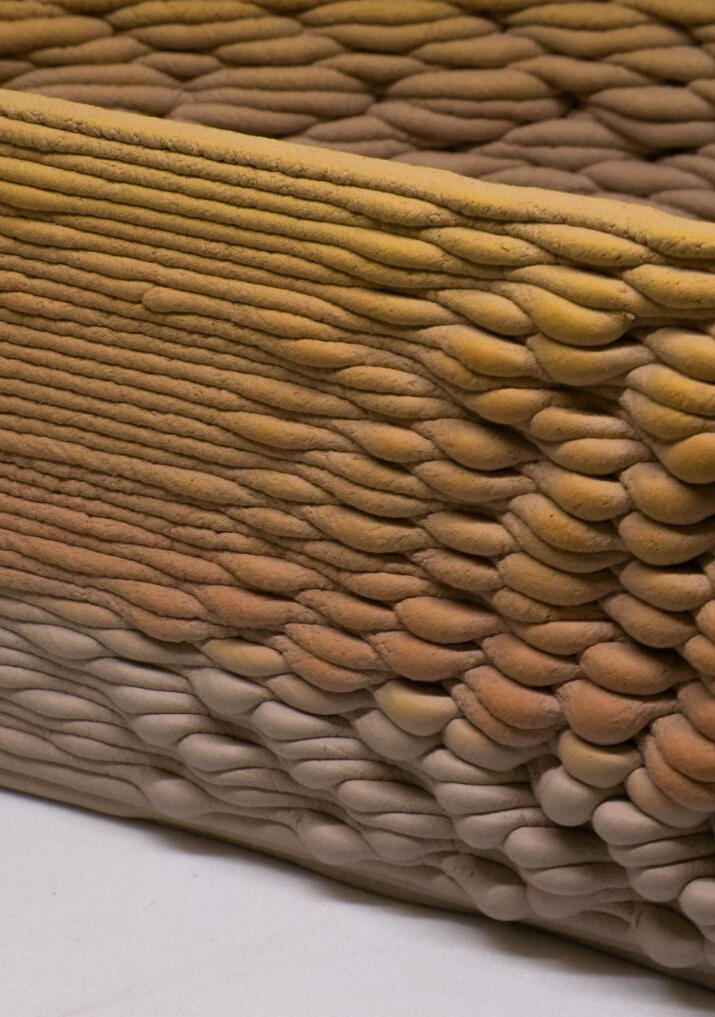
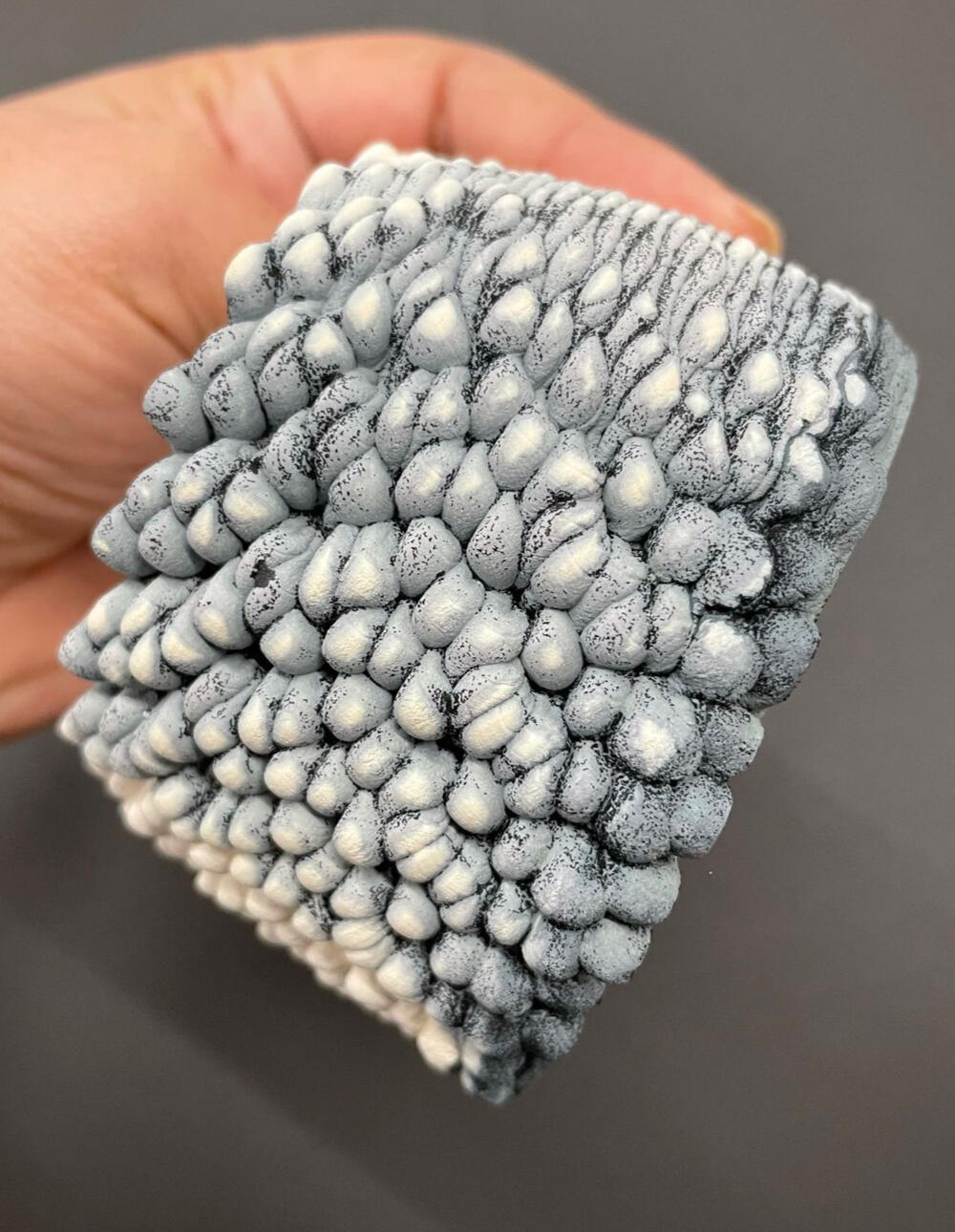
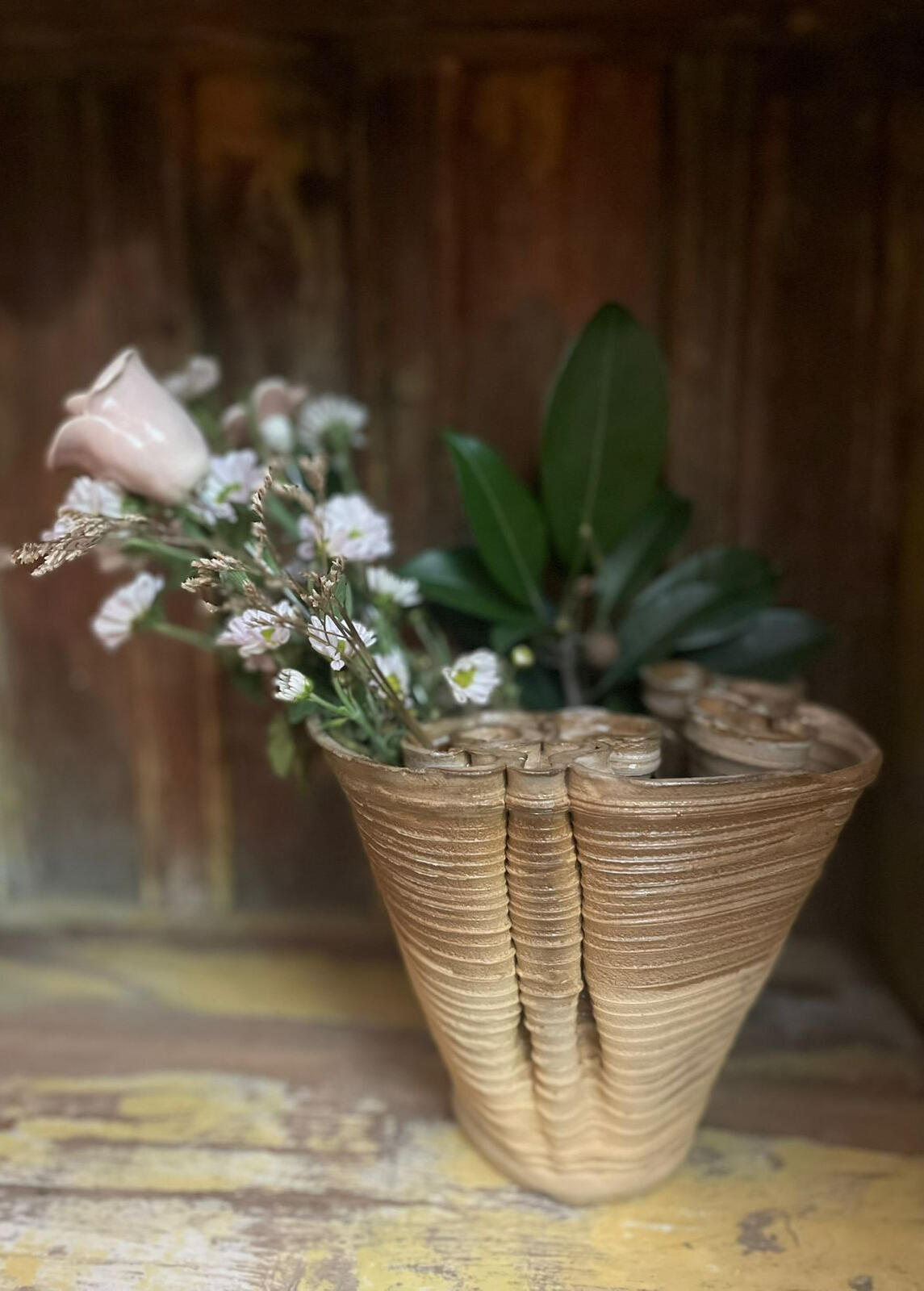
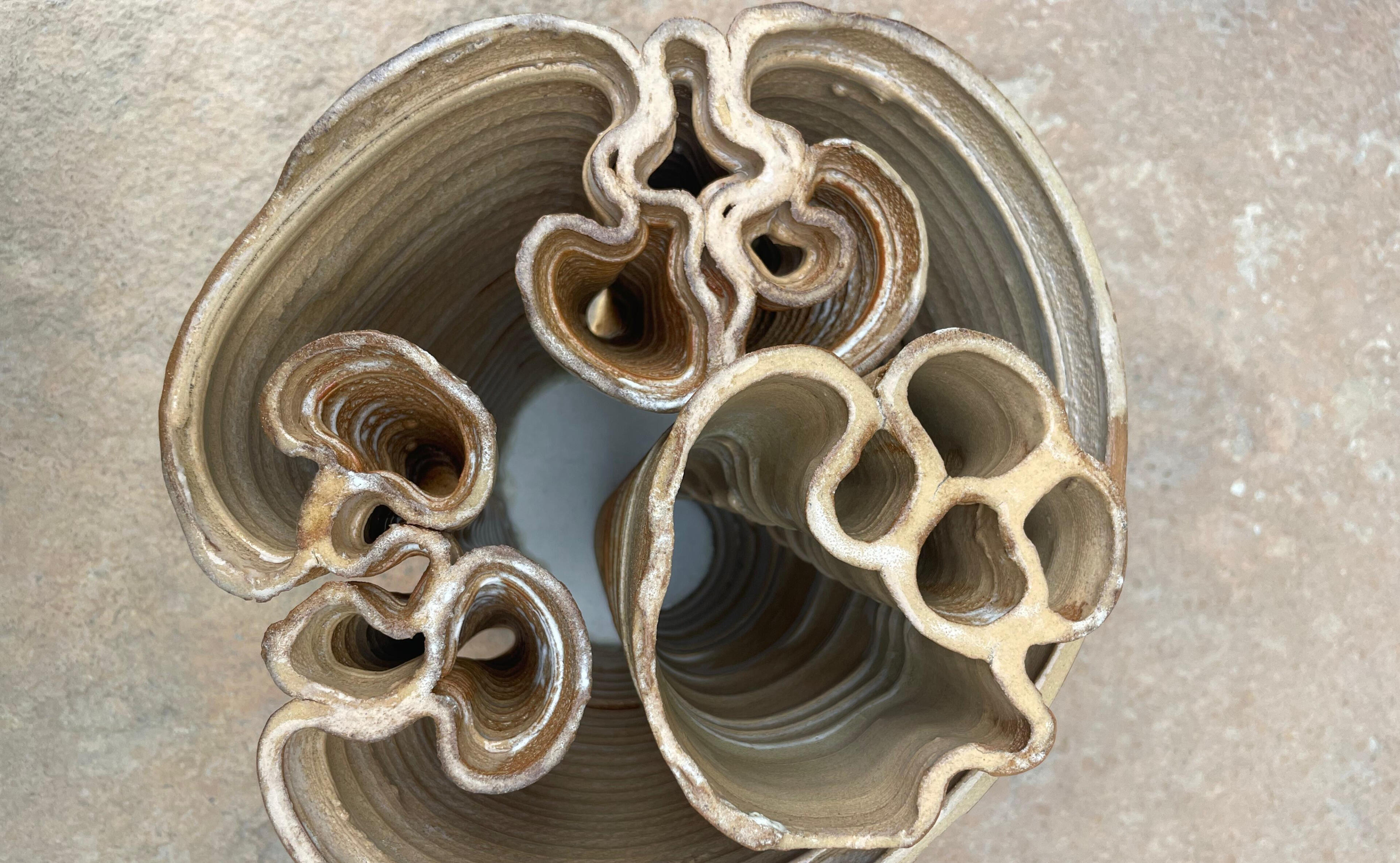
CoralThis collection explores the translation of differential line growth algorithms into ceramic form. Inspired by systems of growth found in nature, the algorithm allows lines to expand, divide, and respond to one another, generating complex structures from simple rules. These computational patterns are translated directly into clay through 3D printing, where each programmed path becomes part of the final geometry. The resulting vessels shift between dense and open structures, creating moments of expansion, branching, and accumulation. Rather than imposing a fixed form, the process allows the geometry to emerge through interaction—bringing together computation, material behaviour, and organic growth to create vessels that feel grown rather than constructed.
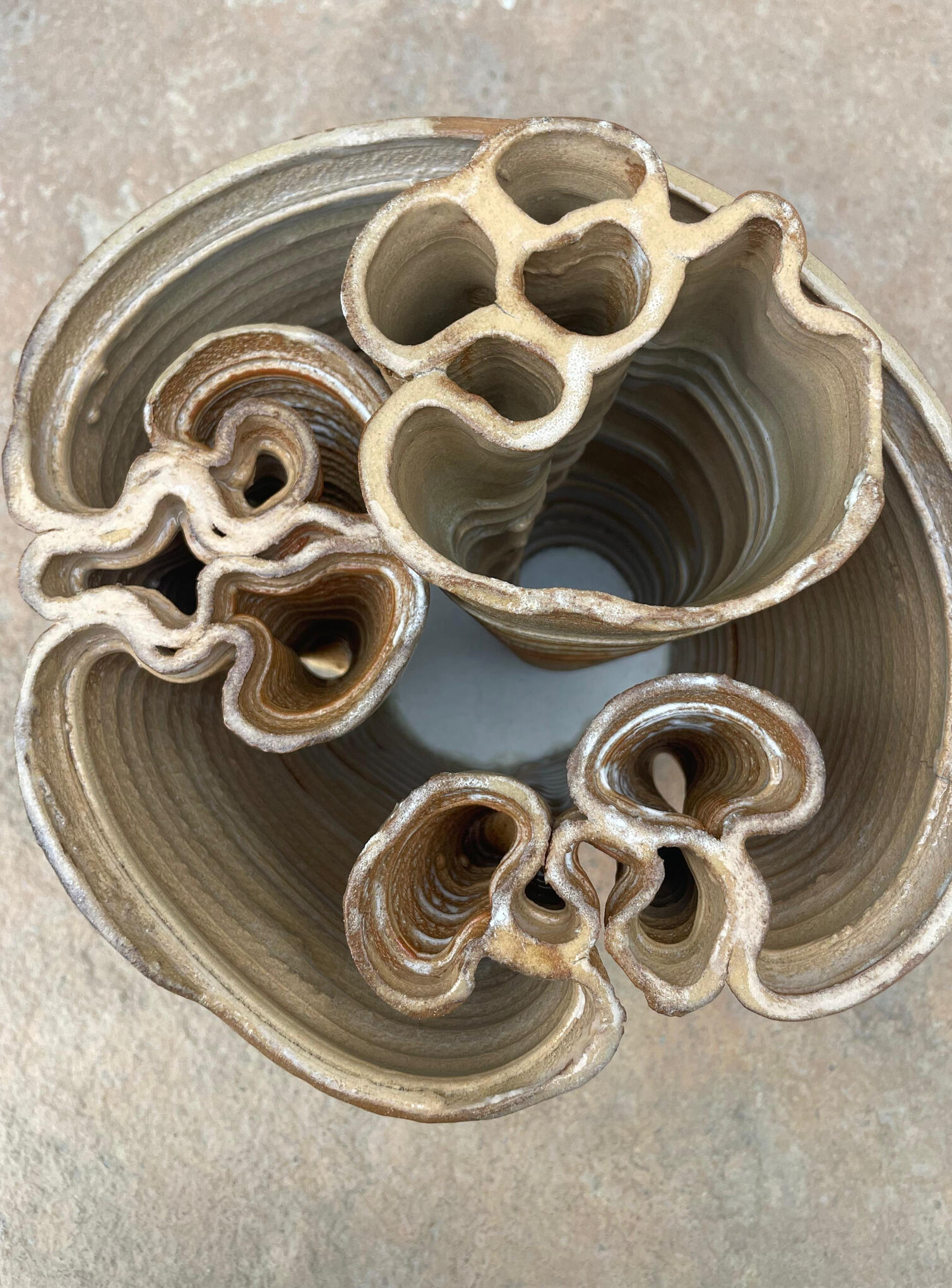
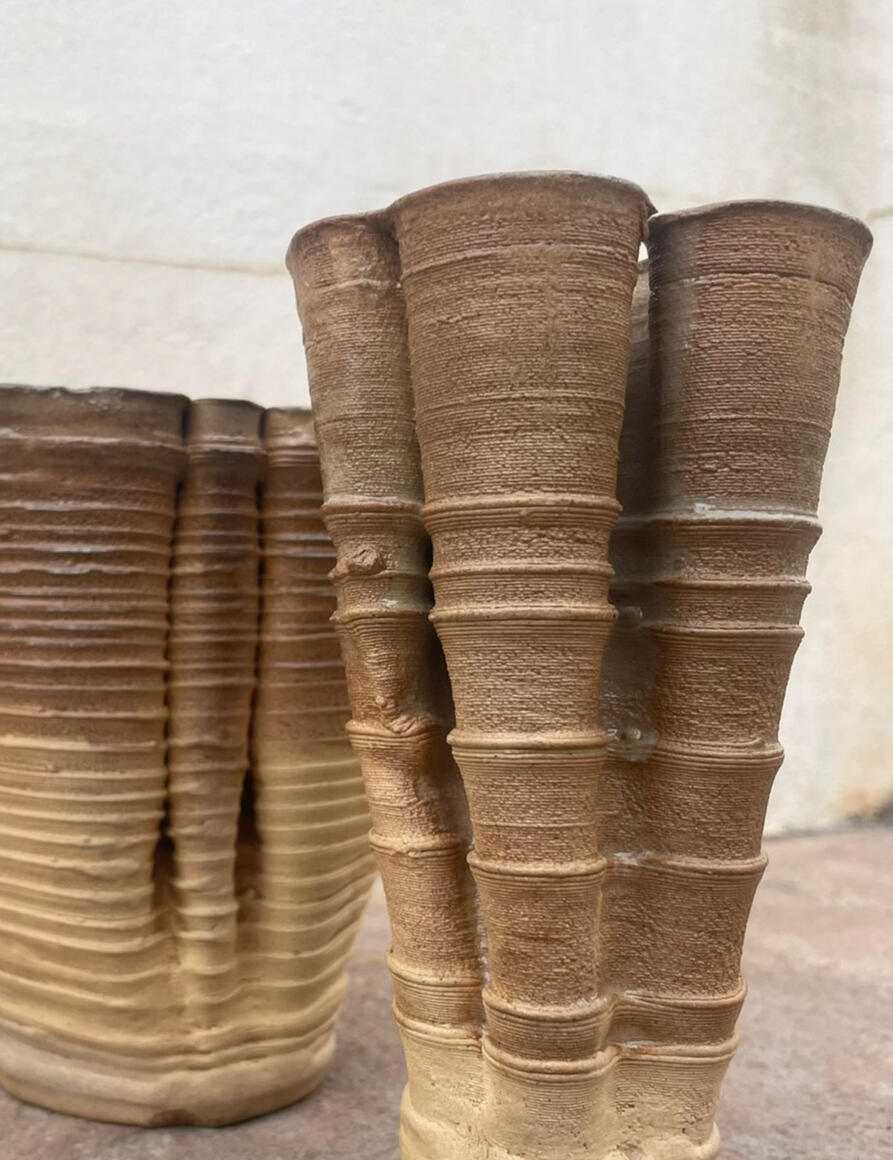
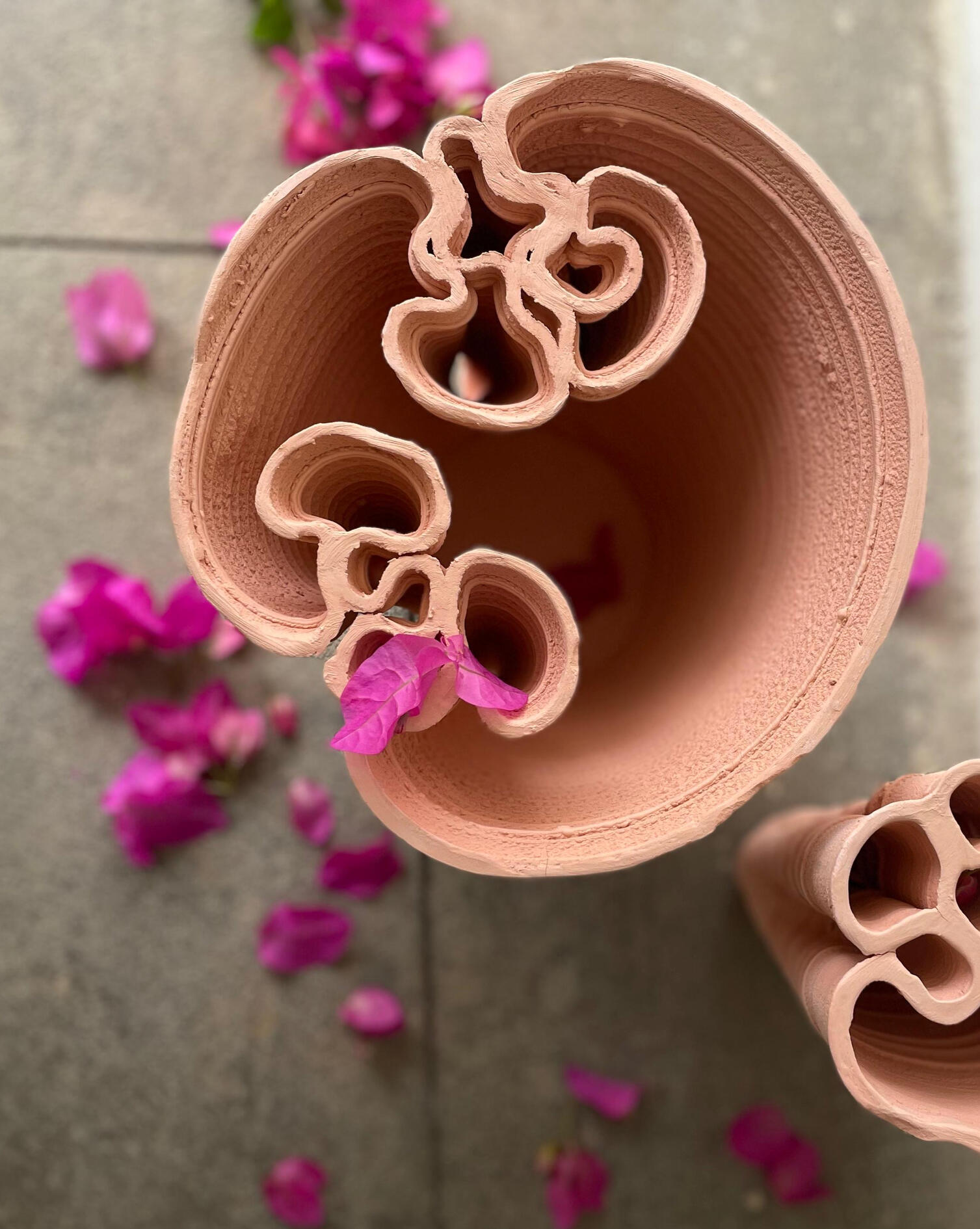
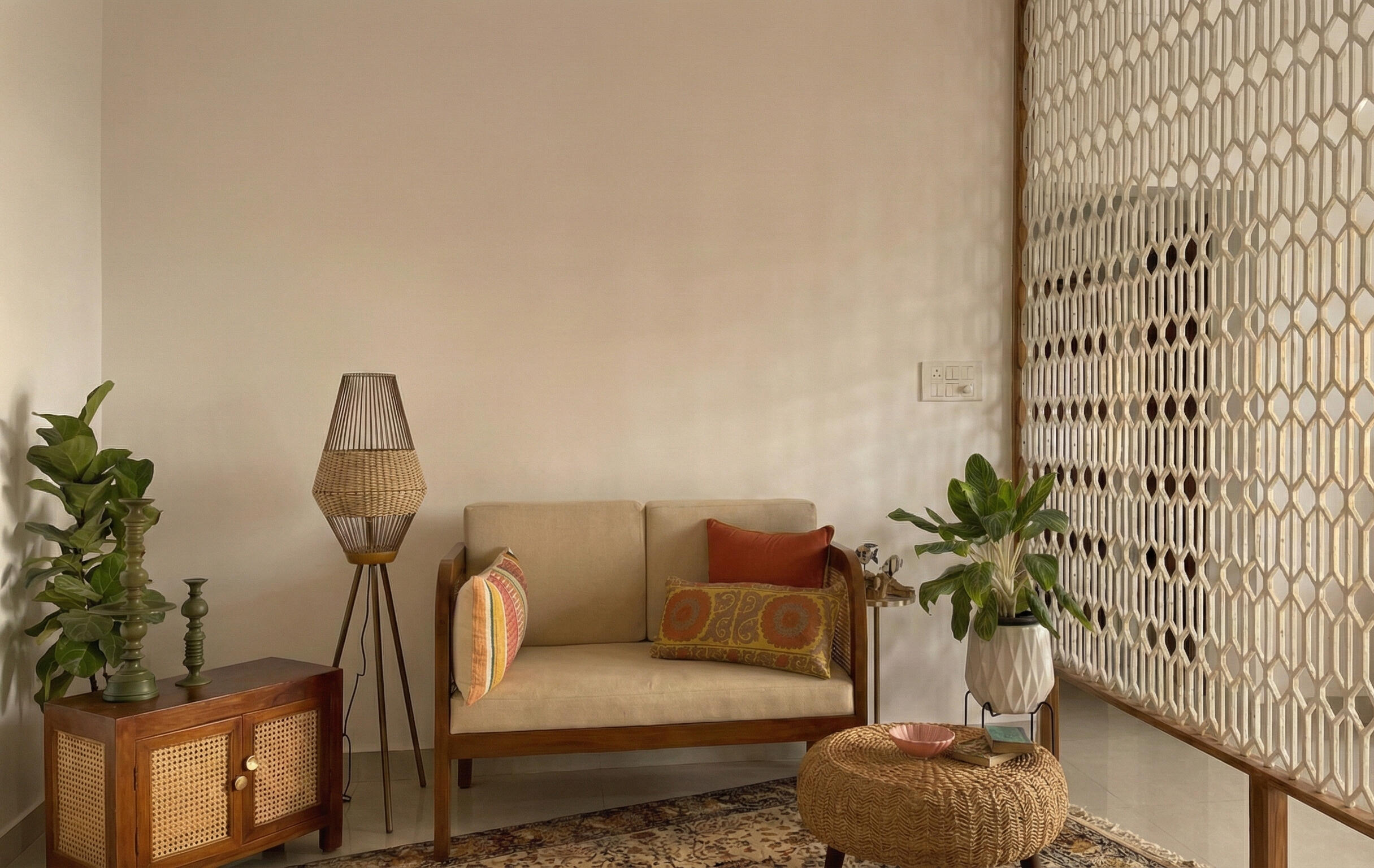
Deep NoirA study in shadow and silhouette. The Deep Noir console absorbs light to reveal form, relying on the interplay of soft highlights across its ribbed, sculptural legs. It stands as a dark anchor, grounding the airiness of the surrounding space with a tactile elegance.Ornamental yet restrained, classical yet unmistakably contemporary, the table occupies a rare balance between presence and poise. Its sculptural base introduces depth and rhythm without excess, drawing from classical proportions while reinterpreting them through a modern, pared-back lens.The base is not cast, but grown. Using a custom clay extrusion process, the stoneware is printed in continuous layers. This technique realizes complex, undulating geometries that defy the constraints of the traditional potter's wheel—digital precision merging with the soulful durability of fired ceramic.
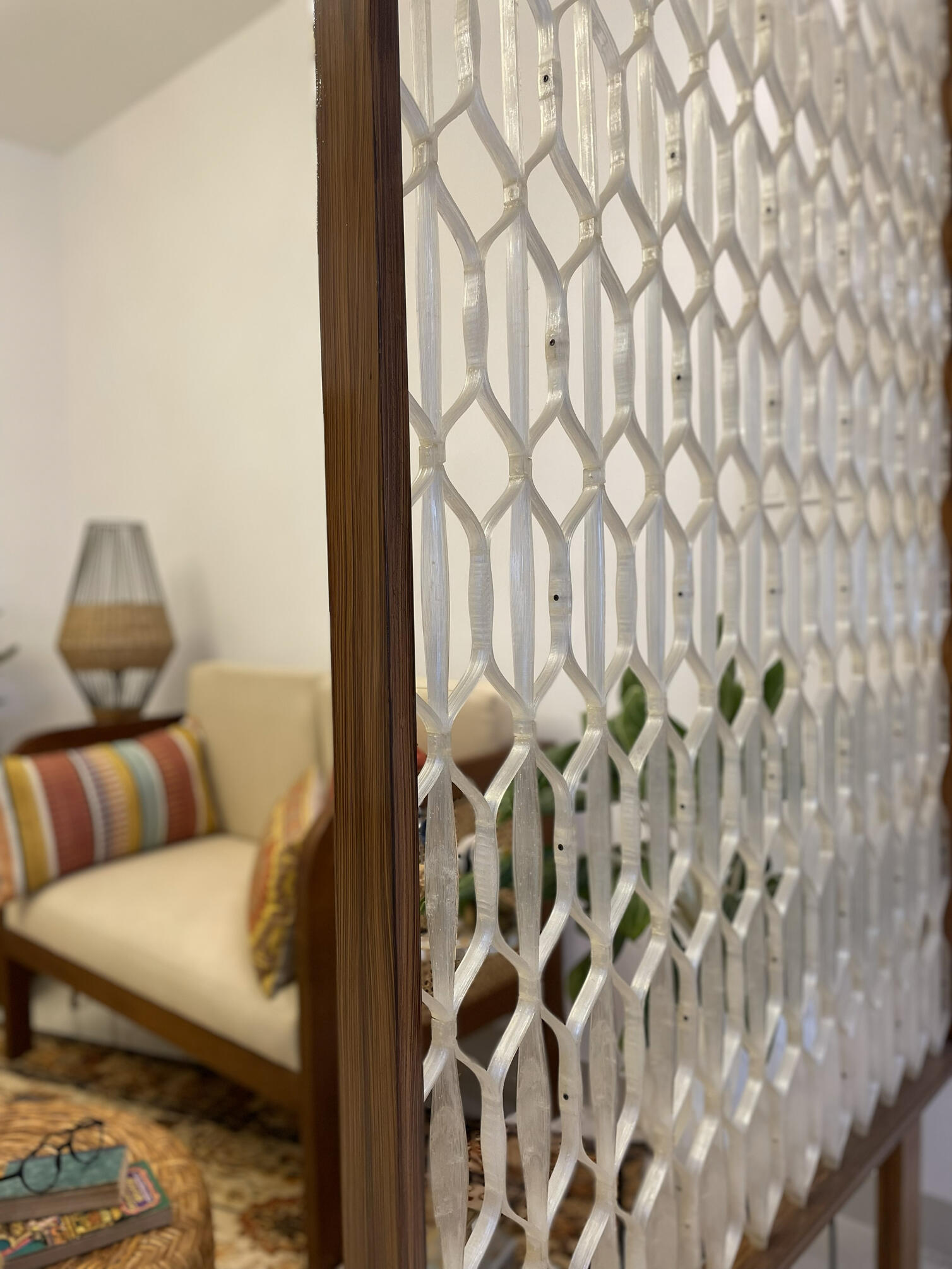
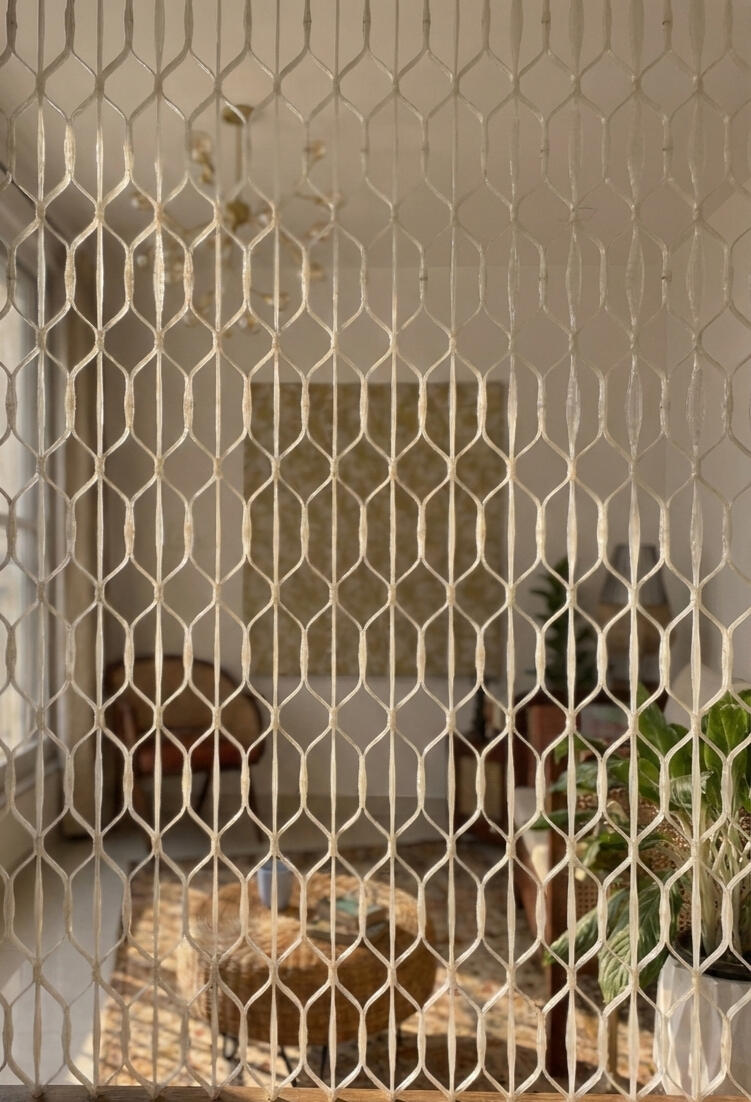
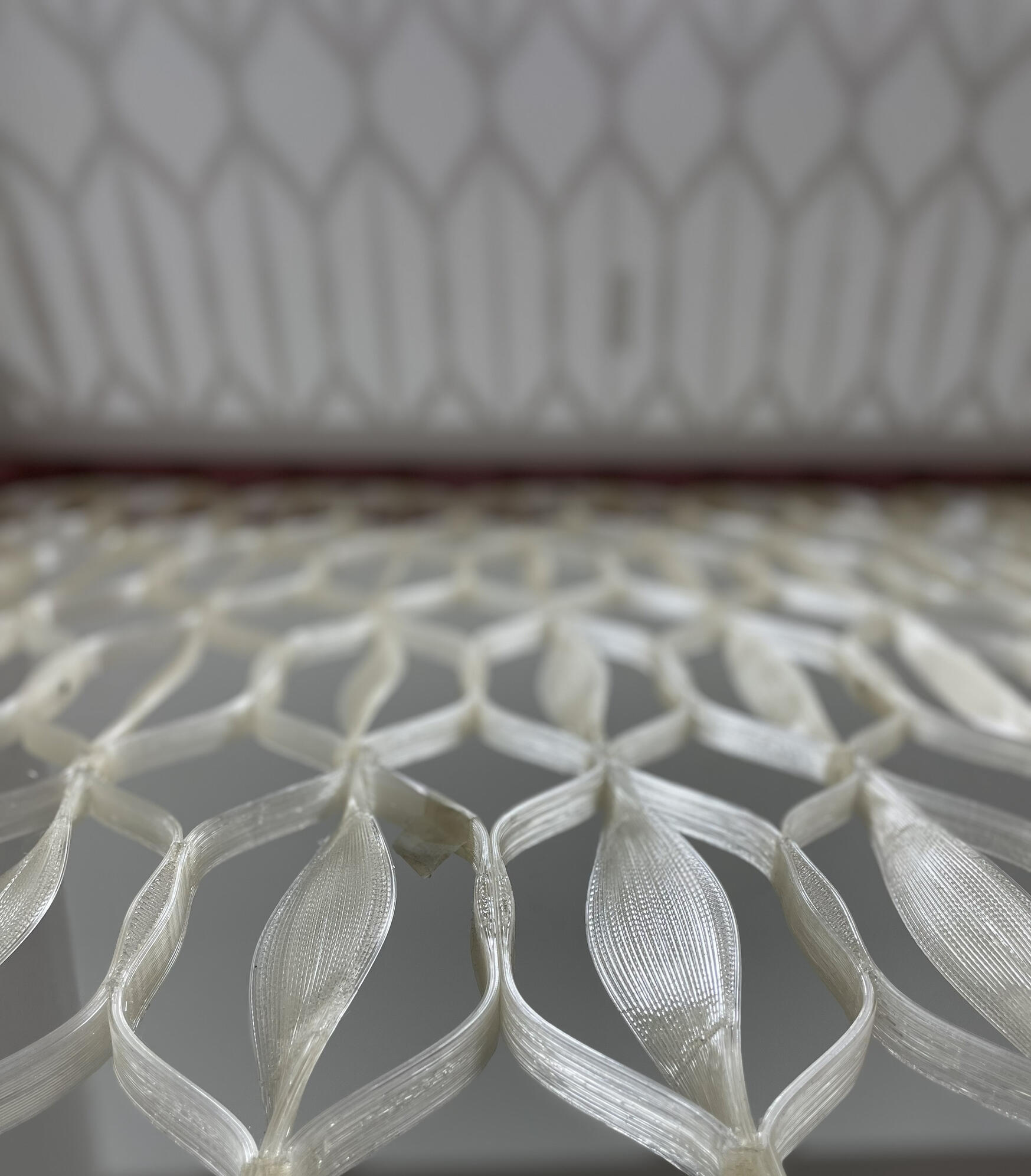
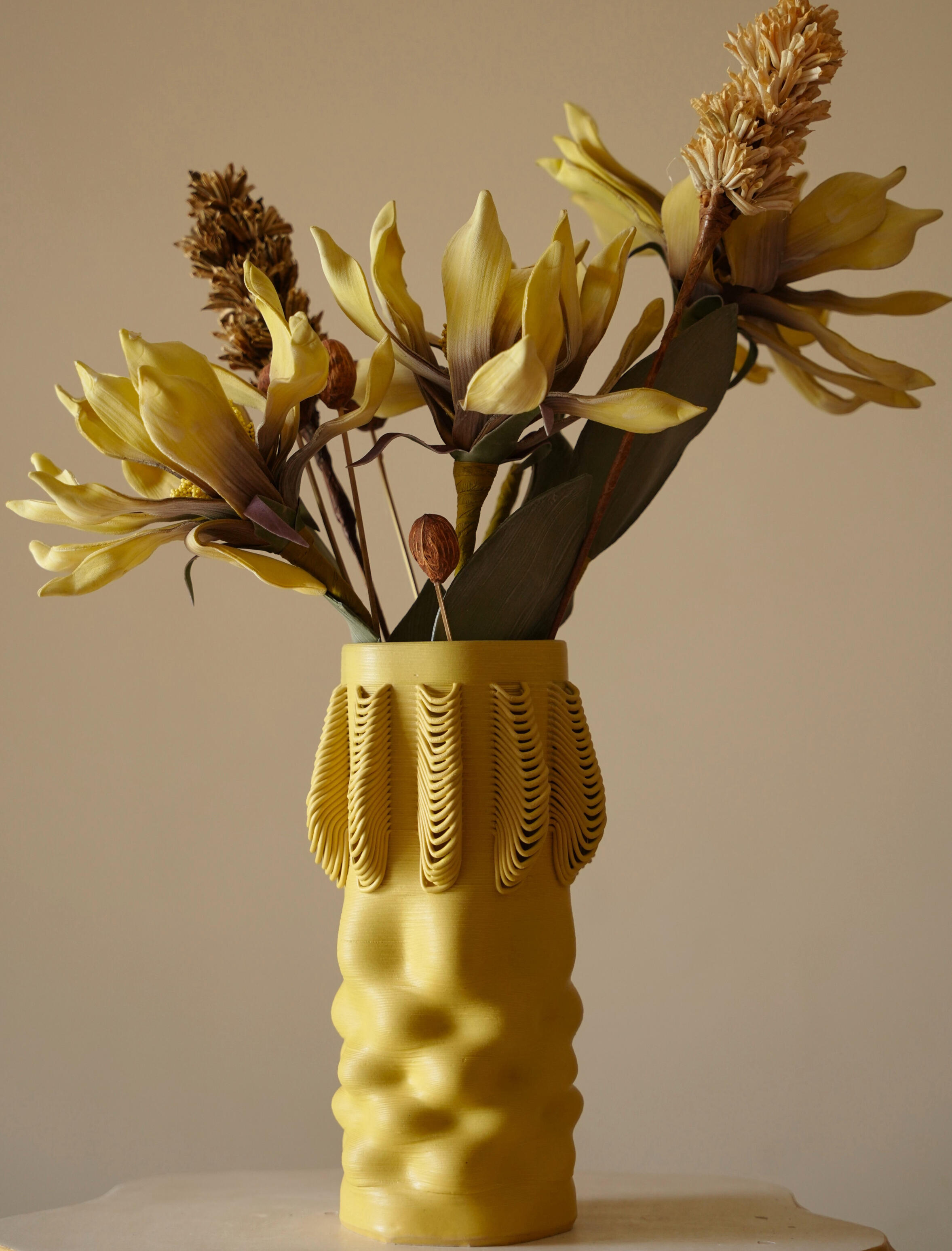
Digital Lace IIThis captivating stoneware vase invites touch and exploration, with its surface formed through continuous programmed toolpaths that create delicate, lace-like structures across the vessel. The repeated patterns introduce rhythm and movement, while subtle variations emerge from the material’s behaviour during printing. The sculptural body contrasts with the fragile, tactile surface, blurring the boundary between structure and ornament. Part of the Droops Collection—named from Drop + Loop—the piece explores how a simple looping motion can transform into intricate, organic textures. Through digital fabrication, the collection translates the movement of a clay droplet into a language of rhythm, repetition, and form.
// book a session
Book Our Services & Machines
Welcome to code:earth!
code:earth offers a full range of offerings, from expert consultations to 3D printing with clay and biomaterials.
Our dedicated team are here to support you at every step, ensuring you make the most of our equipment and expertise.
For 3d printing Services
File Format: We accept only DXF files. Please send them to [email protected] at least 1 week in advance for review.
New Clients: Schedule a free 15-minute induction for guidance and answers to any questions.
work done in collaboration with Sharif. M & Hana. C (Bio-ID, UCL, London)
// contact us
Tell us about your project
If you have a design concept in mind and need a functional prototype, we can help bring your vision to life. Whether you have sketches, concepts, or 2D designs, we can collaborate with you to transform them into 3D printed projects.